Seattle Startup's New Drone Could Replace Police Helicopters
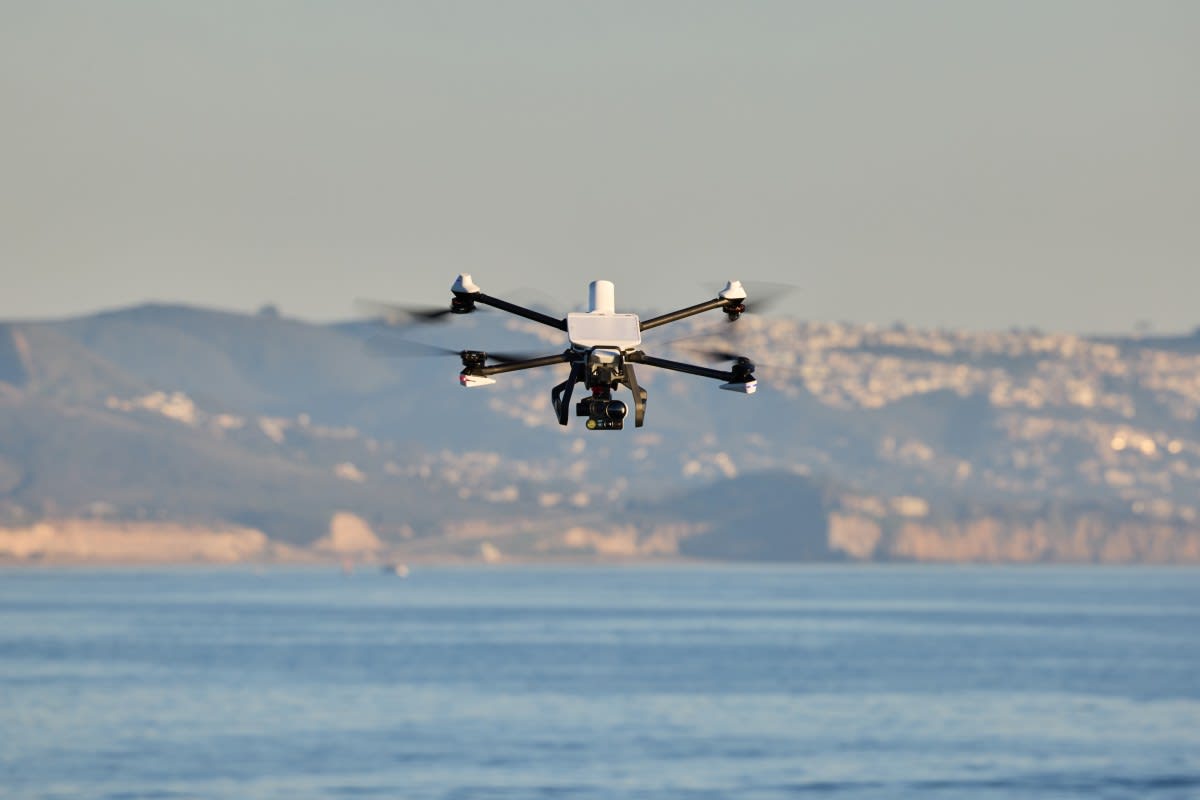
A Seattle drone company just unveiled Guardian, a high-tech emergency response drone that could transform how police and fire departments respond to 911 calls. The innovation could help 50,000 public safety stations nationwide save money while responding faster to emergencies.
Imagine calling 911 and having help arrive overhead in minutes, equipped with cameras, medical supplies, and even a defibrillator. That's the future Blake Resnick's company Brinc is building with Guardian, their newest emergency response drone launched this week.
Guardian isn't your average camera drone. This powerful machine flies at 60 mph for over an hour, carries thermal imaging and 4K zoom cameras that can read license plates from high altitude, and includes a speaker louder than a police siren. Its automated charging station can swap batteries without human help and stock emergency supplies like Narcan and flotation devices.
The real game changer? Guardian is the first public safety drone with built-in Starlink satellite internet, giving it connectivity anywhere on Earth. That means police and fire departments can deploy eyes in the sky immediately, even in remote areas or during disasters when cell towers fail.
Resnick founded Brinc in 2017 after receiving a Thiel Fellowship, which funds young entrepreneurs. Sam Altman became one of the company's first investors, and today Brinc is valued at nearly half a billion dollars. The company is now setting up a massive 50,000-square-foot facility in Seattle to meet growing demand.
The timing couldn't be better for an American drone manufacturer. Recent trade restrictions on foreign-made drones have opened up the U.S. market, creating space for homegrown innovation. About 20,000 police departments and 30,000 fire departments across America need reliable drone technology, and many can't afford traditional helicopters that cost millions to purchase and maintain.
The Ripple Effect
Guardian drones could save lives by arriving at emergencies faster than ground vehicles stuck in traffic. A heart attack victim could receive a defibrillator in minutes. A lost hiker could be located with thermal imaging before darkness falls. Firefighters could assess a burning building's hotspots before entering.
Brinc recently partnered with the National League of Cities to help communities nationwide launch "drone as first responder" programs. The company estimates the market opportunity at $6 to $8 billion as cities worldwide modernize their emergency response systems.
For smaller communities especially, Guardian offers capabilities once reserved for big cities with helicopter budgets. A single drone costing far less than a helicopter could protect entire towns, arriving at scenes in a fraction of the time while keeping human responders safer.
Technology is giving first responders superpowers, and communities everywhere will benefit from faster, smarter emergency response.
Based on reporting by TechCrunch
This story was written by BrightWire based on verified news reports.
Spread the positivity!
Share this good news with someone who needs it