Self-Cleaning Solar Panel Coating Boosts Efficiency 4.75%
Scientists created a new transparent coating that helps solar panels clean themselves while letting more light through. The breakthrough could make solar power cheaper and more reliable worldwide.
Solar panels just got a lot easier to maintain, and it's about to change clean energy forever.
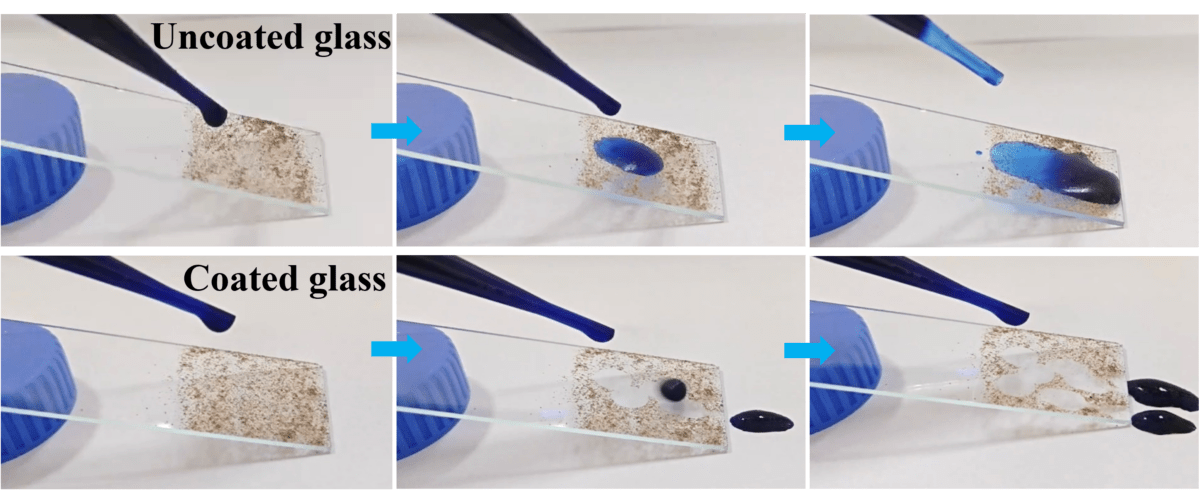
An international research team has developed a transparent coating that lets solar panels clean themselves automatically. Water, dust, and even bird droppings simply roll off the surface, carrying dirt away without anyone lifting a finger.
The innovation increased solar cell efficiency from 13.90% to 14.56%, a jump that could add up to massive energy gains across millions of panels worldwide. Even better, the coating actually lets more light reach the solar cells than uncoated panels, achieving 96.2% light transmission.
"Dust, dirt and bird droppings all affect solar panel performance," said co-author Sudhagar Pitchaimuthu. "Maintenance risks damaging the panels, is costly and sometimes a logistical challenge."
The coating works through clever chemistry. Scientists combined a thin adhesive base layer with tiny hydrophobic silica particles that lock into place as the material hardens. These microscopic bumps trap air at the surface, causing water droplets to bead up and roll away at the slightest tilt.
The team tested the coating's durability against scratches, sand impacts, and weather exposure. It held up beautifully in both acidic conditions and neutral environments, maintaining its self-cleaning powers throughout.
What makes this breakthrough even sweeter is what it doesn't contain. Unlike many competing products, this coating avoids PFAS, the "forever chemicals" that persist in the environment and human bodies for decades.
The research team used common materials like tetraethyl orthosilicate and ethanol, creating the coating through a process called sol-gel that's already used in manufacturing. This means scaling up production should be relatively straightforward.
The Ripple Effect
The timing couldn't be better. Solar power is expanding rapidly worldwide, but maintenance costs and efficiency losses from dirty panels have slowed adoption in dusty regions. This coating could make solar viable in deserts, industrial areas, and places where cleaning crews can't easily reach.
Co-author Sanjay Latthe emphasized the cumulative impact: "Improving the performance of solar cells and panels could have an incredible cumulative effect." Even small efficiency gains multiplied across millions of panels translate to powering thousands more homes without installing a single additional panel.
The team is now testing the coating in extreme conditions, from Scottish winters to Dubai deserts. If it performs as expected, the product could hit the market within five years or sooner.
For homeowners and solar farm operators alike, this means lower maintenance costs, better performance, and one less barrier to adopting clean energy.
More Images
Based on reporting by PV Magazine
This story was written by BrightWire based on verified news reports.
Spread the positivity!
Share this good news with someone who needs it