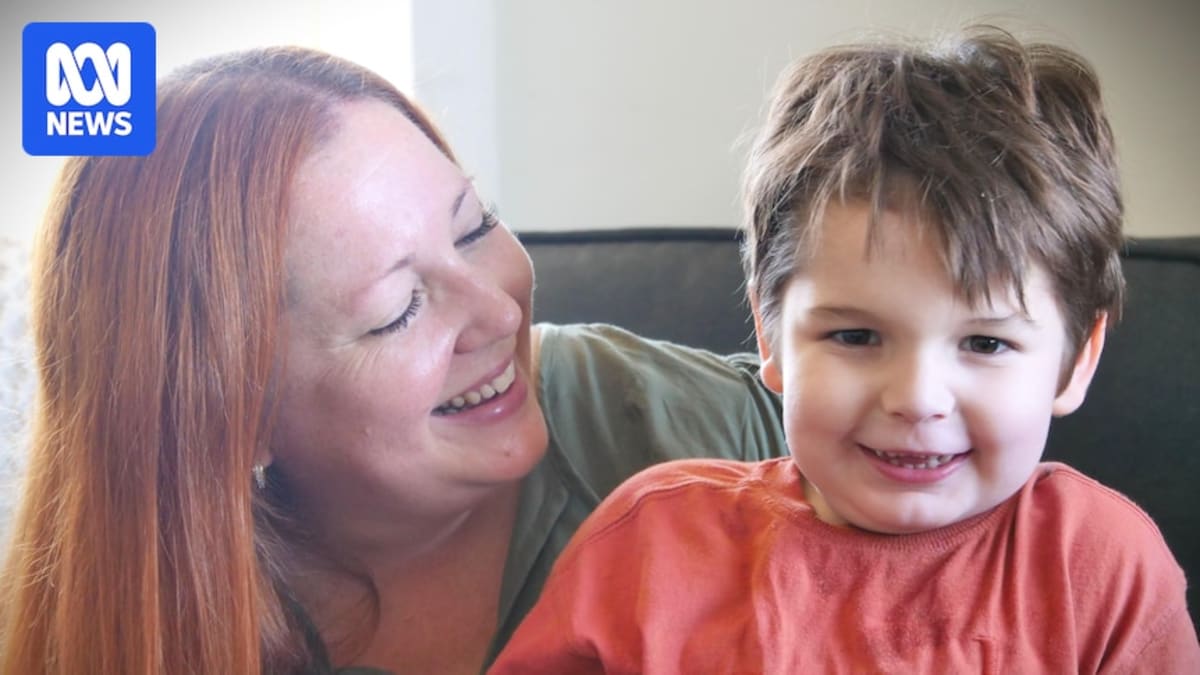
Senate Inquiry Could Help Families Access Epilepsy Support
A new Senate inquiry into epilepsy in Australia offers hope to thousands of families struggling with funding gaps for care and support services. Four-year-old Leo's family is among those waiting for changes that could make life-saving assistance more accessible.
When Kat Robinson tucks her four-year-old son Leo into bed each night in Rockhampton, Australia, she fights a paralyzing fear that he might have a seizure and never wake up. Even with anti-suffocation pillows and video monitors, she knows current safety measures aren't enough to protect her rambunctious boy who lives with Dravet syndrome, a rare and medication-resistant form of epilepsy.
Leo was diagnosed at age one, and his mom describes the daily reality as "living with a ticking time bomb, except you can't see the countdown." But after years of navigating impossible funding gaps, her family finally has reason for hope.
A specialized seizure alert dog named Annie could change everything for Leo. The dog-in-training will learn to detect Leo's seizures before they happen, offering the family precious warning time. When Leo and Annie first met, "it was an instant connection," Robinson said. "It was like Annie already understood 'this small person is my person.'"
The challenge? Annie costs over $40,000 to train, plus thousands more annually for care. Robinson has turned to online fundraising and even game show appearances to cover costs the family can't access through government programs.
The National Disability Insurance Scheme (NDIS) classifies epilepsy primarily as a medical condition rather than a disability, leaving families without support for crucial services like seizure alert dogs or support workers. Robinson's application for a support worker was rejected despite Leo's complex needs.
"Probably the vast majority of our phone calls are around how to access the NDIS because people don't have access to support," said Sandi Rodiger, chief executive of Epilepsy Queensland. The health system doesn't provide the level of support these families desperately need.
Why This Inspires
Last month, the Australian government announced a Senate inquiry into epilepsy, set to report in September. The inquiry is accepting submissions until mid-May and represents the first major examination of funding gaps affecting thousands of Australian families living with epilepsy.
Epilepsy Australia and advocacy groups see this as a turning point. "I think it's a recognition that more needs to be done," Rodiger said. "We need to change the way that we view epilepsy in Australia so that the support is there for people."
For the Robinsons, Annie should be ready for placement by year's end. While a cure remains distant, this Senate inquiry offers hope that future families won't face the same crushing financial barriers when seeking support for their children.
Robinson's determination reflects what countless families face daily, and now their voices might finally be heard where policy gets made.
More Images


Based on reporting by ABC Australia
This story was written by BrightWire based on verified news reports.
Spread the positivity!
Share this good news with someone who needs it