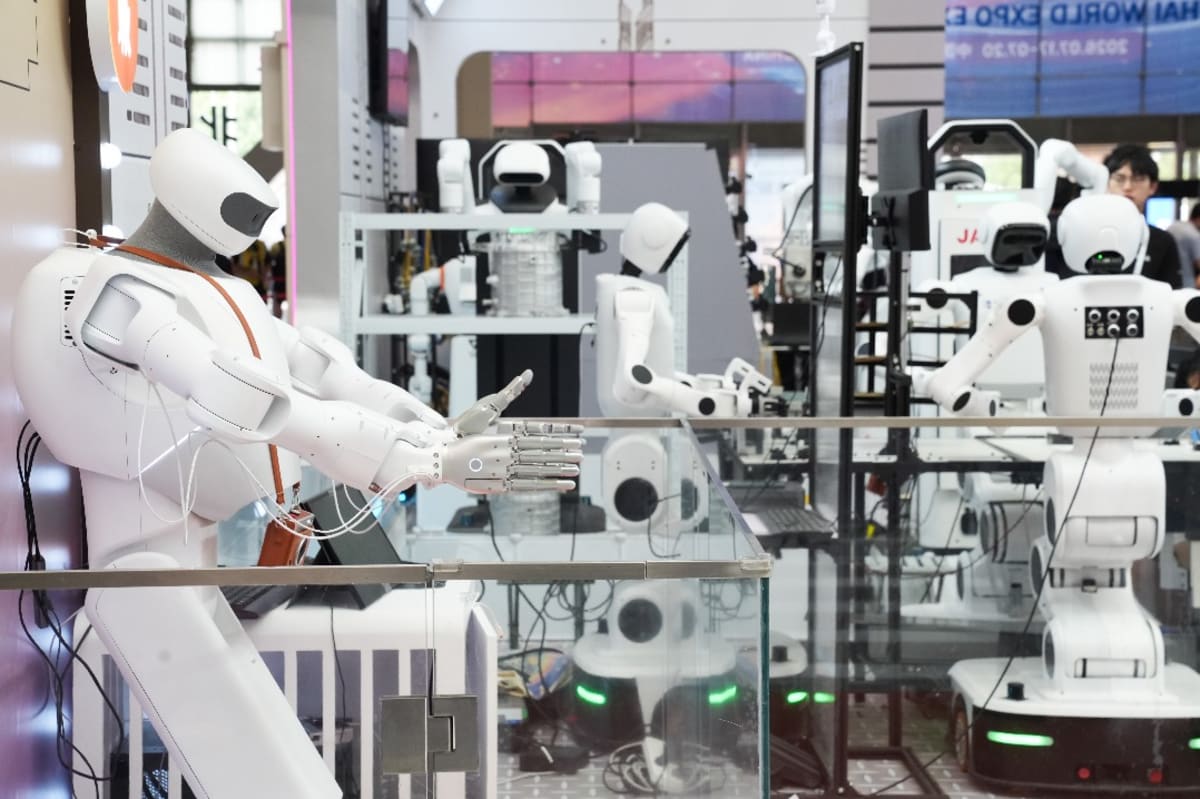
Shanghai Opens China's First Humanoid Robot Training Center
China launched its first training center for humanoid robots in Shanghai, backed by Huawei and designed to help intelligent robots learn from real-world scenarios. The facility can produce 2,000 robots annually and aims to solve major development challenges in the rapidly growing industry.
Shanghai just opened a groundbreaking facility that could transform how humanoid robots learn to navigate our world.
The Embodied AI Training Demo Center launched Sunday at the 2026 World AI Conference, marking China's first dedicated space for teaching robots human-like intelligence. Backed by tech giant Huawei and the National Humanoid Robotics Innovation Center, the facility uses real-world scenarios and high-quality data to train robots for practical service work.
The center focuses on four key areas: collecting data from actual environments, training robot models, evaluating their performance, and testing them in real applications. This comprehensive approach moves beyond simple training to create a complete development platform from data collection through deployment.
The timing couldn't be better. The same weekend, Shanghai unveiled a massive pilot-scale service platform spanning 6,800 square meters in Pudong New Area. The facility can produce 2,000 humanoid robots per year and includes specialized zones for assembly, testing, and storage.
These twin launches tackle some of the biggest headaches in robotics development. High testing costs, unstable mass production, and difficulty deploying prototypes have slowed progress for years. The new platforms provide shared infrastructure that smaller companies and research teams can access without building their own expensive facilities.
The Ripple Effect
Beyond China's borders, this infrastructure could accelerate humanoid robotics worldwide. When robots train in diverse real-world scenarios, they learn skills that transfer across cultures and environments. A robot trained to navigate Shanghai's busy streets gains knowledge applicable to cities globally.
The collaboration model matters too. By bringing together government resources, private tech leadership, and research institutions, Shanghai created a blueprint other regions can follow. Shared facilities reduce redundant spending and speed up the entire industry's learning curve.
The 2,000-robot annual capacity might sound modest, but pilot-scale production serves a crucial middle step between lab prototypes and full manufacturing. Companies can test designs, refine processes, and verify real-world performance before committing to massive factories.
This approach to robotics development prioritizes practical service over speculation. Rather than chasing flashy demos, the centers focus on robots that can genuinely help people in everyday situations. From healthcare assistance to manufacturing support, humanoid robots trained here aim to solve real problems.
China's investment signals confidence that helpful, capable humanoid robots will soon move from science fiction to daily reality, with Shanghai leading the way forward.
More Images
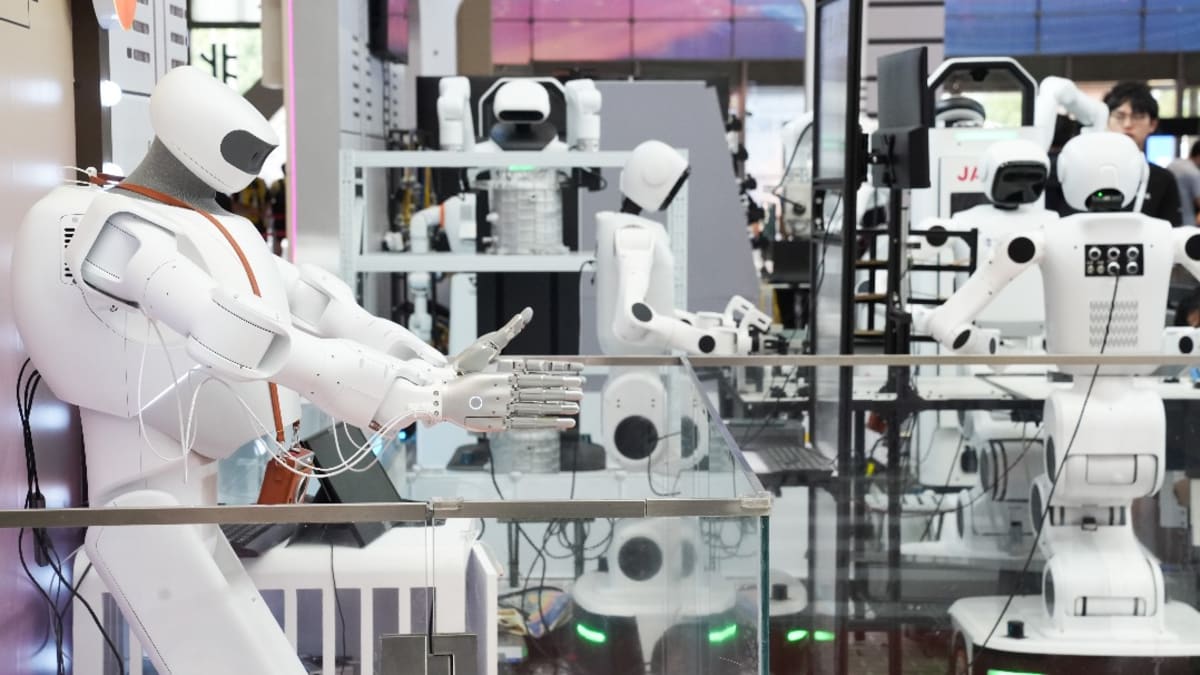
Based on reporting by Google: robotics innovation
This story was written by BrightWire based on verified news reports.
Spread the positivity!
Share this good news with someone who needs it