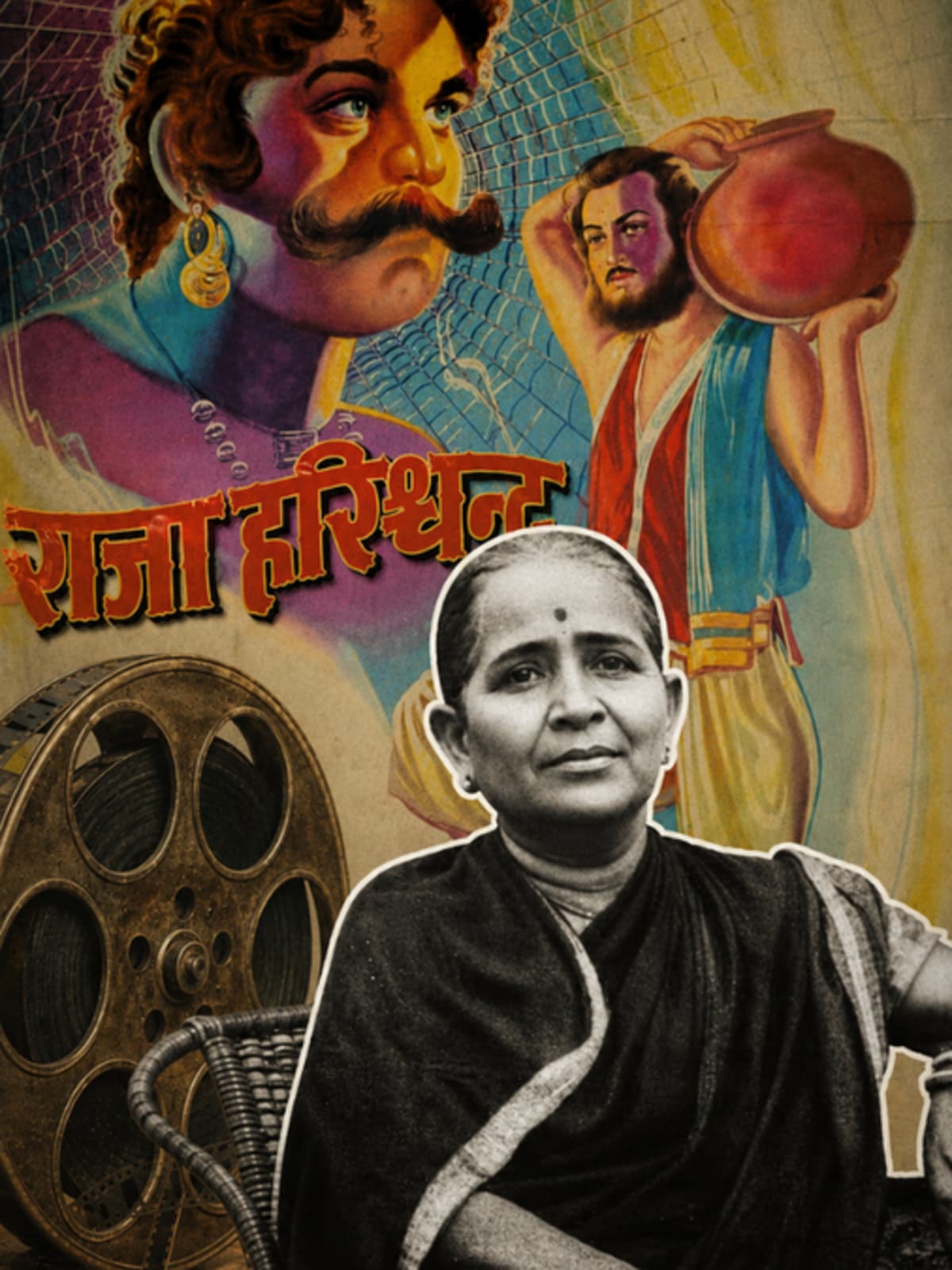
She Sold Her Jewelry to Create India's First Film in 1913
In 1913, Saraswatibai Phalke hand-edited India's first feature film, sold her jewelry to fund it, fed 70 crew members daily, and shaped cinema history without credit. Her work as editor and technical pioneer broke barriers for women in Indian film.
In 1913, while her husband gained fame as the Father of Indian Cinema, Saraswatibai Phalke sat night after night with scissors and glue, hand-splicing hundreds of film strips that would become Raja Harishchandra, India's first full-length feature film. Her name appeared nowhere in the credits.
Saraswatibai did far more than edit. She mixed chemical solutions to develop exposed film, hand-perforated raw reels so cameras could use them, and managed every costume and prop on set. When funding ran short, she sold her own jewelry so her husband Dadasaheb could travel abroad, learn filmmaking techniques, and return with India's first movie camera.
Every single day during production in their modest Nashik studio, she cooked full meals for nearly 70 crew members. Then she returned to editing reels late into the night, all while raising her children alone.
When Dadasaheb asked her to act in the film, Saraswatibai firmly refused. She reminded him she was already handling editing, chemical processing, costumes, and feeding the entire crew single-handedly. She knew exactly where her skills were needed most.
Why This Inspires
In early 1900s India, women were almost never allowed near film sets. Technical work like editing, developing footage, or handling equipment was considered entirely unsuitable for them. Saraswatibai ignored those restrictions completely, deciding frame by frame which shots stayed in the final cut and directly shaping how audiences would experience the story.
Her technical expertise proved essential. She didn't just support the film. She built it, shot by shot, with her own hands.
For decades, Dadasaheb received sole credit for creating Indian cinema while Saraswatibai's contributions went unacknowledged. Today, film historians recognize the truth: without her hours cutting, splicing, and developing those first reels, Raja Harishchandra might never have reached a projector at all.
Cinema's foundation was built by a woman who chose progress over recognition, and craftsmanship over credit.
Based on reporting by The Better India
This story was written by BrightWire based on verified news reports.
Spread the positivity!
Share this good news with someone who needs it