Sheep Wool Helps Regrow Better Bone in Lab Success
Scientists turned agricultural waste into a breakthrough bone repair material that grows tissue more natural than current methods. This wool-based discovery could transform regenerative medicine while giving new life to discarded farm products.
Scientists at King's College London have transformed ordinary sheep's wool into a material that helps damaged bones heal better than the current medical gold standard.
The research team extracted keratin, a natural protein found in wool, and created special membranes that support bone growth. When tested in rats with skull injuries too large to heal naturally, the wool-based material helped regenerate new bone that looked remarkably similar to healthy tissue.
Here's what makes this discovery exciting: the new bone grown with wool keratin was more organized and structurally sound than bone formed using collagen, the material doctors have relied on for decades. While collagen scaffolds produced more total bone volume, the keratin created tissue with better aligned fibers that more closely resembled natural, healthy bone.
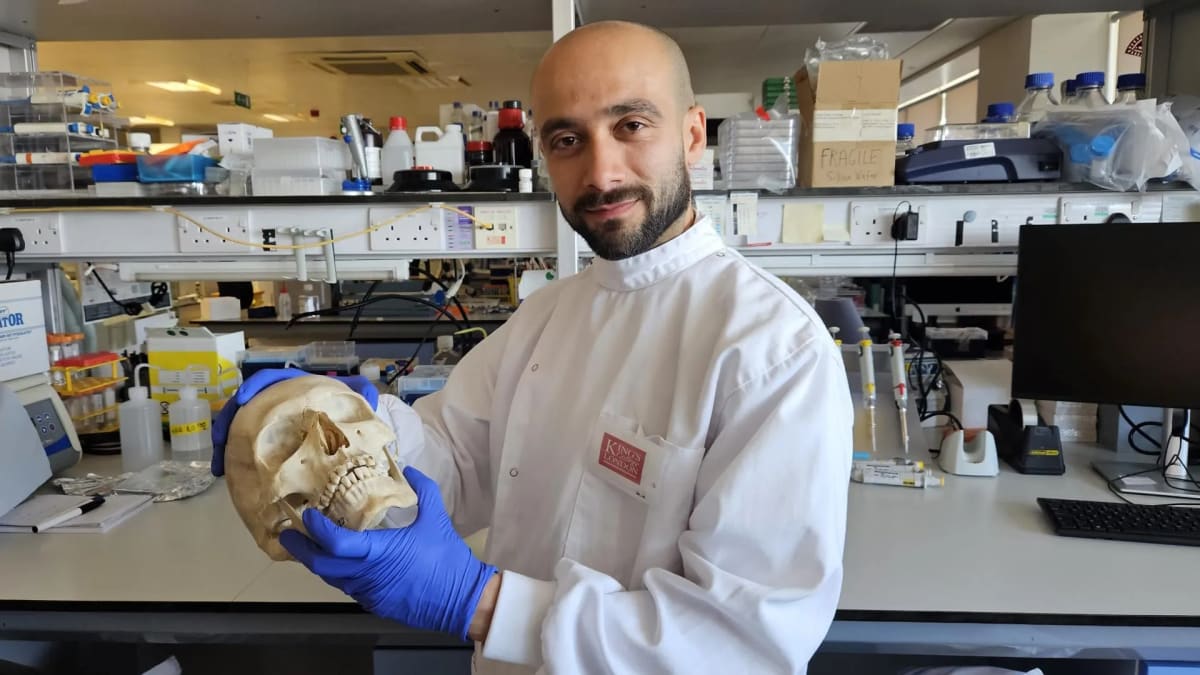
Dr. Sherif Elsharkawy from King's Faculty of Dentistry, Oral & Craniofacial Sciences led the breakthrough. "We are really excited to show for the first time how a wool-based material has been successfully tested in a living animal to repair bones," he said.
The researchers chemically treated wool to create stable, durable scaffolds that act as protective barriers during healing. These scaffolds keep soft tissue from interfering while giving new bone space to grow across damaged areas.
Collagen has served medicine well, but it comes with problems. The material is relatively weak, can degrade too quickly for weight-bearing repairs, and costs a lot to extract.
The Ripple Effect
This discovery could solve multiple problems at once. Wool is naturally renewable and often thrown away as waste by farms, making it both sustainable and potentially inexpensive to source at scale.
The keratin membranes remained stable throughout the healing process and integrated smoothly with surrounding tissue in the animal tests. Both characteristics are critical for moving the technology toward real patient care.
"We've effectively demonstrated the technology in an animal model, which makes this much more than an early materials concept," Dr. Elsharkawy explains. "It shows that keratin can support bone regeneration in a living biological system, bringing the technology significantly closer to use in real patients."
The breakthrough positions keratin as a potential new class of regenerative biomaterial that could challenge medicine's long reliance on collagen. What was once agricultural waste might soon help people heal from injuries, dental procedures, and bone damage with better results than ever before.
Based on reporting by Science Daily
This story was written by BrightWire based on verified news reports.
Spread the positivity!
Share this good news with someone who needs it