Sheffield Doctor's 1930 Work Saved 82 Million Lives
A forgotten medical hero treated the first documented patients with penicillin in 1930, years before it became the lifesaving drug we know today. Sheffield is finally honoring Cecil George Paine, whose groundbreaking work helped transform medicine forever.
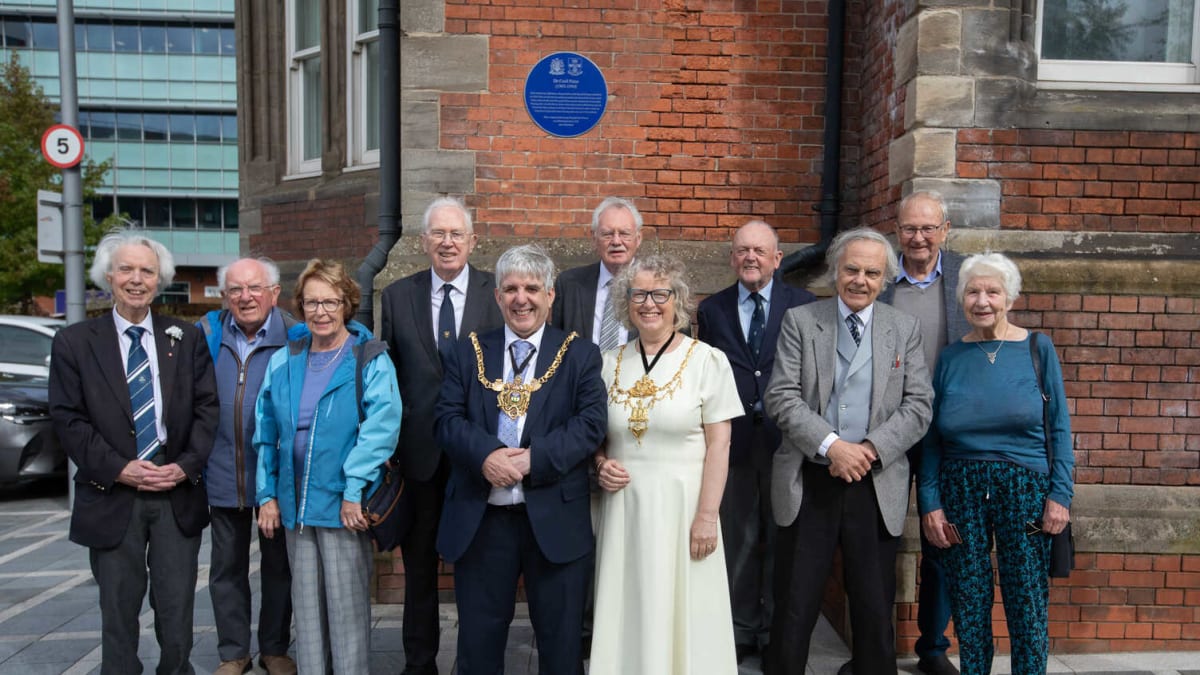
A new plaque at the University of Sheffield celebrates a doctor whose nearly forgotten achievement helped save 82 million lives worldwide.
Most people know Alexander Fleming discovered penicillin in 1928. But it was Cecil George Paine, working at Sheffield's Royal Infirmary in 1930, who first successfully used the drug to treat human patients.
Paine treated two babies and a miner suffering from eye infections using a crude penicillin filtrate supplied by his former lecturer, Fleming himself. The treatments worked, marking the first documented therapeutic use of what would become one of medicine's most important discoveries.
Fleming had published his discovery of penicillin's antibacterial properties in 1928, but its healing potential remained unexplored. Others had tried using it before Paine with little success.
Paine joined Sheffield Medical School as a lecturer in 1932 and shared his findings with Fleming and Howard Florey, who served as Sheffield's Professor of Pathology from 1932 to 1935. Florey later led the Oxford team that purified penicillin and conducted the first clinical trial in 1941.
The Ripple Effect
Paine's breakthrough rippled through medical history in ways he never pursued himself. He didn't publish his research or keep detailed records, nearly losing his contribution to history entirely.
His work only came to light in the 1980s, decades after penicillin had already transformed medicine. By then, the drug had established itself as a cornerstone of modern healthcare.
Today, penicillin and its derivatives continue saving lives across the globe. The 82 million lives attributed to antibiotics developed from Paine's initial success represent just part of the drug's ongoing impact.
The new plaque at the Jessop Building, a Victorian hospital now part of the University of Sheffield, ensures Paine's contribution won't be forgotten again. Professor Sheila Francis of Cardiovascular Biology called his work part of Sheffield's "proud tradition of making discoveries that transform lives."
Sheffield's recognition of Paine reminds us that major breakthroughs often depend on unsung heroes willing to try what others haven't. His willingness to test Fleming's discovery on real patients opened the door to an antibiotic revolution that continues saving lives today.
Based on reporting by Google News - Medical Breakthrough
This story was written by BrightWire based on verified news reports.
Spread the positivity!
Share this good news with someone who needs it