%2Fhttps%3A%2F%2Ftf-cmsv2-smithsonianmag-media.s3.amazonaws.com%2Ffiler_public%2Fcb%2F72%2Fcb726792-ecc1-446c-b20b-ce1ce610ebe3%2Fezgif-7013df4c21cb050d.jpg)
Ship Speed Limits Cut Whale Deaths by 90 Percent
After slowing down ships along the East Coast, scientists found vessel strikes killing North Atlantic right whales dropped by up to 90 percent. Now federal agencies are considering whether new detection technology could replace these lifesaving speed limits.
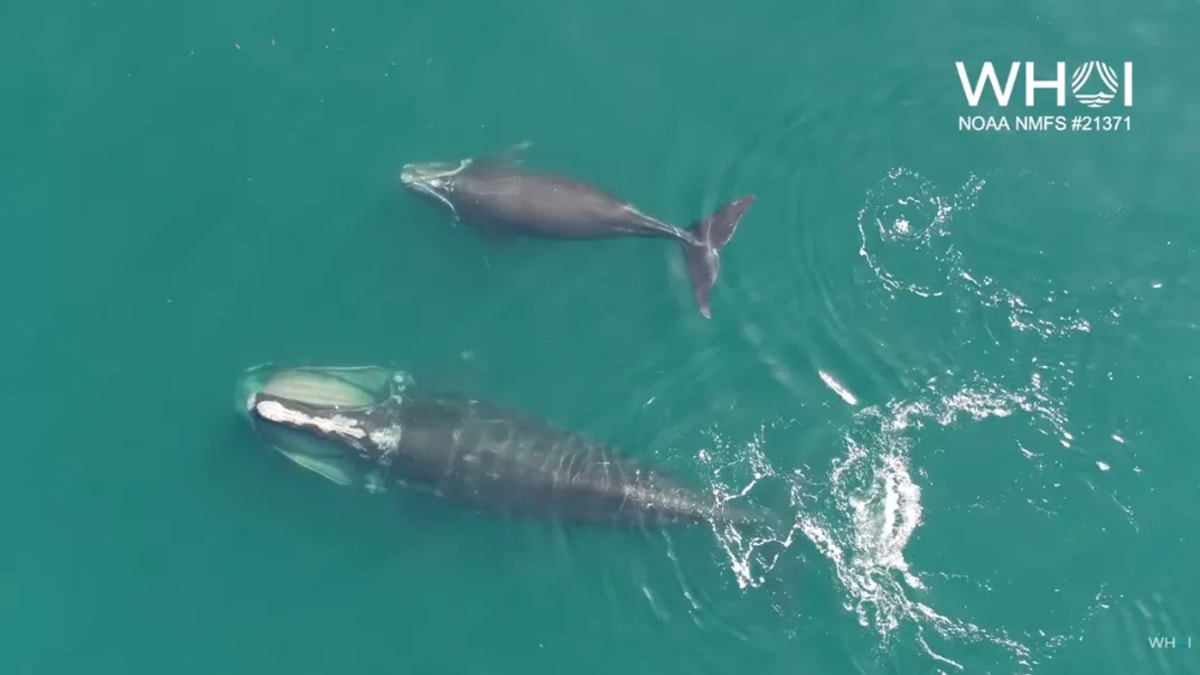
When Regina Asmutis-Silvia spotted ripples near her research boat in Massachusetts, she slowed down just in time. A North Atlantic right whale surfaced 30 feet ahead, close enough to touch.
Her careful speed gave her time to turn away. But many other boats moving faster aren't so lucky, and right whales are paying the price.
Only about 380 North Atlantic right whales remain in the wild, making them one of the planet's most endangered whale species. Vessels strike and kill an estimated 20,000 whales worldwide each year, and these gentle giants swimming along the East Coast face constant danger from shipping traffic.
Since 2008, the National Oceanic and Atmospheric Administration has required ships to slow down in certain areas where whales swim with their calves. The results have been remarkable: reducing vessel speed cuts whale deaths from ship strikes by up to 90 percent.
That success comes from simple physics. Slower boats give captains more time to spot whales and steer away. The whales themselves are surprisingly hard to see, especially right whales, which lack the dorsal fin that makes other species easier to spot.
"These animals do what they want," says Asmutis-Silvia, executive director of Whale and Dolphin Conservation North America. Whales hunting for food focus intensely on their meal, not on watching for boats above.
The protections are working at a critical time. After years of decline, North Atlantic right whale populations have started growing slightly, and 2026 brought the best calving season since 2009. But scientists call this progress "fragile."
Every single whale matters to the species' survival. One female named Wart has given birth to seven calves since 1982, and her descendants account for at least 31 whales in today's tiny population. Female whales are especially vulnerable because they spend time near the surface feeding with their young.
Despite the speed limits, ships have killed at least 15 North Atlantic right whales since 2017 and seriously injured three more. Without the regulations, those numbers would be much higher.
The Bright Side
Now NOAA is exploring whether new whale detection technology could supplement the speed limits, giving ships even better tools to avoid collisions. While conservationists support developing these technologies, they emphasize that slowing down remains the most effective protection we have.
The combination of speed limits and detection tools could make shipping lanes safer for both whales and boats. Hitting an 80,000-pound animal poses serious risks to smaller vessels too.
Jessica Redfern from the New England Aquarium notes that losing even one whale, especially a female, means losing all her future calves and their descendants. "This is not a sustainable level of human-caused mortality," she says.
The species teeters on the edge, but the proven success of ship speed limits offers hope that simple solutions can help whales thrive again.
More Images
%2Fhttps%3A%2F%2Ftf-cmsv2-smithsonianmag-media.s3.amazonaws.com%2Ffiler_public%2Fcb%2F72%2Fcb726792-ecc1-446c-b20b-ce1ce610ebe3%2Fezgif-7013df4c21cb050d.jpg)
%2Fhttps%3A%2F%2Ftf-cmsv2-smithsonianmag-media.s3.amazonaws.com%2Ffiler_public%2Fcb%2F72%2Fcb726792-ecc1-446c-b20b-ce1ce610ebe3%2Fezgif-7013df4c21cb050d.jpg)
%3Afocal(1024x683%3A1025x684)%2Fhttps%3A%2F%2Ftf-cmsv2-smithsonianmag-media.s3.amazonaws.com%2Ffiler_public%2Fcb%2F72%2Fcb726792-ecc1-446c-b20b-ce1ce610ebe3%2Fezgif-7013df4c21cb050d.jpg)
Based on reporting by Smithsonian
This story was written by BrightWire based on verified news reports.
Spread the positivity!
Share this good news with someone who needs it