Simple Mineral Cuts Farm Pollution by 42%
Scientists discovered that adding manganese to soil can slash harmful greenhouse gas emissions from farms by nearly half. This breakthrough could help agriculture fight climate change while protecting water supplies.
Farmers might have a surprisingly simple weapon in the fight against agricultural pollution: a mineral already used to help crops grow.
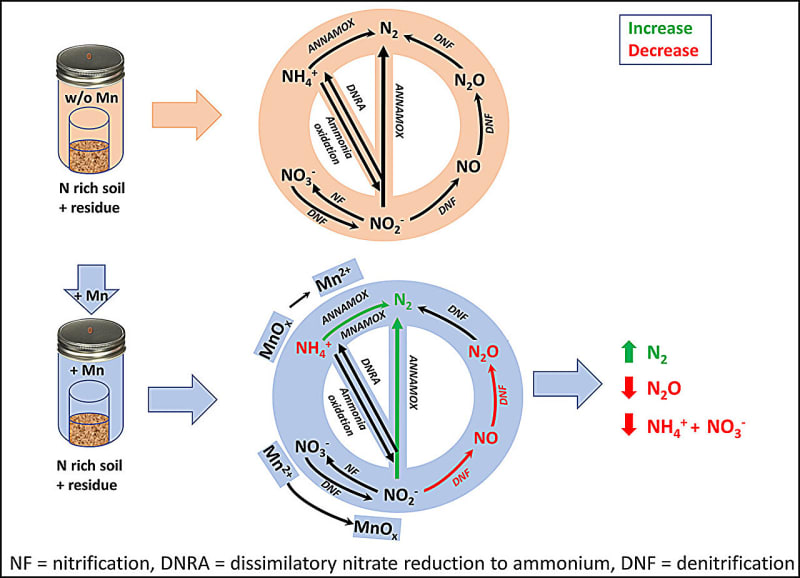
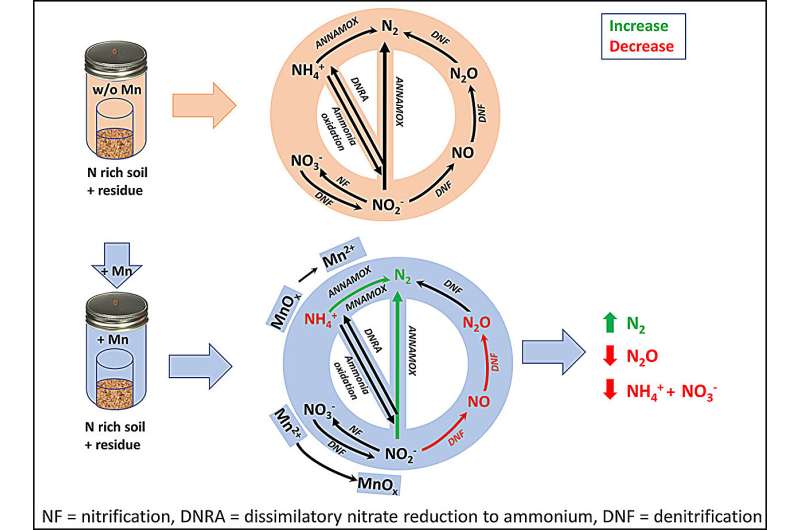
Researchers at the University of Connecticut found that adding manganese to farm soil can reduce nitrous oxide emissions by up to 42%. Nitrous oxide is a greenhouse gas 300 times more powerful than carbon dioxide, and it's released when nitrogen fertilizers break down in soil.
The discovery came from assistant professor Avishesh Neupane, who spent 51 days testing different amounts of manganese in soil samples. Some of the soil had been treated with nitrogen fertilizer for 27 years, while other samples had no nitrogen added during that time.
The results surprised even the researchers. At the highest tested level (250 milligrams per kilogram of soil), manganese reduced nitrous oxide emissions by 42%. Even at lower amounts, it still cut emissions by 32%.
But the benefits didn't stop there. The manganese also lowered nitrate levels in the soil, which means less nitrogen pollution washing into rivers and lakes. That matters because nitrogen runoff creates toxic algal blooms that kill fish and contaminate drinking water.
The Bright Side
What makes this discovery especially promising is that manganese isn't some exotic chemical. Farmers already add it to soil when crops need it, since it's an essential nutrient for plant health.
The team discovered that manganese works by reducing the expression of a gene called amoA, which normally converts ammonia into nitrate. With less of this conversion happening, there's less nitrogen available to leak into the environment as pollution.
Of course, balance is key. Too much manganese can actually harm plants, so researchers need to find the sweet spot. Neupane emphasizes this was just a laboratory study, and his collaborators at the University of Tennessee are now testing the approach in actual farm fields.
If the field experiments work as well as the lab tests, farmers could have a practical tool to reduce their environmental impact. They'd be fighting climate change and protecting water quality at the same time, all with a mineral many of them already use.
"If we do more field experiments, then maybe we can use manganese as a tool to control emissions and nitrate loss," Neupane says. Sometimes the best solutions are the ones that have been sitting right under our feet all along.
More Images



Based on reporting by Phys.org
This story was written by BrightWire based on verified news reports.
Spread the positivity!
Share this good news with someone who needs it