Singapore AI Helps Drugs Work Without Retraining Models
Scientists in Singapore just solved one of AI's biggest problems in drug discovery. Their new system lets computers predict how medicines will work, even with molecules they've never seen before.
Researchers in Singapore have cracked a puzzle that's been holding back AI-powered drug discovery for years.
For all their promise, artificial intelligence systems used to find new medicines hit a wall whenever they encounter unfamiliar molecules or proteins. They're brilliant students who freeze on test day when the questions look different from their homework. Until now, that meant researchers had to constantly retrain these systems with new data, a slow and expensive process that limited collaboration between labs.
A team from Nanyang Biologics presented their solution at the International Conference on Learning Representations in April 2026. Their Test-time Adaptation framework, called TAB, lets AI models adapt to completely new scenarios without accessing any original training data.
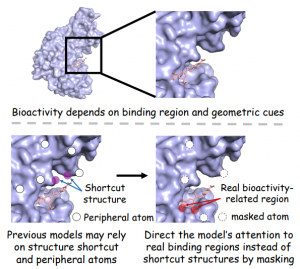
The breakthrough tackles two stubborn problems. First, TAB teaches the AI to focus on what actually matters: how a drug molecule physically fits into a specific pocket on a target protein. Think of it like teaching someone to assess whether a key fits a lock by looking at the teeth and grooves, not the decorative keychain attached to it.
Second, the system fights against false pattern recognition. AI models often latch onto coincidental features that appear frequently in training data but don't actually cause drugs to work. TAB randomly masks parts of molecular structures to force the model to focus only on the binding regions that truly determine whether a drug will be effective.
The system runs each prediction multiple times with slight variations, measuring consistency. Reliable predictions get more weight; shaky ones get sidelined. This prevents unreliable guesses from derailing the whole process.
The Ripple Effect
The real game changer is what this means for collaboration. Researchers can now deploy these predictive models across different companies and labs without sharing proprietary data, a barrier that's been slowing down drug discovery for years.
In tests across three major benchmarks, TAB improved prediction accuracy by 8.2% and ranking consistency by 5.8% compared to the best existing methods. Those numbers might sound modest, but in drug discovery, they could mean the difference between finding a life-saving treatment or missing it entirely.
The framework is already part of Vecura, an AI platform for molecular discovery operated by Nanyang Biologics, with a provisional patent filed. What started as an academic research project is now moving into real-world pharmaceutical development.
Finding new medicines just got a little faster, a little smarter, and a lot more collaborative.
Based on reporting by Google News - Breakthrough Discovery
This story was written by BrightWire based on verified news reports.
Building Something New? Try the BrightWire Tech Stack Advisor
Compare modern frameworks, cloud hosting, and AI tools tailored to your project budget and scale.
Spread the positivity!
Share this good news with someone who needs it