Singapore Builds Childcare Centre With 3D Printer in 2 Days
A 3D printer just built the exterior walls of Singapore's first printed childcare centre in two days, slashing construction time by more than half. The breakthrough technology could transform how buildings go up, making construction faster, safer, and quieter.
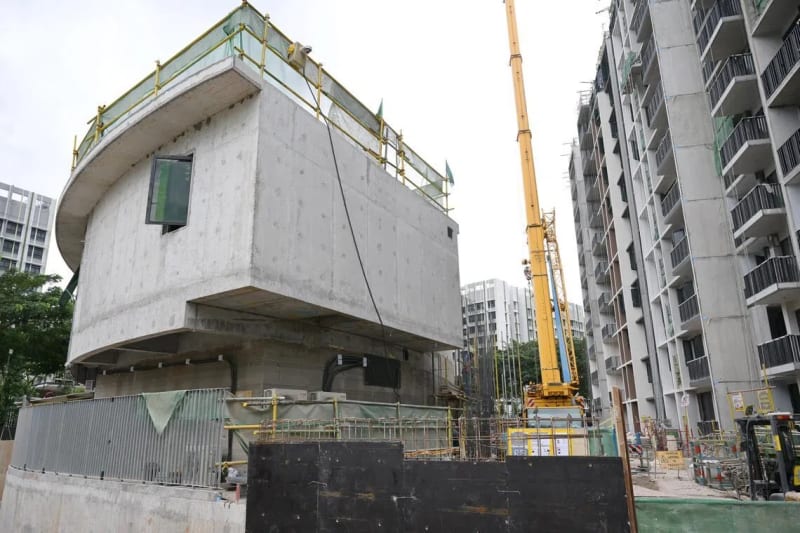
A massive 3D printer is changing construction in Singapore, and it just built the walls of a childcare centre in 48 hours.
The first floor of the two-storey building in Woodlands required just 170 worker hours and a team of six people. Traditional construction would have needed 11 workers and nearly 400 hours to achieve the same result.
The breakthrough came from researchers at the National University of Singapore working with construction firm Woh Hup. They developed a concrete mixture strong enough to meet Singapore's strict building safety standards while flowing smoothly through a printer nozzle.
The printer itself stands up to 5 meters tall with a 10-meter arm that glides along tracks. It hums quietly as it works, layer by layer, creating even curved walls without the wooden or metal molds that traditional construction requires.
Senior lecturer Du Hongjian explains that those molds cost thousands of dollars, take a day to set up, and need two more days after pouring concrete before removal. The printer skips all of that, pumping out precise walls while workers monitor sensors tracking concrete quality.
The Ripple Effect
This technology could reshape construction across Singapore and beyond. Workers no longer need to climb dangerous heights to pour concrete, making job sites safer.
The quiet operation might allow construction to continue later into evenings without disturbing neighborhoods. Complex architectural designs that would be expensive or impossible with traditional methods become straightforward when a printer can shape any curve or angle.
The team is already printing three curved feature walls at the condominium's entrance, demonstrating designs that would require costly custom formwork using old methods.
There's an environmental angle too. While printable concrete currently uses more cement than regular concrete, producing more carbon emissions, the researchers found a solution. Replacing 60 percent of cement with recycled glass powder cuts carbon emissions in half while maintaining strength.
The glass powder also makes the concrete more resistant to damage from groundwater, extending the building's lifespan.
Similar 3D printing has created benches and pavilions in Singapore's public housing estates, but those weren't load-bearing structures. This childcare centre proves the technology can handle the real structural demands of buildings where people live and work.
The childcare centre sits in Norwood Grand, a 348-unit condominium development expected to finish in July. Soon, children will play and learn inside walls that were printed into existence, never knowing their classroom represents a construction revolution.
More Images




Based on reporting by Google News - Singapore Technology
This story was written by BrightWire based on verified news reports.
Spread the positivity!
Share this good news with someone who needs it