Singapore Builds First 3D-Printed Bridge by 2028
Singapore is constructing its first 3D-printed pedestrian bridge, cutting construction time by 75% while using half the workforce. The 10-meter bridge connecting Jurong West to Tengah town showcases how smart technology can solve labor shortages while building faster.
By 2028, pedestrians crossing the Jurong River in Singapore will walk across something nobody in the country has experienced before: a bridge printed layer by layer by robotic arms.
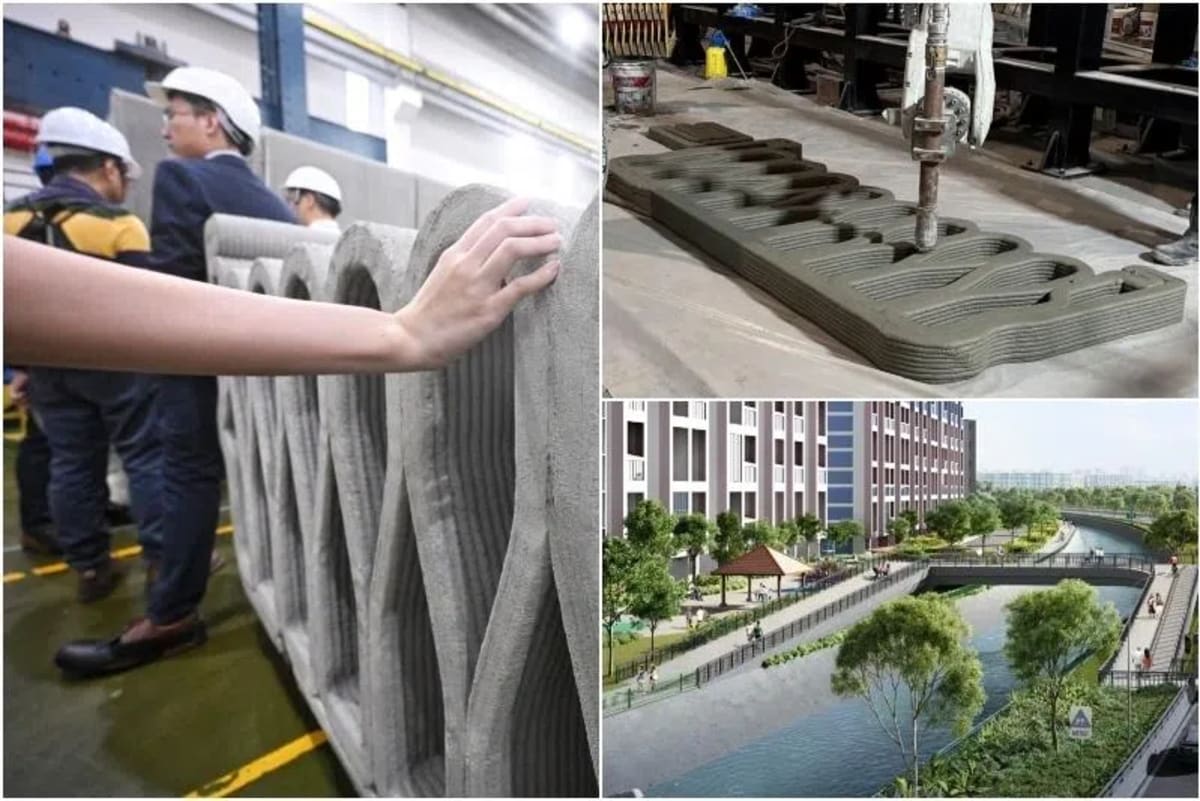
The Land Transport Authority is building Singapore's first 3D-printed concrete pedestrian bridge near Block 410 Jurong West Street 42. The 10-meter-long, 5-meter-wide structure will connect residents in Jurong West to the growing Tengah town, where new housing developments are rising.
The technology solves a real problem. Singapore faces ongoing labor constraints in construction, and this innovation cuts the workforce needed by half while slashing production time dramatically.
What once took up to a full day now takes just four hours. Robotic arms squeeze a specially designed concrete mix through a nozzle, building the bridge segment by segment, layer by layer.
The engineering challenge goes deeper than just printing concrete. The material must flow smoothly during printing, hold its shape immediately after, but not harden too quickly or risk cracking.
Getting that balance right took serious research. LTA partnered with the Singapore Centre for 3D Printing at Nanyang Technological University, engineering consultancy Witteveen+Bos, and construction firm CES_Innovfab for the $1.4 million development project that started in January 2023.
Testing the concept required precision. At the DNV Technology Centre laboratory near Joo Koon, engineers built a smaller model and loaded it with 18 tanks of water, each weighing one metric tonne, to ensure the structure could handle real-world use.
The final bridge will consist of 10 concrete segments threaded together with steel cables running the entire length. Construction will align with the completion of connecting roads and footpaths to Tengah town.
The Ripple Effect
This bridge represents more than a river crossing. Singapore has already used 3D printing to build exterior walls for a Woodlands childcare center in just two days and to create assistive devices like prosthetic hands for people with disabilities.
Deputy director Allan Yeo acknowledges that 3D concrete printing remains an emerging technology. This project serves as a pilot to assess whether the approach works for future infrastructure.
The location was chosen carefully. This stretch of Jurong River is narrower and has fewer structural complications than other sites, making it manageable for a first attempt.
While no other bridge locations have been identified yet, the technology's potential extends far beyond this single crossing. If successful, this could transform how Singapore builds infrastructure in an era of labor shortages.
Innovation meets necessity when countries face real constraints, and Singapore is turning that challenge into an opportunity to build smarter, faster, and with fewer workers.
More Images

Based on reporting by Google News - Singapore Technology
This story was written by BrightWire based on verified news reports.
Spread the positivity!
Share this good news with someone who needs it