Singapore Launches AI Satellites to Process Data in Orbit
Singapore is sending three new satellites into space that can think for themselves, processing images and making decisions without beaming everything back to Earth first. The breakthrough technology could transform how we monitor our planet from above.
Satellites are about to get a lot smarter, and Singapore is leading the charge into orbit.
Nanyang Technological University is launching three groundbreaking space projects that will test artificial intelligence, advanced propulsion systems, and high-resolution cameras directly in space. The first satellite will carry AI capable of analyzing images on board, making quick decisions without waiting for commands from Earth.
The innovation solves a massive problem. Right now, satellites capture enormous amounts of data and must transmit it all back home for processing. That takes time, bandwidth, and energy. The new AI-powered nanosatellite, built by local firm Satoro Space, will do the heavy lifting in orbit.
The tiny spacecraft measures just 30 by 10 by 10 centimeters, about the size of a shoebox. But it packs serious technology, including next-generation solar panels made from lightweight perovskite materials developed by NTU scientists and local startup Singfilm.
The second satellite addresses another space challenge: movement. At 30 kilograms, it will test a unique propulsion system developed by NTU spin-off company Aliena that uses electrically charged gas to maneuver in orbit. As thousands more satellites crowd low Earth orbit, the ability to dodge debris and adjust positions becomes critical for safety and sustainability.
The spacecraft will also carry an Atomic Oxygen Detector to study how materials hold up against the corrosive gas found in very low Earth orbit. Understanding durability could help future satellites last longer in harsh conditions.
The third project sends a Singapore-designed camera to the International Space Station. The LEOCAM imaging system uses a triple-mirror setup to capture high-resolution Earth images, spotting objects as small as one meter wide. LightHaus Photonics becomes the first Singaporean company to build a space-based optical system.
Why This Inspires
These projects represent more than technical achievements. They show how smaller nations can punch above their weight in space innovation by focusing on smart, agile solutions rather than massive budgets.
The Space Access Program, which funds these missions, gives local researchers and companies affordable ways to test their ideas in orbit. Annual launches planned for 2026, 2027, and 2028 will accelerate the journey from laboratory to space.
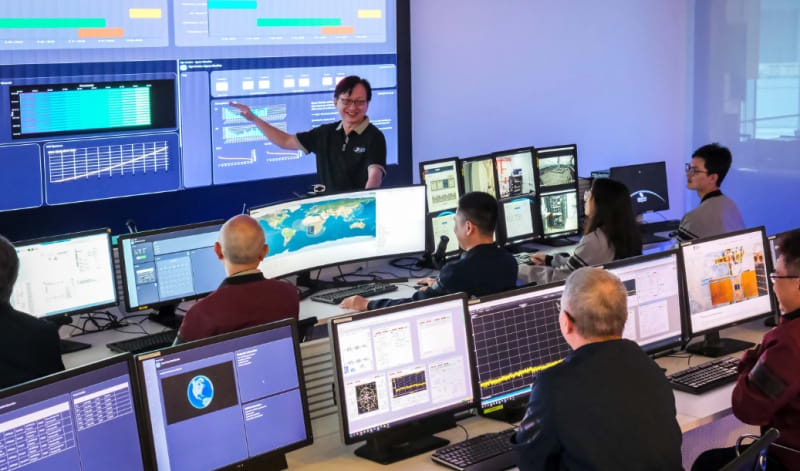
Professor Warren Chan, dean of NTU's College of Engineering, emphasized that developing AI in orbit gives Singapore a strategic advantage. Quick decision-making in space opens doors for applications from disaster response to climate monitoring, all without the delays of traditional satellite operations.
The projects also highlight growing collaboration between universities and private companies. Aliena, Satoro Space, Singfilm, and LightHaus Photonics are all working alongside academic researchers to build Singapore's commercial space ecosystem.
With over two decades of satellite experience, NTU has proven it can develop and deploy space technology rapidly and cost-effectively. These three projects continue that tradition while pushing boundaries into artificial intelligence and autonomous operations.
Singapore's space sector is looking up, and the view from orbit is about to get much clearer.
Based on reporting by Google News - Singapore Technology
This story was written by BrightWire based on verified news reports.
Spread the positivity!
Share this good news with someone who needs it