Singapore Launches AI Supercomputer for Climate Research
Singapore just unveiled a supercomputer as powerful as 120,000 laptops to help scientists tackle climate change, improve healthcare, and advance artificial intelligence. The system will support over 9,000 researchers working on solutions that could save lives and protect the planet.
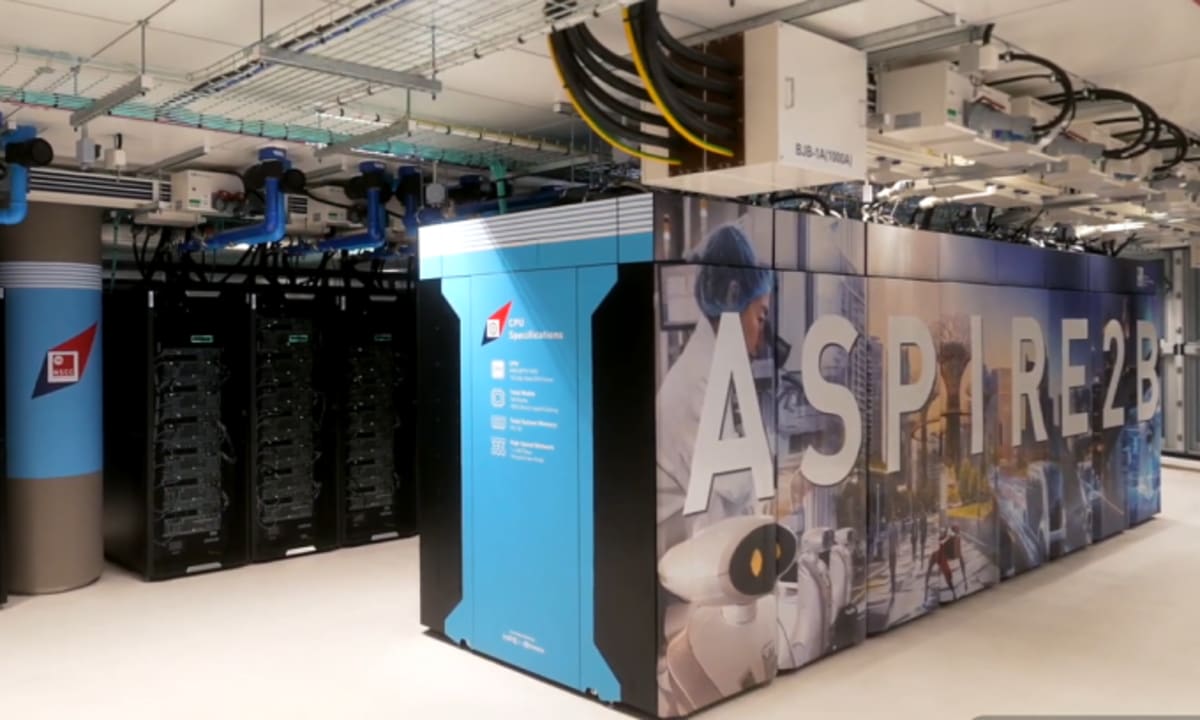
Singapore just gave its scientists a game-changing tool to solve some of humanity's biggest challenges. The island nation unveiled Aspire 2B, a supercomputer with the computing power of 120,000 high-end laptops, designed to accelerate breakthroughs in climate science, healthcare, and artificial intelligence.
Launched Monday at Nanyang Technological University, the system packs 1,500 Nvidia H200 graphics processing units. That makes it Singapore's largest cluster of advanced AI chips and gives it four times the power of its predecessor systems combined.
More than 9,000 researchers from universities, research institutes, and government agencies will now have access to this computational powerhouse. The increased capacity means they can build larger AI models and run experiments that once took weeks in just days.
The real-world applications are already taking shape. Scientists will use Aspire 2B to develop advanced climate models that blend AI with physics-based simulations, creating more accurate predictions about extreme weather events.
Minister for Digital Development and Information Josephine Teo highlighted one critical use case: better forecasting for intense rainfall and rising sea levels. "This can help us anticipate intense rainfall and rising seas earlier, and plan our whole urban development and coastal defenses around them," she explained.
The system also enables researchers to train AI models that were previously too large to develop within Singapore's borders. That means local scientists can now compete at the global frontier of AI research without relying on foreign computing resources.
The Ripple Effect
Singapore's investment in computational infrastructure represents more than just technological advancement for one nation. When scientists gain access to powerful tools like Aspire 2B, their discoveries can benefit people worldwide.
Climate models developed in Singapore could help coastal cities from Miami to Manila better prepare for flooding. Healthcare AI trained on this system might lead to faster drug discovery or more accurate disease diagnosis everywhere.
By making the supercomputer available to thousands of researchers rather than limiting it to elite institutions, Singapore is democratizing access to cutting-edge technology. Graduate students working on climate solutions now have the same computational muscle as established research teams.
The timing couldn't be better. As climate change accelerates and AI capabilities expand, having the computing power to model complex systems and test solutions quickly becomes essential infrastructure, not luxury.
Singapore's approach also shows how smaller nations can punch above their weight in scientific research through strategic investments in shared resources that multiply the impact of every researcher.
This supercomputer will help scientists answer questions faster and tackle problems that seemed impossibly complex just years ago.
Based on reporting by Google News - Singapore Technology
This story was written by BrightWire based on verified news reports.
Spread the positivity!
Share this good news with someone who needs it