Singapore Tests Next-Gen Solar Cells in Space
Singapore just launched satellite technology that could make space missions lighter, smarter, and more powerful. The breakthrough involves ultra-thin solar panels and onboard AI that processes images in orbit.
Singapore is betting on two game-changing technologies that could reshape how satellites power themselves and process information, and researchers just sent both into orbit aboard a tiny satellite.
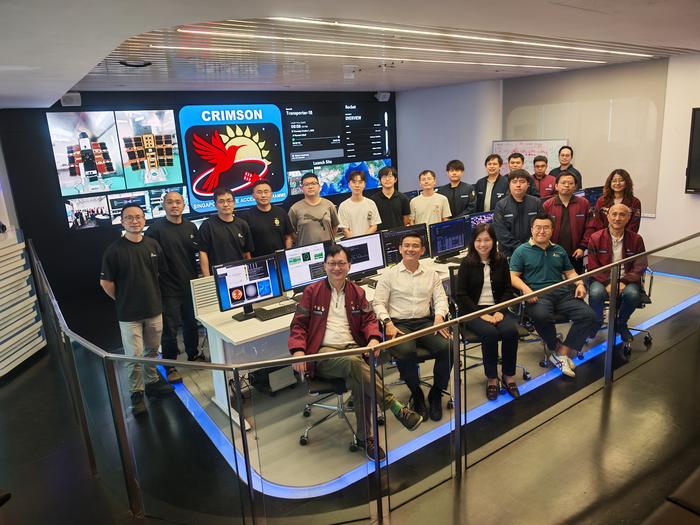
On October 1, Nanyang Technological University launched CRIMSON-1, its 14th satellite, carrying experimental perovskite solar cells and an edge AI computing system. The SpaceX Falcon 9 rocket lifted off from California carrying what could become the future of space technology.
The perovskite solar cells represent a major shift from conventional solar panels. These next-generation cells can generate electricity using materials that are dramatically thinner and lighter than traditional panels, which matters enormously in space where every kilogram adds thousands of dollars to launch costs.
NTU researchers and Singfilm Solar, a startup spun off from the National University of Singapore, developed the cells over more than a decade of laboratory work. But surviving a rocket launch and the brutal conditions of space requires proving the technology beyond Earth's atmosphere.
CRIMSON-1 will test whether these lightweight cells can endure extreme temperature swings, radiation bombardment, and the vacuum of space while still producing reliable power. The satellite carries the first Singapore-made solar module ever deployed in orbit, built on ultrathin glass that flexes without breaking.
The second experiment tackles a different challenge: the flood of data satellites collect but struggle to transmit back to Earth. Current satellites often capture far more images than they can send through limited communication bandwidth, creating bottlenecks that delay useful information.
The onboard AI system will process satellite images directly in orbit, analyzing what matters before transmitting only the essential data home. Researchers will monitor how the system handles heat and power consumption under heavy workloads in the harsh space environment.
Singapore's National Space Agency is backing this work through its Space Technology Development Programme, committing $210 million since 2022 to strengthen national capabilities. Chief Executive Ngiam Le Na explained that missions like CRIMSON-1 help Singapore technologies establish "flight heritage," the proven track record that commercial customers demand before adoption.
The Ripple Effect
The implications stretch far beyond one satellite. If perovskite cells prove durable in space, they could power more capable satellites without adding weight, potentially supporting ambitious projects like space-based AI data centers that process massive amounts of information in orbit.
Edge AI processing could accelerate disaster response by identifying floods or earthquakes in real-time, improve climate monitoring by flagging environmental changes immediately, and enhance everything from agriculture to urban planning. NTU's Earth Observatory already uses satellite data for rapid earthquake mapping and monitoring land subsidence, applications that would benefit enormously from faster onboard analysis.
Together, these technologies could enable a new generation of satellites that are lighter to launch, more powerful in operation, and smarter about what information they send home.
The data from CRIMSON-1 will help researchers understand whether laboratory breakthroughs can survive the reality of space, one orbit at a time.
More Images


Based on reporting by Google News - Singapore Technology
This story was written by BrightWire based on verified news reports.
Building Something New? Try the BrightWire Tech Stack Advisor
Compare modern frameworks, cloud hosting, and AI tools tailored to your project budget and scale.
Spread the positivity!
Share this good news with someone who needs it

