Six Moons Hide Oceans Under Ice, More Likely Waiting
Scientists have confirmed at least six moons in our solar system contain vast oceans of liquid water beneath frozen surfaces, with more discoveries likely ahead. These hidden oceans, kept liquid by tidal forces and radioactive heat, could harbor conditions for life far beyond Earth.
Our solar system's most promising places to find life might be hiding beneath thick shells of ice, far from the Sun's warmth.
At least six moons orbiting Jupiter and Saturn now show strong evidence of liquid water oceans trapped beneath their frozen surfaces. Europa, Ganymede, Callisto, Enceladus, Titan, and the surprising newcomer Mimas all appear to harbor water kept liquid by tidal flexing from their giant planets and heat from radioactive decay.
None of these oceans has been photographed directly. Instead, scientists piece together evidence from magnetic fields, gravity measurements, surface fractures, and in one spectacular case, geysers shooting ocean samples into space.
Enceladus provides the most exciting proof. NASA's Cassini spacecraft flew through plumes erupting from cracks near the moon's south pole and detected salty water, organic compounds, and even phosphates, a key ingredient for life as we know it.
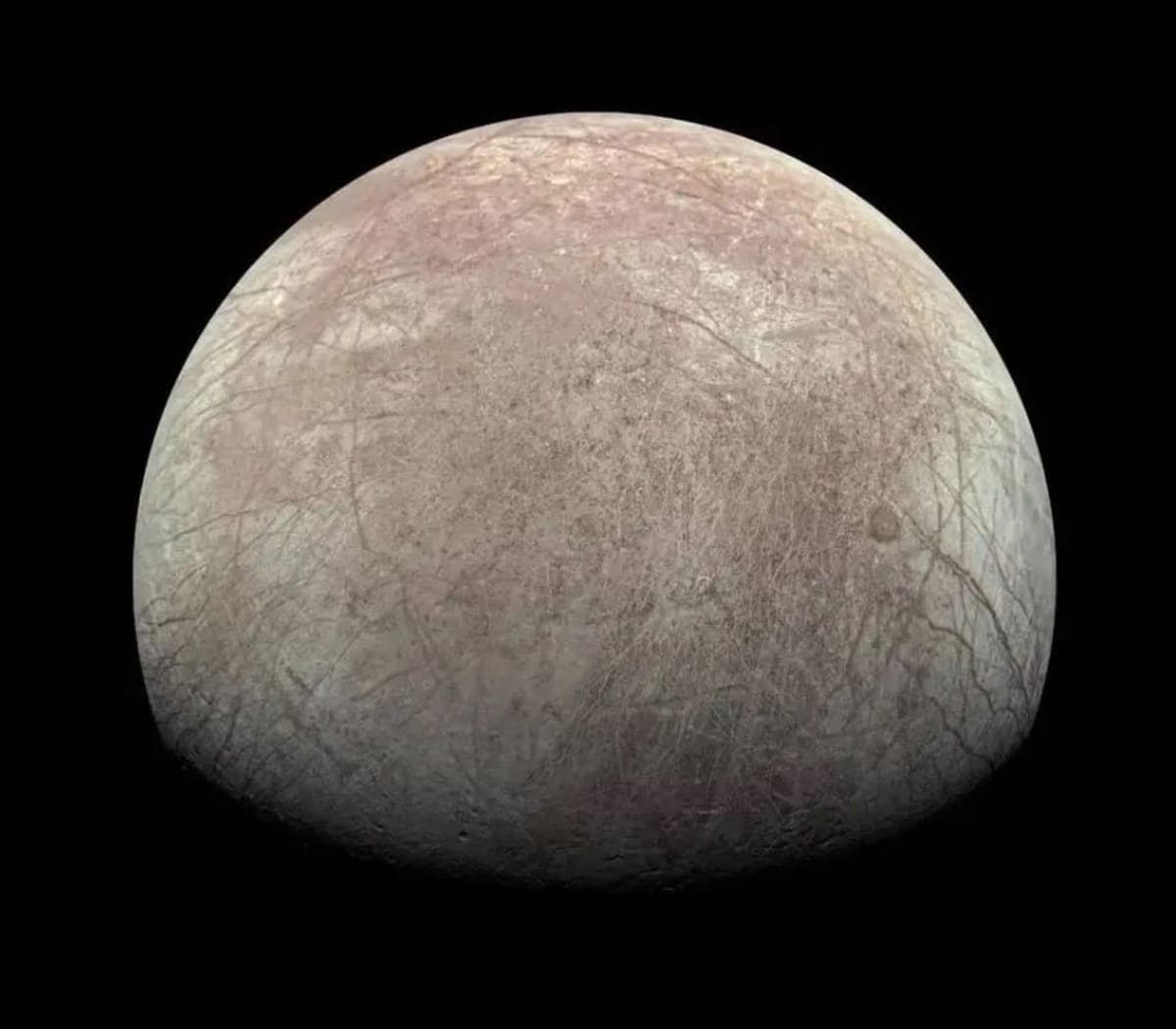
Europa remains the most famous ocean moon. Its young, fractured surface and strong magnetic signals point to a saltwater ocean beneath the ice that may hold twice as much water as all of Earth's oceans combined. NASA's Europa Clipper mission, launched in 2024, will investigate whether this ocean touches a rocky seafloor where chemical reactions could support life.
The latest addition shocked researchers. Mimas looks dead from the outside, covered in ancient craters with no obvious signs of activity. But a 2024 analysis of its orbit and rotation revealed a global ocean just 20 to 30 kilometers beneath the surface, probably formed less than 25 million years ago.
This discovery suggests other seemingly inactive moons could be hiding oceans too. Neptune's moon Triton and several of Uranus's large moons have moved higher on the candidate list as scientists reanalyze old data with improved models.
The Ripple Effect
The growing list of ocean worlds transforms our understanding of where life might exist. Water no longer seems like Earth's unique gift but rather a common feature of the outer solar system.
These discoveries also reshape the search for life beyond our planet. Instead of focusing only on Mars or distant Earth-like exoplanets, astrobiologists now see potentially habitable environments orbiting giant planets throughout our own cosmic neighborhood.
Future missions will target these hidden oceans directly. The European Space Agency's JUICE spacecraft, already on its way to Jupiter, will study Ganymede, Europa, and Callisto up close. NASA's Dragonfly mission will send a drone to explore Titan's surface and subsurface ocean in the 2030s.
The ocean worlds of our solar system are no longer science fiction but real targets for exploration, each one a chance to answer humanity's oldest question about our place in the universe.
More Images


Based on reporting by Google News - Science
This story was written by BrightWire based on verified news reports.
Spread the positivity!
Share this good news with someone who needs it