Six Planets Align This Weekend in Rare Night Sky Show
Jupiter, Saturn, Venus, Mercury, Neptune and Uranus will parade across the sky together this weekend in a celestial event that won't happen again until 2040. Four of them will be visible without any special equipment.
Look up this weekend and you'll witness something that won't happen again for another 16 years: six planets lining up in a cosmic parade across the night sky.
Jupiter, Saturn, Venus, Mercury, Neptune and Uranus will all appear together from February 28 through early March, creating a curved line of planets that stretches across the sky. Venus will shine brightest, easily visible to anyone who steps outside, while Jupiter will glow prominently in the southeastern sky.
The best part? You don't need expensive equipment to see most of them. Four planets will be visible to the naked eye, though binoculars or a telescope will help you spot Neptune and Uranus.
Dr. Megan Argo from the University of Lancashire explains that this alignment happens because the planets' orbits have brought them into the same area of sky from our perspective on Earth. Since each planet circles the sun at different speeds, they're constantly shifting position against the stars.
While spotting four or five planets together happens fairly often, seeing six is much rarer. All seven planets were visible together last year, but after this weekend's show, the next full lineup won't occur until 2040.
NASA celebrated the event by releasing new sonifications, turning astronomical data from Jupiter, Saturn and Uranus into sound so people can literally hear what the planets would sound like.
Why This Inspires
This planetary parade reminds us that we're part of something much bigger than ourselves. No matter where you are on Earth, the same planets are putting on a show for everyone under the same sky.
The event connects people across continents, from families in the UK to stargazers in Australia, all looking up together at the same natural wonder. It's a moment when busy lives pause and we remember to appreciate the universe we call home.
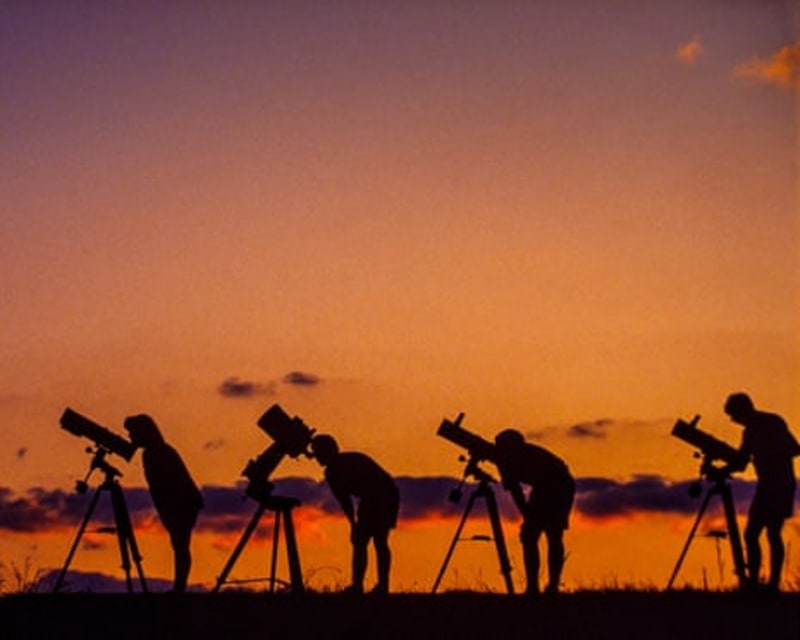
To catch the show, head outside around 5:45pm if you're in the UK or 6pm in the US. Find a spot with a clear view to the west, preferably on a hill with an unobstructed horizon.
In the northern hemisphere, Jupiter will appear high in the southeast while Mercury, Saturn, Neptune and Venus cluster near the western horizon. Venus will be the brightest, with fainter Mercury to its right and Saturn and Neptune sitting above them. Uranus will glow faintly below the Seven Sisters star cluster.
Southern hemisphere viewers will see a similar but reversed pattern, with Jupiter appearing in the north. Australian stargazers should head out after 6:45pm local time, though Mercury might be too close to the horizon to spot.
Dr. Ed Bloomer from the Royal Observatory Greenwich notes that stargazing apps can help locate the fainter planets. As a bonus, the moon joins the parade over the next few days, adding even more of our solar system to the spectacular view.
This weekend offers a rare chance to see our cosmic neighborhood all at once, a gentle reminder that wonder is always just overhead.
More Images

Based on reporting by Google News - Science
This story was written by BrightWire based on verified news reports.
Spread the positivity!
Share this good news with someone who needs it