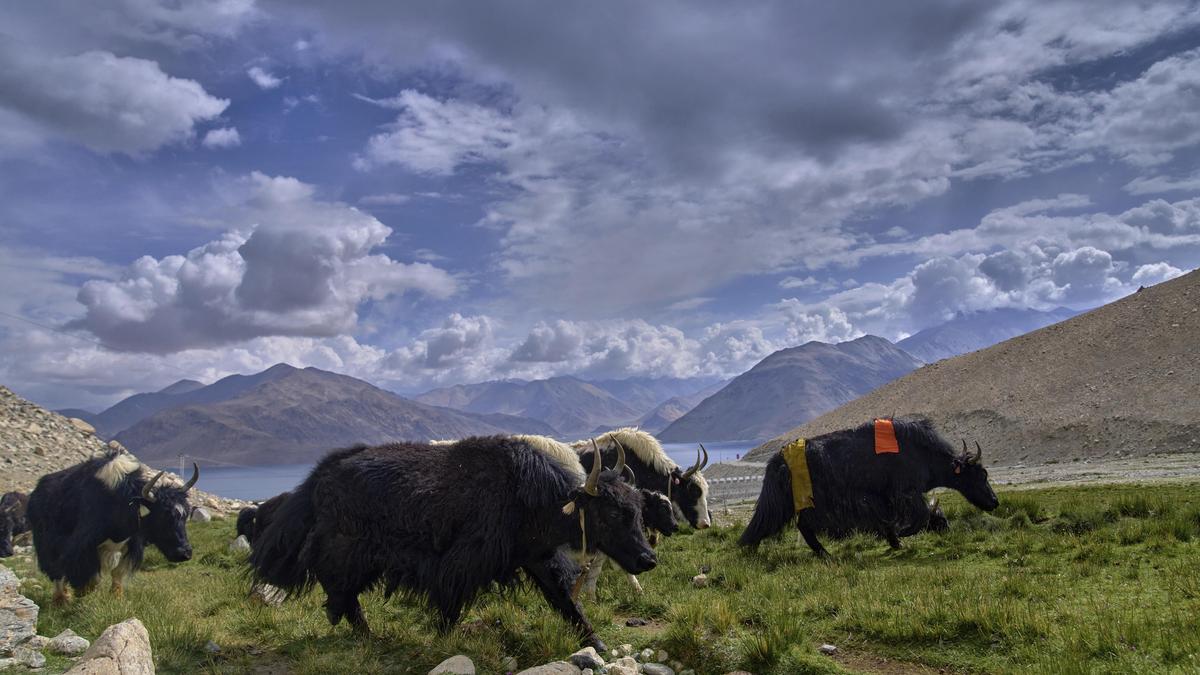
Smart Collars Help Yak Farmers Track Herds in Himalayas
Scientists in India created GPS-enabled collars that monitor yak health and location in remote mountain regions. The technology helps farmers protect their animals and livelihood across challenging high-altitude terrain.
Farmers in the Himalayas just got a high-tech helper for one of their toughest jobs: keeping track of yaks wandering across vast mountain ranges at 8,000 feet and higher.
Scientists at India's National Research Centre on Yak developed smart collars that use GPS and health sensors to monitor these hardy animals in real time. The device alerts farmers when their yaks wander too far, cross into restricted border areas, or show early signs of illness or stress.
For communities across Ladakh, Arunachal Pradesh, and other Himalayan states, yaks are everything. Known as the "ship of the Himalayas," these animals provide meat, milk, and transportation in regions where few other livestock can survive. India's 58,000 yaks are the backbone of mountain economies, with nearly half living in Ladakh alone.
But managing herds across rugged, remote terrain has always been an uphill battle. Yaks graze over enormous distances, sometimes wandering near international borders where access is restricted. When an animal gets sick or injured in these hard-to-reach areas, farmers often discover the problem too late.
The new collar system creates a virtual fence around grazing areas and tracks each animal's location and vital signs. Director Mihir Sarkar and his team at the Dirang research center partnered with scientists from Assam Don Bosco University to build the device using Internet of Things technology, which lets sensors collect and share data automatically without constant human monitoring.
Farmers receive alerts on their phones when a yak crosses the virtual boundary or when the collar detects health changes that might signal illness or injury. This early warning system means veterinarians can intervene faster, potentially saving animals that represent a family's entire livelihood.
The Ripple Effect
The technology does more than protect individual animals. By helping farmers manage their herds more efficiently, the system strengthens food security and economic stability for entire mountain communities that have few alternative sources of income.
The collars also address a unique security concern. When yaks wander near international borders in sensitive areas, farmers struggle to retrieve them from restricted zones. Real-time location tracking helps prevent these situations before they become problems.
For yak herders working in some of Earth's most challenging environments, this smart collar transforms an ancient way of life with 21st-century tools, making their essential work safer and more sustainable.
Based on reporting by The Hindu
This story was written by BrightWire based on verified news reports.
Spread the positivity!
Share this good news with someone who needs it