Smart Windows Use Sodium to Cut Cooling Costs by 2030
Scientists just solved the puzzle of making affordable smart windows that block heat without expensive materials. This breakthrough could slash your air conditioning bills within five years.
Your windows might soon help pay your electricity bill, thanks to a clever discovery that swaps expensive materials for common salt ingredients.
Researchers at Seoul National University cracked a problem that's stumped scientists for years. They figured out how to make "smart windows" that automatically block heat using sodium instead of pricey lithium. The difference matters because sodium costs far less and exists abundantly everywhere on Earth.
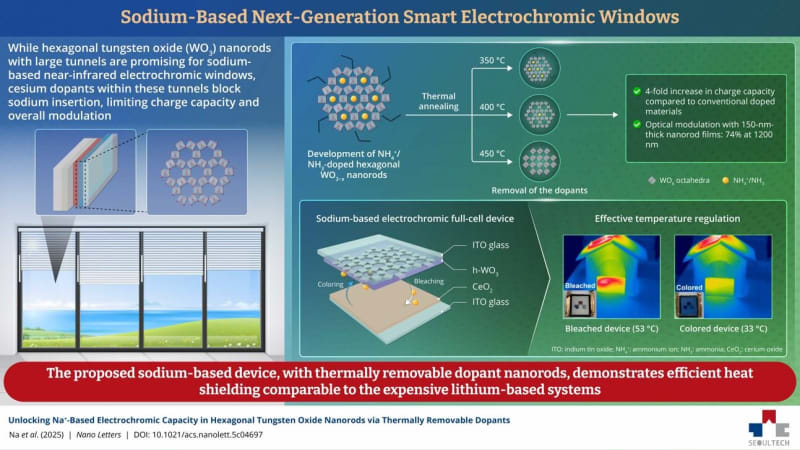
These special windows work like sunglasses for your home. When temperatures rise, a tiny electric current makes them darken and block the invisible infrared rays that carry heat from sunlight. The windows stay clear for visible light, so rooms don't feel dark or gloomy.
Dr. Sungyeon Heo and his team discovered the trick was removing temporary scaffolding materials with simple heat treatment. This opened up tiny tunnels inside tungsten oxide nanorods, letting larger sodium ions slip through just as easily as lithium. The result? Heat blocking performance that matches expensive systems at a fraction of the cost.
The windows work with films just 150 nanometers thin. That's about 500 times thinner than a human hair, yet powerful enough to significantly reduce indoor temperatures.
The Ripple Effect
This technology adapts to different climates and seasons. In scorching regions like the Middle East, the windows can stay permanently darkened to fight relentless heat. In places with four seasons, they adjust automatically throughout the year, blocking summer heat but welcoming winter warmth.
The energy savings add up fast. Buildings account for nearly 40% of global energy use, with heating and cooling eating the biggest chunk. Smart windows that regulate temperature naturally could dramatically reduce how much electricity homes and offices consume.
Manufacturing looks promising too. The entire production happens in a single reactor, making it easier to scale up. The materials come as liquids that can be coated onto glass or mixed into other building materials, opening doors beyond just windows.
Within five to ten years, these sodium-based smart windows could become standard in new construction. Early adopters might retrofit existing buildings in hot climates where the cooling savings justify the upgrade cost fastest.
The research team emphasized their focus on Earth-abundant, affordable components. By proving sodium works as well as lithium, they removed a major barrier that kept smart windows too expensive for everyday buildings.
Comfort improves alongside savings. Rooms stay cooler without constant air conditioning noise and drafts, while natural light continues streaming through.
This breakthrough shows how small material tweaks can unlock big real-world benefits, turning every window into an energy-saving ally.
More Images


Based on reporting by Phys.org - Technology
This story was written by BrightWire based on verified news reports.
Spread the positivity!
Share this good news with someone who needs it