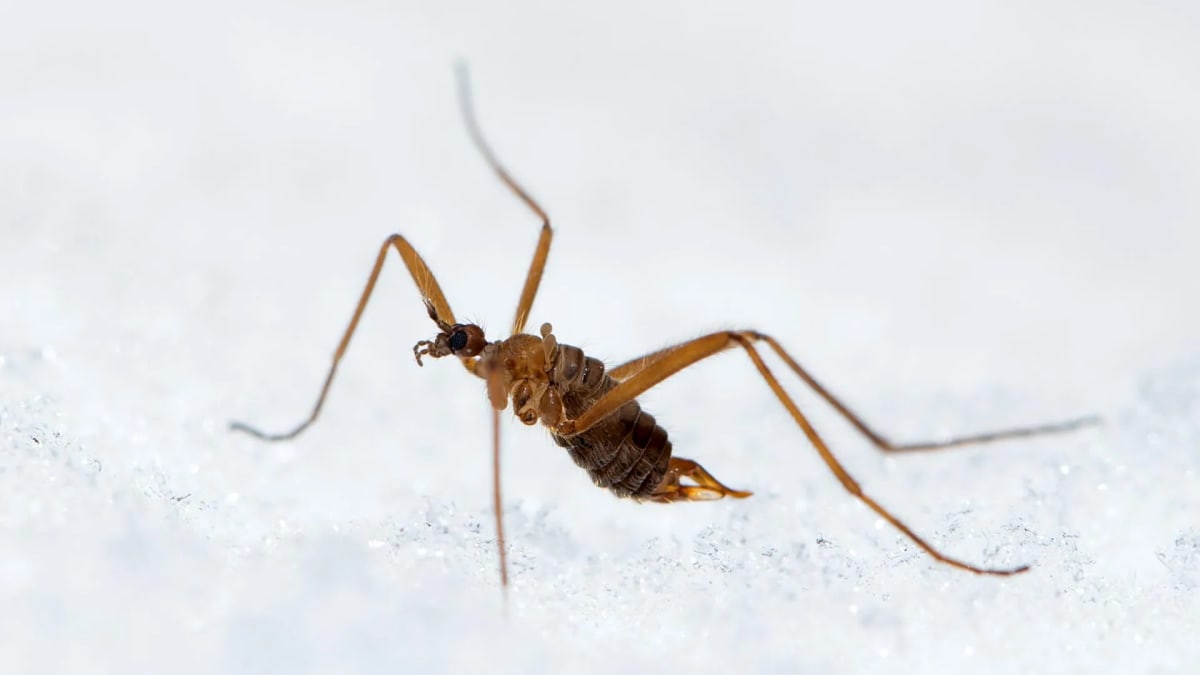
Snow Flies Make Their Own Heat to Survive Freezing Cold
Scientists discovered that tiny snow flies survive subzero temperatures by generating their own body heat and producing antifreeze proteins. This groundbreaking finding could help protect human cells and tissues from cold damage.
While most insects hide from winter's chill, snow flies thrive in conditions cold enough to freeze their relatives solid.
Researchers at Northwestern University just uncovered how these small, wingless insects survive temperatures as low as 21 degrees Fahrenheit. The answer surprised even seasoned scientists: snow flies create their own body heat like polar bears and produce antifreeze proteins like Arctic fish.
Most insects are cold-blooded, meaning they rely entirely on outside temperatures to regulate their bodies. When winter arrives, they typically find shelter and go dormant until spring. Snow flies do the opposite, emerging to mate and lay eggs only when snow covers the ground.
"When it gets cold, a common strategy is to find shelter and become dormant," said Marco Gallio, who led the study. "But instead of slowing down, snow flies actually prefer freezing cold, snowy conditions."
The team became the first to sequence the snow fly genome, comparing it with related insects that can't handle cold. What they found was so unusual they initially thought they'd sequenced the wrong species. Many genes didn't match anything in existing databases.
Those mysterious genes turned out to produce antifreeze proteins that attach to ice crystals and stop them from growing. Some of these proteins are structurally similar to those found in Arctic fish, showing how evolution arrives at the same solutions across completely different species.
The surprises didn't stop there. The researchers also found genes associated with heat production, similar to those in brown fat that helps bears survive hibernation. To test this, they measured snow fly body temperatures while gradually lowering surrounding temperatures below freezing.
The insects consistently stayed a couple degrees warmer than expected. Unlike bees and moths that shiver to create warmth, snow flies generate heat at the cellular level without any visible shaking or movement.
To confirm the antifreeze proteins actually work, researchers modified fruit flies to produce one of the snow fly proteins. When exposed to freezing temperatures, these modified flies survived at much higher rates than normal fruit flies.
Why This Inspires
This discovery shows how life finds extraordinary ways to adapt to the harshest conditions. Snow flies don't just endure the cold or hide from it. They've evolved multiple independent strategies that work together, combining mammalian heat production with fish antifreeze chemistry.
The practical applications could be transformative. Understanding how these proteins protect cells from freezing damage might help scientists develop better ways to preserve human tissues, organs for transplant, or even crops during unexpected frosts.
Nature continues to surprise us with solutions we never imagined, reminding us that innovation often comes from the smallest, most overlooked creatures.
Based on reporting by Science Daily
This story was written by BrightWire based on verified news reports.
Spread the positivity!
Share this good news with someone who needs it