Soft Robot Arms Learn Like Humans, Adapt Instantly
Scientists created AI-powered soft robot arms that learn movements once and instantly adapt to new situations without retraining. The breakthrough brings safe, flexible robots closer to helping people with daily tasks like bathing and rehabilitation.
Imagine a robot arm that learns like you do, adapts as quickly as your own hand, and stays safe enough to help you shower or get dressed.
Researchers at the Singapore-MIT Alliance for Research and Technology just made that vision real. Their new AI control system lets soft robotic arms master a wide range of movements once, then adjust on the fly to whatever comes next.
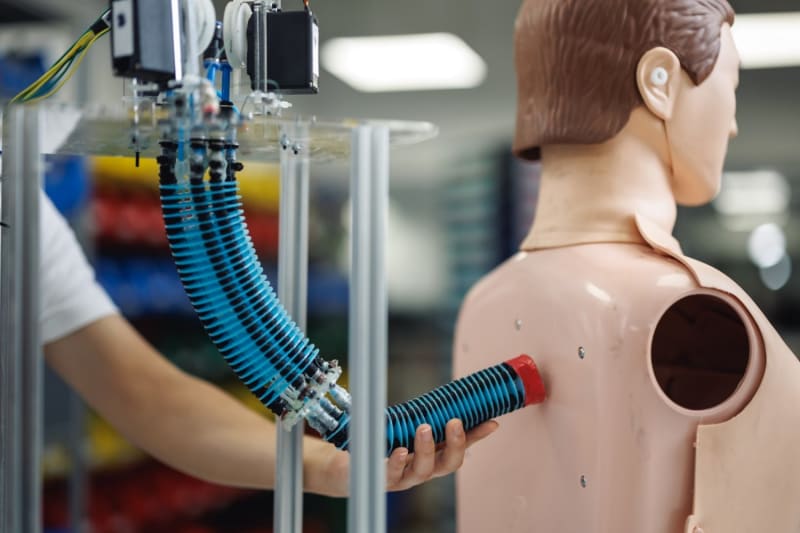
Unlike traditional robots built with rigid metal joints, these soft arms are made from flexible rubber and move using components that act like artificial muscles. That flexibility makes them perfect for delicate tasks near people, but controlling them has always been incredibly tricky because their shape changes unpredictably.
The breakthrough lies in how the system mimics the human brain. It uses two types of connections working together, just like synapses in your mind.
The first set, called structural synapses, trains offline on basic movements like bending and extending. These become the robot's foundational skills. The second set, plastic synapses, updates in real time as the robot works, fine-tuning movements to handle whatever is happening right now.
In tests, the robotic arm successfully bent into a smooth C-shape even when researchers blasted it with fans at changing speeds. It maintained 93.8 percent accuracy under the most challenging conditions. The lightweight 160-gram arm also lifted objects weighing more than half its own mass while staying precise and controlled.
The system solves three major problems that have blocked soft robots from real-world use. It transfers learned skills to new tasks, adapts instantly when conditions change, and guarantees the robot stays stable and safe throughout.
Why This Inspires
This technology opens doors for people who need it most. Soft robot arms could soon help individuals with limited mobility shower independently, support rehabilitation after injuries, or assist caregivers with physically demanding tasks.
The safety factor matters enormously. Because these arms are soft and can adapt mid-motion, they can work directly with human bodies without causing discomfort or injury. A gust of wind, a shift in weight, or unexpected movement would not throw them off course.
MIT Professor Daniela Rus, who co-led the research, points to a future where versatile soft robots operate safely alongside people in clinics, factories, and homes. The study, published in Science Advances, represents years of work across multiple Singapore and MIT research teams.
Unlike previous soft robot systems that could only do one or two things well, this controller achieves all the capabilities needed for real-world deployment. It is smart enough to learn, adaptable enough to handle surprises, and reliable enough to trust near vulnerable people.
The path from lab to living room still has steps to go, but this breakthrough removes a major barrier that has held soft robotics back for years.
Based on reporting by MIT News
This story was written by BrightWire based on verified news reports.
Spread the positivity!
Share this good news with someone who needs it