Solar & Wind Offset Gas Crisis After Hormuz Closure
Despite widespread fears of a coal comeback, global fossil fuel power generation fell in March as renewable energy filled the gap left by the Hormuz Strait closure. Clean energy added in 2024 alone now generates twice the electricity of all the LNG that used to pass through Hormuz.
The world just proved it can handle an energy crisis without returning to dirty power.
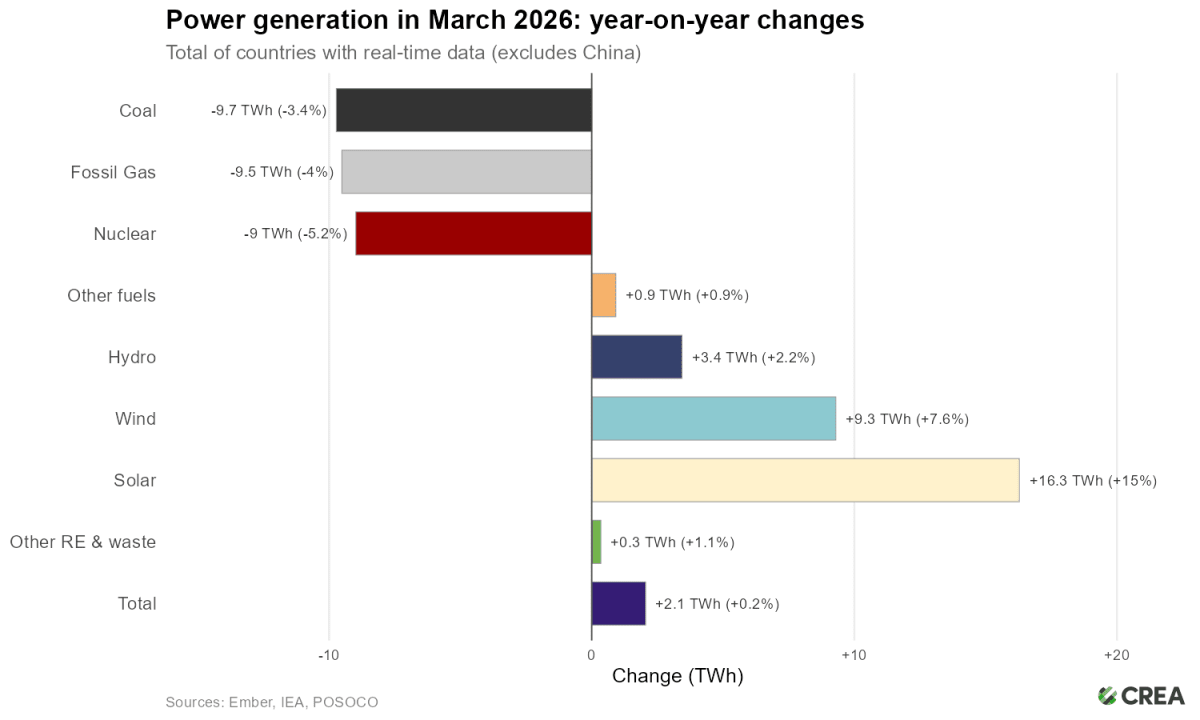
When the Strait of Hormuz closed earlier this year, cutting off 19% of global natural gas trade, experts predicted countries would rush back to coal. Instead, something remarkable happened. Global fossil fuel power generation fell 1% in March, with gas dropping 4% and coal staying flat.
Solar and wind energy stepped up to fill the gap. Outside China, solar generation jumped 14% and wind rose 8% compared to last year. That growth more than compensated for the lost gas supply.
The numbers tell an even more impressive story. The renewable capacity added in 2024 alone generates around 1,100 terawatt hours of electricity per year. That's double the output of all the liquefied natural gas that previously flowed through Hormuz before the crisis, which would have produced about 590 terawatt hours.
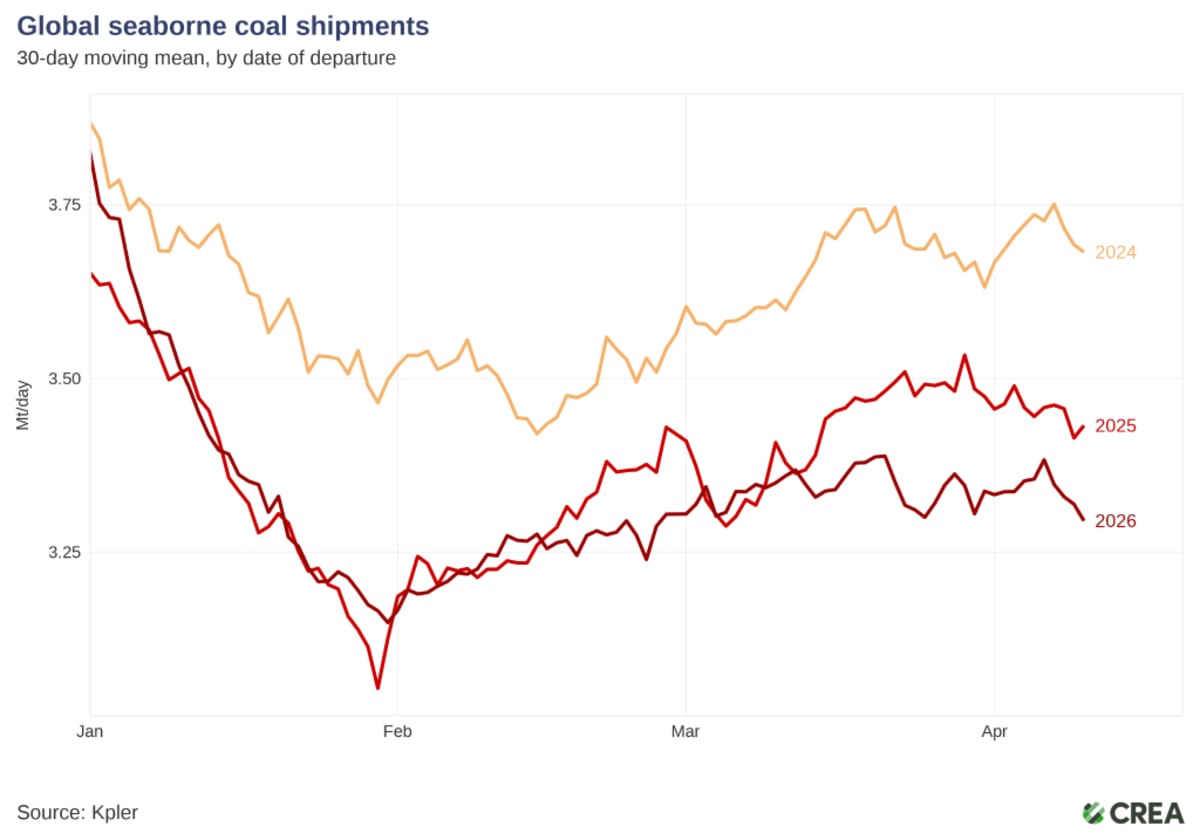
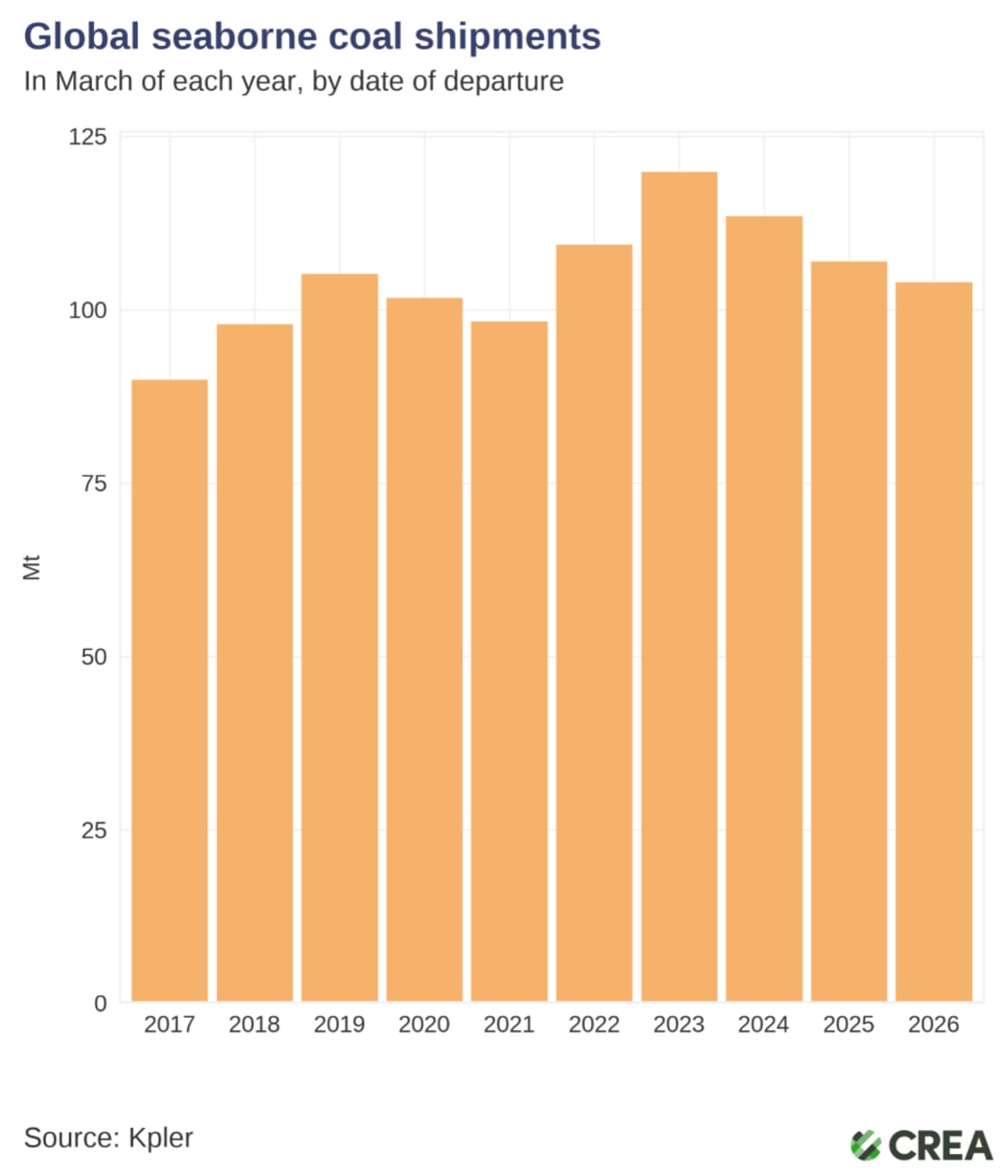
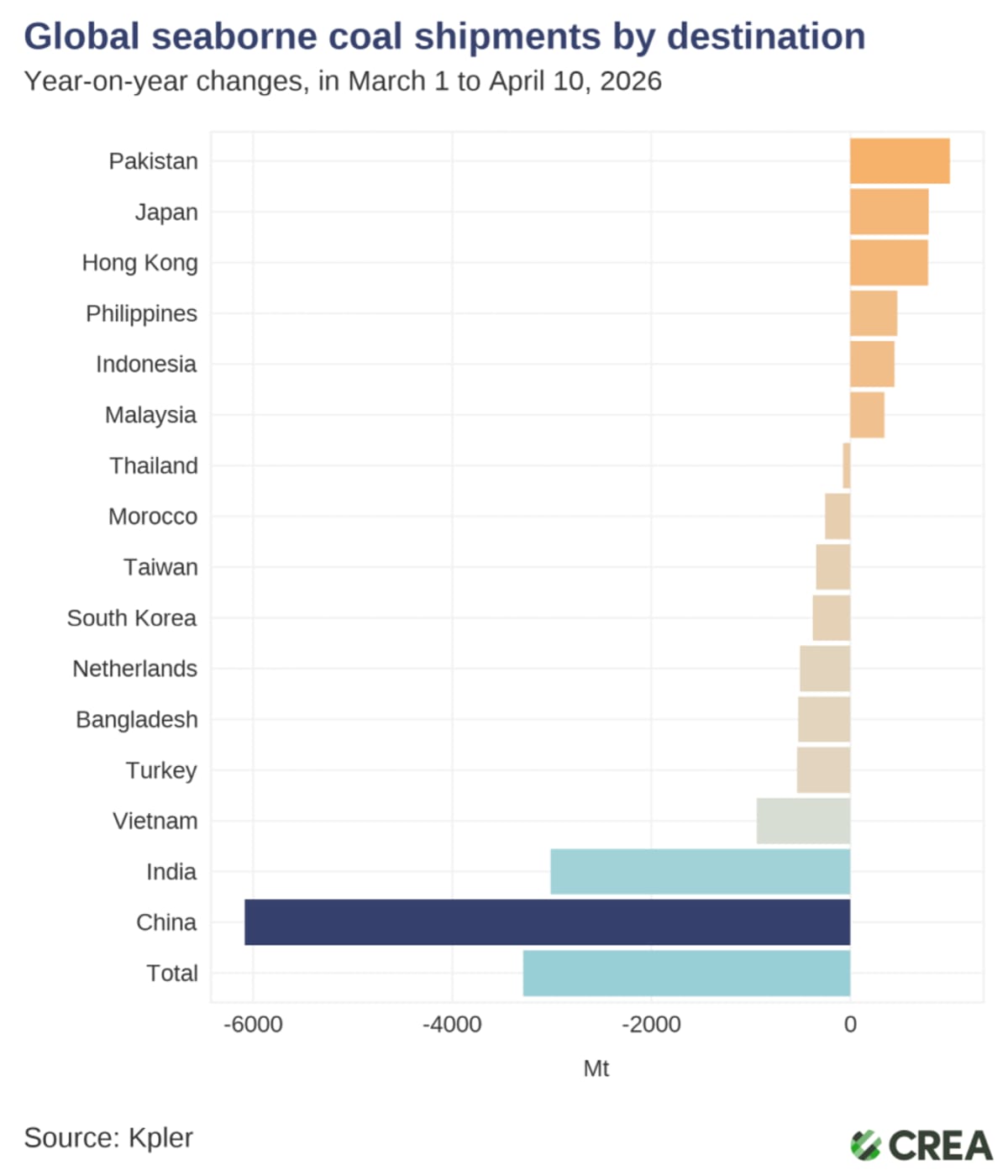
Coal power actually decreased in major markets including the United States, India, the European Union, Turkey, and South Africa. Seaborne coal shipments fell 3% to their lowest levels since 2021. No country brought retired coal plants back online or delayed shutdowns in March.
China saw a modest 2% increase in coal generation as coastal plants shifted from expensive gas to coal. But even that figure sits well below 2024 levels, which had already dropped 6% in March.
The Bright Side: This mirrors what happened after Russia cut gas exports to Europe. Initial fears of a coal resurgence proved unfounded as Europe instead accelerated clean energy adoption and achieved record drops in coal use and emissions in 2023.
The economics explain why coal isn't bouncing back. Coal plants were already running at maximum capacity before the crisis because they had lower operating costs than gas. They simply can't ramp up further to replace gas on short notice.
Total electricity demand showed no signs of declining due to the Hormuz crisis. Generation growth turned positive in March after dipping in January and February, meaning renewables genuinely replaced fossil fuels rather than meeting reduced demand.
The fossil fuel crunch has made the case for clean energy stronger than ever, showing the world can navigate supply shocks without stepping backward on climate progress.
More Images
Based on reporting by Google News - Clean Energy
This story was written by BrightWire based on verified news reports.
Spread the positivity!
Share this good news with someone who needs it