Solar Breakthrough Achieves 23% Efficiency at 50cm Scale
Chinese researchers just solved solar energy's biggest manufacturing puzzle, creating large panels that keep nearly all their power. Their invention could finally make ultra-efficient perovskite solar panels affordable for homes everywhere.
Scientists in China have cracked one of solar energy's toughest challenges: making powerful solar cells that actually work when you scale them up.
A team at the Chinese Academy of Sciences developed a clever pre-seeding technique that helps next-generation perovskite solar panels maintain their efficiency even when manufactured at larger sizes. Their breakthrough mini-module, measuring about 50 square centimeters, achieved an impressive 23.15% power conversion efficiency with less than 3% power loss compared to tiny lab versions.
That might sound technical, but here's why it matters. Traditional perovskite solar cells pack tremendous power in laboratory settings but lose efficiency when manufacturers try making them bigger. It's like baking the perfect cupcake but failing every time you attempt a full-sized cake.
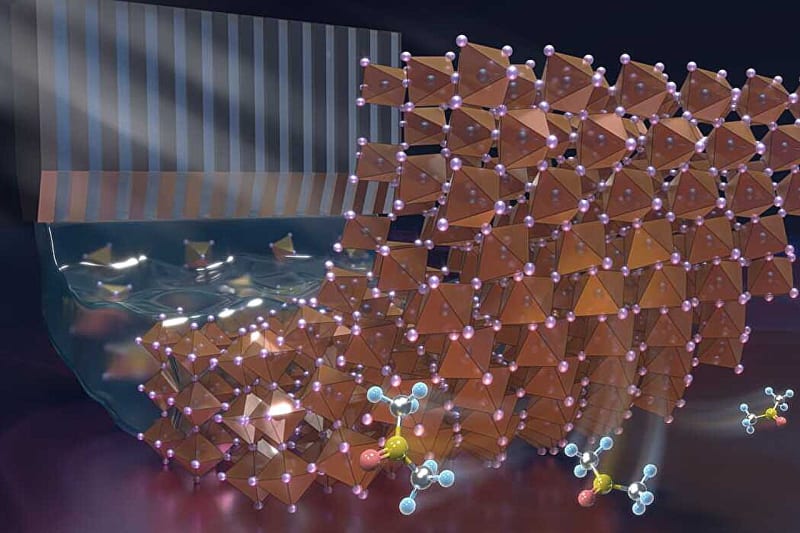
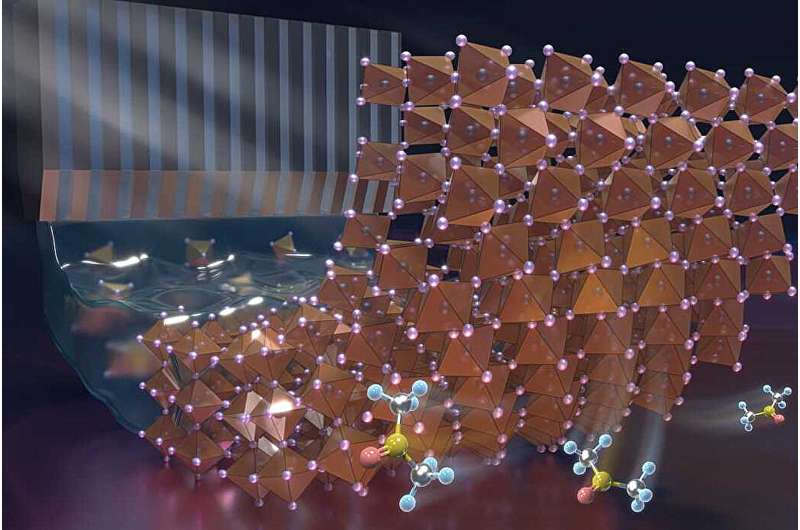
The researchers solved this by creating tiny crystal "seeds" that guide how the solar material grows. Think of them as scaffolding that helps build a stronger structure. These seeds contain trapped solvent molecules that release during manufacturing, creating a gentle environment that lets the solar crystals reorganize themselves into a dense, highly organized layer.
Dr. Sun Xiuhong, who co-led the study published in Nature Synthesis, explains their method tackles two problems at once: controlling how crystals form and stabilizing the critical interface where different layers meet. Previous attempts could only address one challenge at a time.
The technique eliminates tiny voids and smooths out imperfections that typically plague large-scale solar manufacturing. The result is a perovskite film with dramatically improved electronic properties and better resistance to heat and light over time.
The Ripple Effect
This breakthrough addresses a major barrier keeping perovskite solar panels from reaching rooftops worldwide. While these cells promise higher efficiency than conventional silicon panels, manufacturers have struggled to produce them at practical sizes without sacrificing performance.
The Chinese team's approach works with existing slot-die coating processes, the same industrial techniques used for printing magazines and coating materials at scale. That compatibility means manufacturers won't need entirely new factories to adopt this technology.
Beyond immediate solar applications, the research team believes their crystal-seeding concept could transform other emerging technologies. By adjusting the organic ingredients and solvents, scientists can create a whole library of customized materials for various electronic devices.
Professor Pang Shuping notes this technology finally overcomes the longstanding scaling bottleneck that has kept perovskite solar panels in laboratories rather than on homes and businesses. The combination of guided crystal growth and interface restoration delivers consistent performance regardless of panel size.
The path toward affordable, high-efficiency solar energy just got significantly clearer.
More Images

Based on reporting by Phys.org - Technology
This story was written by BrightWire based on verified news reports.
Spread the positivity!
Share this good news with someone who needs it