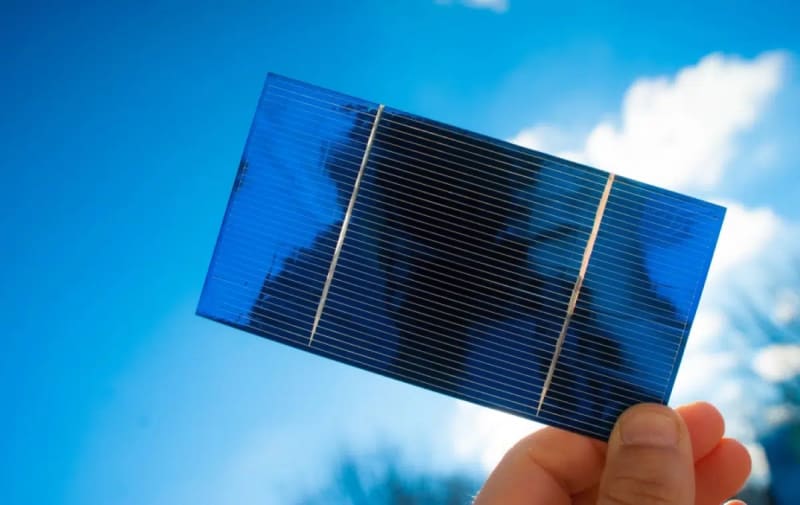
Solar Cells Hit 26.6% Efficiency, Last 2,000 Hours at 85°C
Chinese researchers solved solar technology's biggest weakness with a molecule that protects cells during manufacturing. The breakthrough delivers record efficiency and durability that could finally make perovskite solar panels practical for hot climates.
Scientists at Xi'an Jiaotong University just cracked the code on solar cells that work harder and last longer, even in scorching heat.
For years, perovskite solar cells promised a revolution. They're lightweight, powerful, and cheaper to make than traditional silicon panels. But there was one massive problem: they fell apart in heat and humidity, making them impractical for the very sunny regions that need them most.
The issue starts during manufacturing. High heat helps perovskite crystals form properly, but that same heat forces iodide molecules to escape from the surface. Tiny voids appear, weakening the entire structure and causing the cells to degrade within months.
Most researchers tried fixing this damage after the fact, adding protective layers in extra manufacturing steps. The Xi'an team took a smarter approach: prevent the damage from happening in the first place.
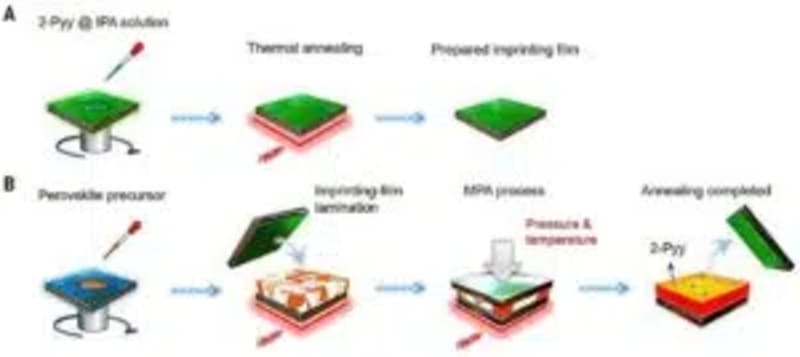
They developed a molecule called 2-Pyy that acts like molecular glue during the crystallization process. Rich in nitrogen, it chemically bonds with the lead in perovskite, stabilizing the structure while it forms. The molecule seals the surface, locks iodide in place, and reinforces internal bonds even under extreme temperatures.
The results speak for themselves. The team tested their cells at 85°C with 60% humidity, conditions that simulate coastal areas and tropical climates. After 2,000 hours of this punishment, the cells still retained 98.6% of their original power.
The Ripple Effect
This isn't just about better numbers on a lab report. The breakthrough changes what's possible for solar energy worldwide.
The cells achieved 26.6% efficiency, among the highest ever recorded for perovskite technology. Combined with their newfound durability, these panels could finally move from research labs to real rooftops. Europe and Asia are already testing tandem modules that layer perovskite over conventional silicon, capturing more of the sun's spectrum.
The manufacturing process uses reusable glass plates, cutting waste and costs. That matters enormously for schools, health clinics, and isolated communities in developing regions. Clean energy becomes accessible where it's needed most.
More efficient panels also mean generating more electricity in less space. Cities can meet energy needs without covering every available surface. Fewer materials, less frequent replacement, and a smaller environmental footprint accelerate the shift away from fossil fuels.
The next challenge is scaling up from small lab samples to full-size panels. If the team can replicate their method at industrial scale, perovskite solar cells will transform from a decades-long promise into an everyday reality powering homes across the hottest parts of our planet.
More Images
Based on reporting by Google News - Solar Power Record
This story was written by BrightWire based on verified news reports.
Spread the positivity!
Share this good news with someone who needs it