Solar Cells Hit 26.6% Efficiency With Glass Plate Trick
Scientists in China solved a major problem that's been holding back the next generation of solar panels. Their simple glass plate technique makes perovskite solar cells stronger and more efficient than ever before.
Solar panels might be about to get a whole lot better, thanks to a surprisingly simple innovation from researchers in China.
Scientists at Xi'an Jiaotong University have cracked one of the biggest problems plaguing perovskite solar cells. These next generation panels are cheaper and lighter than traditional silicon panels, but they've had one major flaw: they break down when exposed to heat during manufacturing.
The team discovered that heating perovskite cells causes iodide to escape from the surface, leaving tiny holes that spread inward like cracks in ice. These weak spots destroy the crystal structure that captures sunlight and converts it into electricity.
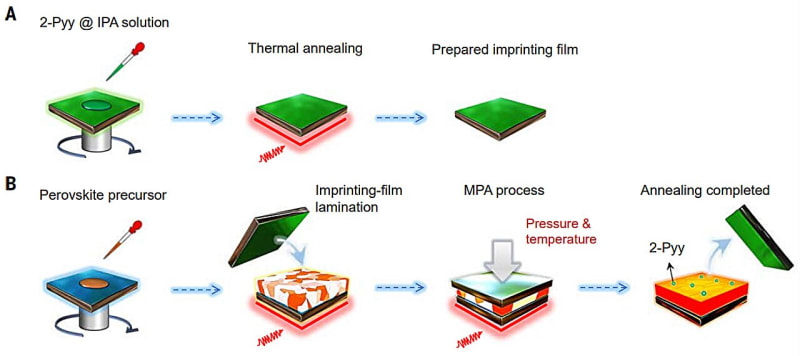
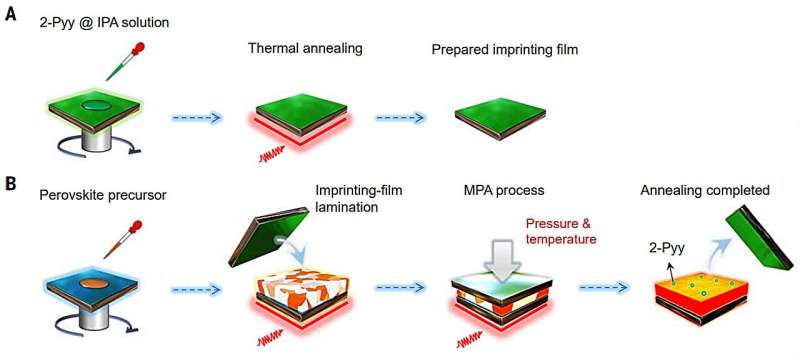
Instead of trying to fix the damage after it happens, the researchers found a way to prevent it entirely. They coat a glass plate with a molecule called 2-Pyy, flip it over, and press it firmly against the solar cell during heating. The molecules bind to lead atoms in the crystals, creating a protective seal that stops iodide from escaping.
The results speak for themselves. The treated cells achieved 26.6% solar conversion efficiency, setting a new record for this type of technology. That means more than a quarter of the sunlight hitting these panels gets converted into usable electricity.
Even better, the cells survived brutal testing conditions. They ran continuously for more than 2,000 hours in extreme heat (85°C) and high humidity (60%) without breaking down. After all that stress, they retained 98.6% of their original power.
The Bright Side
The glass plates used to apply the protective molecules can be cleaned and reused multiple times. That means lower manufacturing costs, which could translate to cheaper solar panels for homeowners and businesses.
The team published their findings in the journal Science and called their method ready for industrial production. Their next step is testing the technique on larger panels to see if it works at commercial scale.
This breakthrough arrives at a crucial moment. The world needs affordable, efficient renewable energy solutions faster than ever. Perovskite cells have always promised to deliver on that need, but their fragility has held them back from widespread adoption.
Now that barrier might finally be crumbling, one glass plate press at a time.
More Images
Based on reporting by Phys.org - Technology
This story was written by BrightWire based on verified news reports.
Spread the positivity!
Share this good news with someone who needs it