Solar Collars Let Farmers Herd 1M Cows From Their Phones
A New Zealand startup just raised $220 million to expand technology that lets ranchers move entire herds with virtual fences and smartphone taps. The solar-powered collars are already helping farmers boost land productivity by up to 20% across three countries.
Managing cattle across remote farmland usually means dogs, horses, motorbikes, or even helicopters. A 30-year-old from New Zealand just proved there's a simpler way.
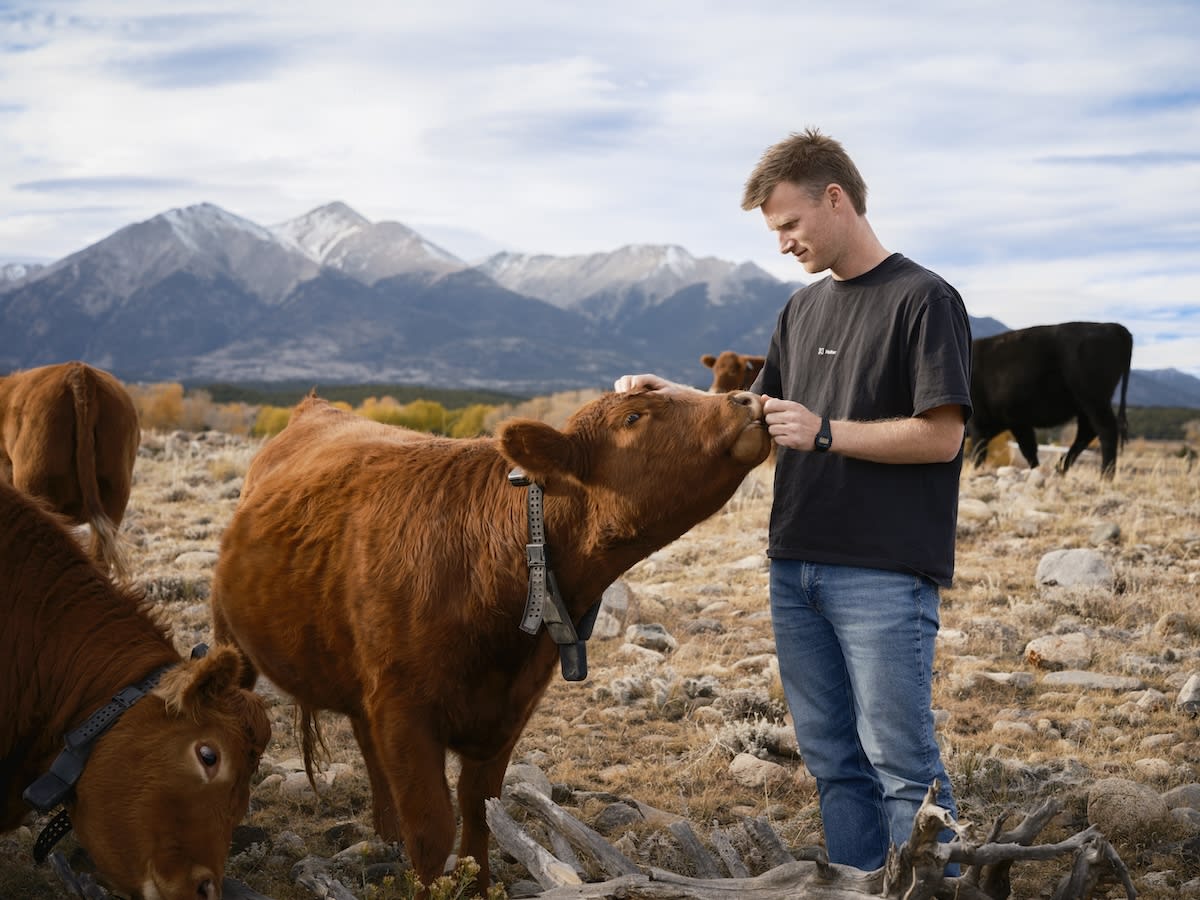
Craig Piggott started Halter nine years ago with a bold idea: teach cows to respond to virtual fences controlled from a smartphone. Today, his solar-powered smart collars are on over a million cattle across 2,000 farms in New Zealand, Australia, and the United States.
The system works like a parking sensor in reverse. Collars use audio and vibration cues to guide cattle away from virtual boundaries that farmers draw on an app. Most cows learn the system within three interactions.
Piggott grew up on a dairy farm before studying engineering and working briefly at Rocket Lab. He started Halter at 21, inspired by the idea that technology could solve agriculture's toughest challenges. "Realizing you could raise money, hire a team, and chase an ambitious mission was inspiring," he said.
The technology does more than move herds. Because the collars continuously collect behavioral data, they track animal health, monitor fertility cycles, and flag when individual cows might be sick. Halter has built what's likely the world's largest dataset of cattle behavior, and the system improves every week.
For farmers, the value is clear. By giving ranchers precise control over where cattle graze, Halter increases land productivity by as much as 20%. Some customers have doubled their output by ensuring cattle graze more efficiently and waste less grass.
Last month, Halter closed a $220 million Series E funding round led by Peter Thiel's Founders Fund, the venture firm behind Facebook and SpaceX. The company now operates across 22 U.S. states and is on its fifth generation of hardware.
The agricultural technology sector has struggled recently as startups fail to persuade farmers to adopt new products. Piggott credits Halter's success to relentless focus on financial returns rather than just labor savings.
Competitors are emerging, including pharmaceutical giant Merck's Vence system and drone-based herding concepts. But Piggott remains confident that collars are the right solution for the long term, and that the real competition isn't other technology at all.
The Ripple Effect
Beyond individual farms, Halter's approach represents a shift in how agriculture can work. Virtual fencing means less physical infrastructure cutting through wild landscapes and more precise land management that could reduce overgrazing. As farmers gain better control over their herds, they can rest land more effectively and potentially improve soil health across millions of acres.
The startup that began with a farm kid's engineering dream is now helping reshape ranching on three continents, one solar-powered collar at a time.
More Images


Based on reporting by TechCrunch
This story was written by BrightWire based on verified news reports.
Spread the positivity!
Share this good news with someone who needs it