Solar Dehydrators Help Maharashtra Women Fight Crop Loss
Women farmers in Maharashtra lose thousands in income when blemished fruits rot unsold. A new initiative brings solar dehydrators that turn waste into profit.
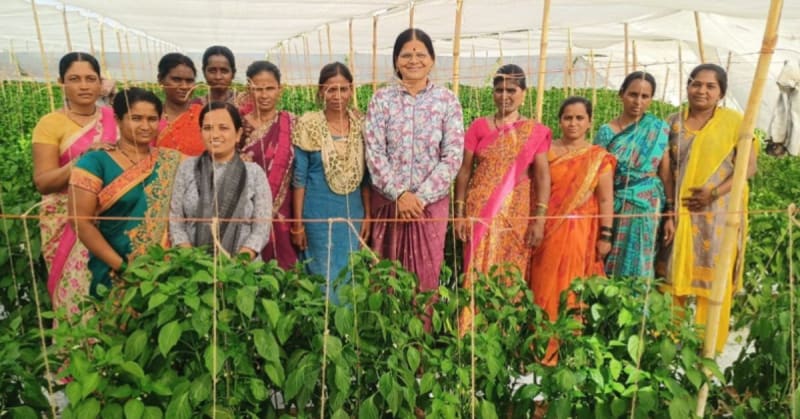
Varsha Dhanavade grew 1,000 pomegranate trees on her three-acre farm in Maharashtra, only to watch most of her harvest go to waste. Middlemen rejected perfectly sweet fruit because of minor blemishes, leaving her with produce that eventually rotted.
"We spend so much money on irrigation, fertilizers, and growing the crop," Varsha says. "When it rots, it is like watching all our money go to waste."
Her story echoes across Maharashtra's Satara, Sangli, and Solapur districts, where women farmers lose massive portions of their harvest to post-harvest spoilage. Indian farmers collectively lose over $11 billion annually to this problem, with mangoes, grapes, and pomegranates especially vulnerable to heat waves, unseasonal rains, and insect attacks.
The Better India and Mann Deshi Foundation are changing this reality with solar dehydrators. These units dry fruits in six to eight hours using hot air, protecting produce from rain, dust, insects, and rodents while preserving color, texture, and nutrition.
Traditional sun-drying takes six to seven days and leaves crops vulnerable to fungus and contamination. Solar dehydrators work faster and cleaner, transforming blemished fruits that would otherwise be rejected into shelf-stable products like dried fruit, pulp, and juice.
The technology offers women farmers a lifeline. Instead of watching their labor spoil, they can process imperfect produce into valuable products that last longer and sell better.
Mann Deshi Foundation, which has empowered women farmers since 1996, will select beneficiaries based on need and readiness to adopt the technology. The organization will handle installation, setup, and training on safe usage and maintenance.
The Ripple Effect
This initiative arrives during the United Nations International Year of the Woman Farmer 2026. Women play crucial roles across India's agrifood systems, producing, processing, and trading food that sustains families and communities, yet their contributions often go unrecognized.
Solar dehydrators don't just reduce waste. They stabilize prices, extend shelf life, and ensure farmers earn more from what they grow, turning months of lost labor into sustainable income.
For farmers like Varsha, this technology means finally getting fair value for their hard work, regardless of whether their pomegranates look picture-perfect.
More Images
%2Fenglish-betterindia%2Fmedia%2Fmedia_files%2F2026%2F03%2F03%2Fdr-suri-srimathi-3-2026-03-03-17-07-57.jpg)
%2Ffilters%3Aformat(webp)%2Fenglish-betterindia%2Fmedia%2Fmedia_files%2F2026%2F03%2F03%2Fdr-suri-srimathi-2026-03-03-16-19-49.jpg)
%2Ffilters%3Aformat(webp)%2Fenglish-betterindia%2Fmedia%2Fmedia_files%2F2026%2F03%2F03%2Ffarming-2026-03-03-16-56-56.jpg)
Based on reporting by The Better India
This story was written by BrightWire based on verified news reports.
Spread the positivity!
Share this good news with someone who needs it
%2Ffile%2Fattachments%2F2992%2F688635092_1403790941795291_6434669868162454614_n_856400.jpg)