Solar Farms That Feed Europe's Crops and Grid
Swedish researchers just cracked the code on designing solar farms that grow food and generate electricity without sacrificing either. Their breakthrough could transform millions of acres across Europe into dual-purpose powerhouses.
Imagine a solar farm that doesn't just generate clean energy but also grows your food. Scientists at Sweden's Mälardalen University just figured out how to make that dream work across Europe's diverse climates.
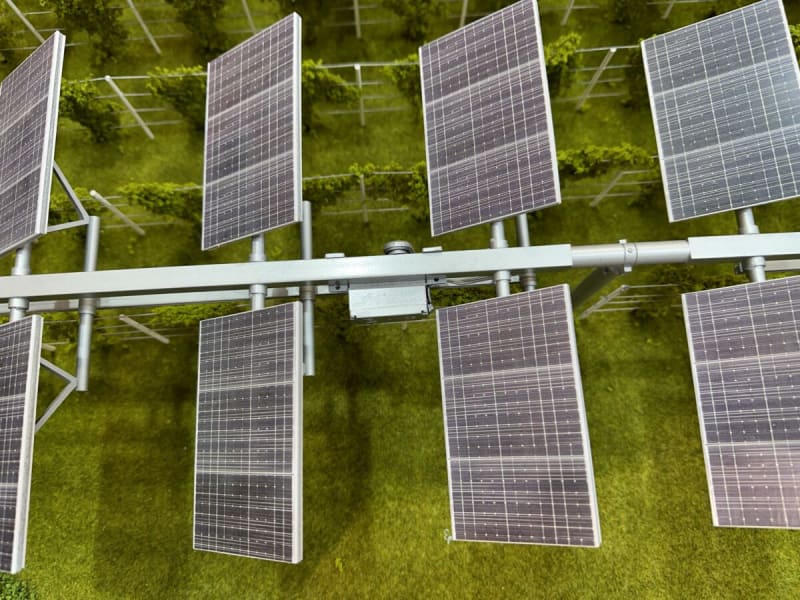
The research team developed a new method to optimize "agrivoltaic" systems, where solar panels and crops share the same land. Their key finding? Spacing solar panel rows 5 to 10 meters apart creates the sweet spot where both crops and energy production thrive.
Lead researcher Sebastian Zainali explains that agrivoltaic performance depends heavily on three factors: local climate, crop choice, and system design. Shade-loving crops like lettuce can handle denser solar panels, while sun-hungry crops like wheat need more space and careful panel placement.
The team tested their approach in three European locations with different climates: Sweden, Germany, and Italy. They used advanced computer modeling to simulate thousands of design combinations, measuring both crop yields and electricity output.
Their innovation addresses a crucial challenge: how to measure success when you're producing two things at once. The researchers focused on the "land equivalent ratio," which calculates how much separate farmland and solar installations you'd need to match what agrivoltaics produces together.
The results showed that row spacing matters more than any other design choice. Too close, and crops suffer from excessive shade. Too far apart, and you waste valuable land that could generate more electricity.
Different European countries have different rules about agrivoltaic systems. Sweden limits how much land panels can cover to 10%. Germany requires farms to maintain at least 66% of normal crop yields. Italy demands panels stand at least 2.1 meters high and cover less than 30% of the ground.
The researchers found that flexible policies work better than rigid rules. When regulations account for local climate and crop needs, farmers can optimize both food and energy production instead of compromising on both.
The Ripple Effect
This breakthrough arrives at a perfect moment. Europe needs more renewable energy to fight climate change while maintaining food security as populations grow. Agrivoltaics solves both challenges on the same acre.
The research shows that smart design can actually help crops in some cases. In hot, dry climates, solar panel shade reduces water stress on plants, meaning farmers use less irrigation while panels stay cleaner and more efficient.
Early adopters across Europe are already seeing results. Farmers report that certain crops actually grow better under partial shade, especially during increasingly common heat waves. Meanwhile, they earn additional income from electricity sales, making small farms more financially stable.
The findings give engineers and farmers a practical roadmap for designing systems tailored to their specific location and crops. No two agrivoltaic farms need to look identical because no two farms face identical conditions.
This research transforms agrivoltaics from experimental concept to practical solution, proving that we don't have to choose between feeding people and powering their homes.
More Images
Based on reporting by PV Magazine
This story was written by BrightWire based on verified news reports.
Spread the positivity!
Share this good news with someone who needs it