Solar Industry Slashes Hail Damage Costs 72% With New Tech
A Texas solar farm cut insurance costs by 72% using smart hail protection systems, showing the renewable energy industry is fighting back against billion-dollar storm losses. The breakthrough could make clean energy projects safer and more affordable worldwide.
Severe storms have battered solar farms with $342 million in damage since 2019, but the renewable energy industry just proved it can fight back.
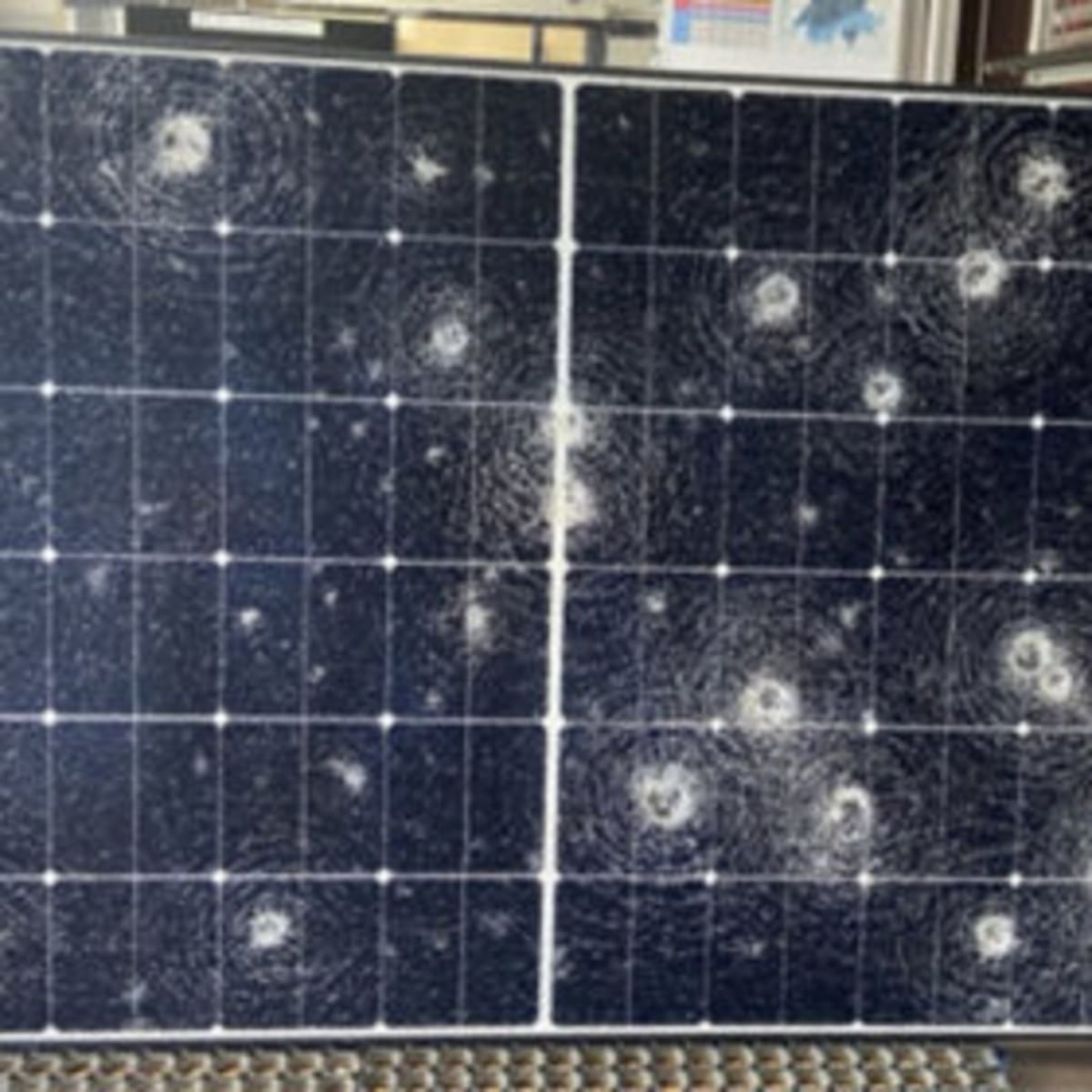
A Texas solar project slashed its insurance costs by 72% using targeted hail protection measures. The win comes as hailstorms have become the renewable energy sector's biggest weather threat, causing more damage than hurricanes across much of the United States.
The solution sounds simple but works remarkably well. Solar panels that can tilt to steep angles during storms suffer half the damage of panels that stay flat or fail to move in time. When panels rotate from 30 degrees to 75 degrees, their breakage probability drops by 83%.
"Hail has emerged as a key driver of losses for solar PV, particularly in regions exposed to severe convective storms," said Tina Baacke, who leads renewable energy insurance at Swiss Re Corporate Solutions. More than 1 million solar panels have been damaged by hail since 2019, but the industry is learning fast.
North American developers have led the charge, adopting three key protections: accurate weather forecasting, rotating tracker systems that can tilt beyond 60 degrees, and smart operations strategies. The approach is spreading globally as solar farms expand into new regions.
The challenge arrived partly because solar technology changed. Modern panels use thinner, lighter glass to cut costs and weight, but this makes them more vulnerable to hailstones. Claims for projects with heat-strengthened glass run $50,000 per megawatt higher than those with thicker, fully tempered glass.
Climate patterns aren't helping either. Severe convective storms, which include hailstorms and damaging winds, caused $51 billion in insured losses globally in 2025 alone. Scientists are tracking evidence that climate change may be creating stronger storms capable of generating larger hailstones.
The Bright Side
Insurance companies are responding not by abandoning solar projects but by working with developers who take protection seriously. Projects demonstrating strong risk management can unlock more insurance capacity and better rates, even in hail-prone areas.
New tools are making it easier to build safely. VDE Americas and kWh Analytics launched a platform in April 2025 that helps developers assess hail risks before breaking ground, letting them design smarter projects from day one.
The progress matters because solar energy keeps expanding into regions with high energy demand, including hail-prone areas. South Africa's newest solar farms are going up in the country's eastern and northeastern regions, where both electricity needs and hail risks run high.
The industry isn't just protecting existing investments. These innovations are making clean energy projects more financially viable in places that previously seemed too risky, opening new paths toward renewable power where it's needed most.
Smart engineering is turning a billion-dollar problem into a manageable risk, keeping the clean energy revolution rolling forward.
More Images
Based on reporting by PV Magazine
This story was written by BrightWire based on verified news reports.
Spread the positivity!
Share this good news with someone who needs it