Solar Panel Breakthrough Hits Record 27.3% Efficiency
Scientists just built a solar cell that converts more than 27% of sunlight into electricity, shattering previous records. The breakthrough could make clean energy cheaper and more powerful than ever.
A team of researchers has achieved a game-changing milestone in solar technology, creating a solar cell that reaches 27.3% efficiency using an innovative triple-layer design.
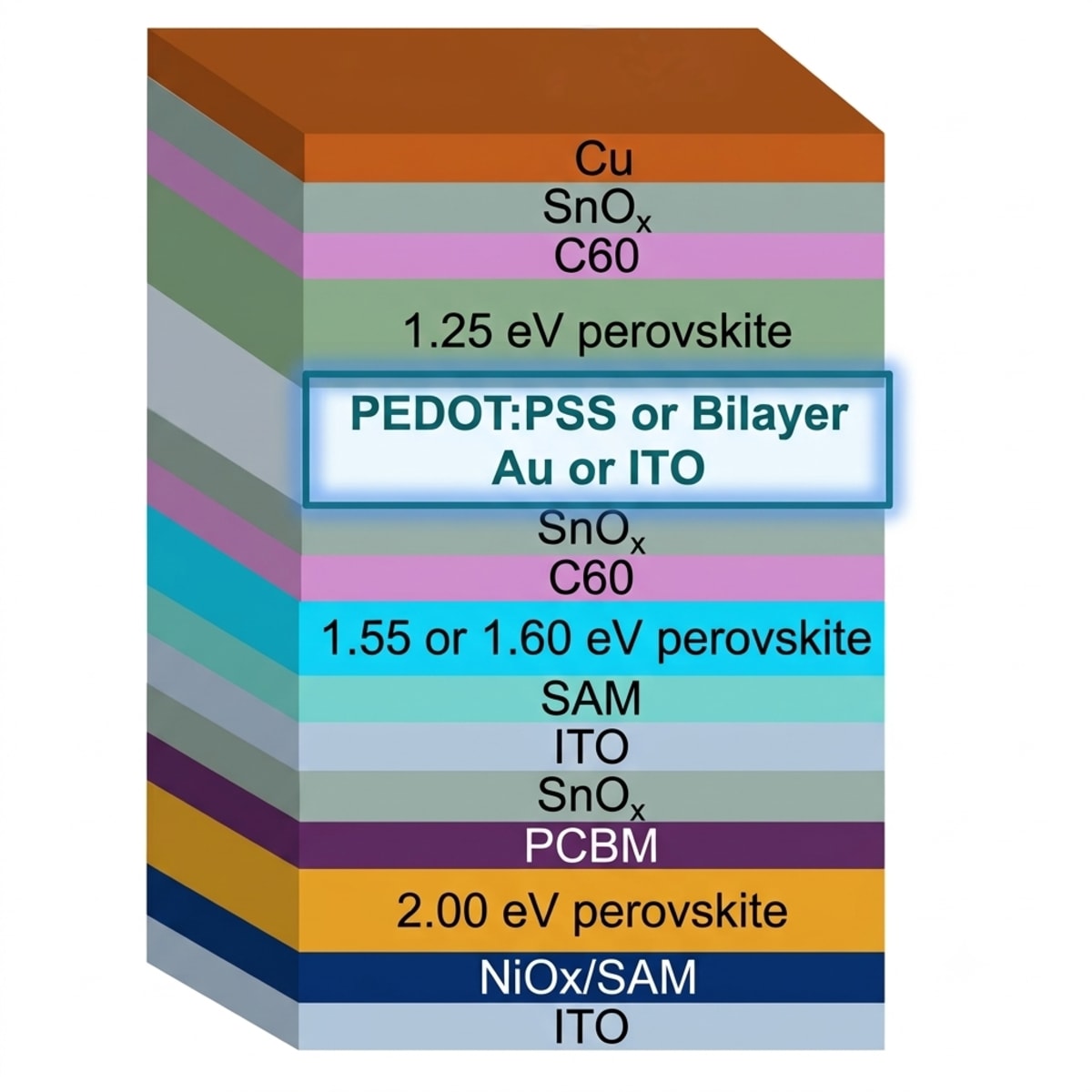
Scientists from Germany's Universität Potsdam and Switzerland's Empa developed the breakthrough by stacking three different light-absorbing layers that work together like a perfectly tuned orchestra. Each layer captures a different portion of the sun's spectrum, ensuring almost nothing goes to waste.
The secret ingredient? A combination of graphene oxide and specialized molecules called self-assembled monolayers that help electricity flow smoothly through the cell. Previous solar panels struggled with electrical resistance and energy loss at the connections between layers, like static on a phone line disrupting your conversation.
The research team tackled this problem head-on by engineering better connections between the layers. They discovered that graphene oxide creates a more uniform surface, allowing the other materials to spread evenly and work more efficiently together.
When they integrated this bilayer design into their triple-junction solar cell, efficiency jumped from 23.6% to 25.1%. Further tweaking the middle layer pushed performance to the record 27.3%.
But efficiency isn't the only win here. The new design also proved remarkably durable, maintaining 90% of its power output after more than 770 hours of continuous exposure to simulated sunlight. That's crucial for real-world applications where solar panels need to perform reliably for decades.
The Ripple Effect
This advance brings affordable, ultra-efficient solar energy closer to reality for millions of homes and businesses worldwide. Every percentage point gained in solar efficiency means lower costs, smaller installations, and faster adoption of clean energy.
The researchers believe they can push efficiency beyond 30% with additional improvements. That would make solar panels powerful enough to generate the same electricity from half the space, opening possibilities for urban buildings, vehicles, and portable devices.
As solar technology continues improving at this pace, the vision of a world powered entirely by clean, renewable energy moves from distant dream to inevitable reality.
More Images


Based on reporting by PV Magazine
This story was written by BrightWire based on verified news reports.
Spread the positivity!
Share this good news with someone who needs it