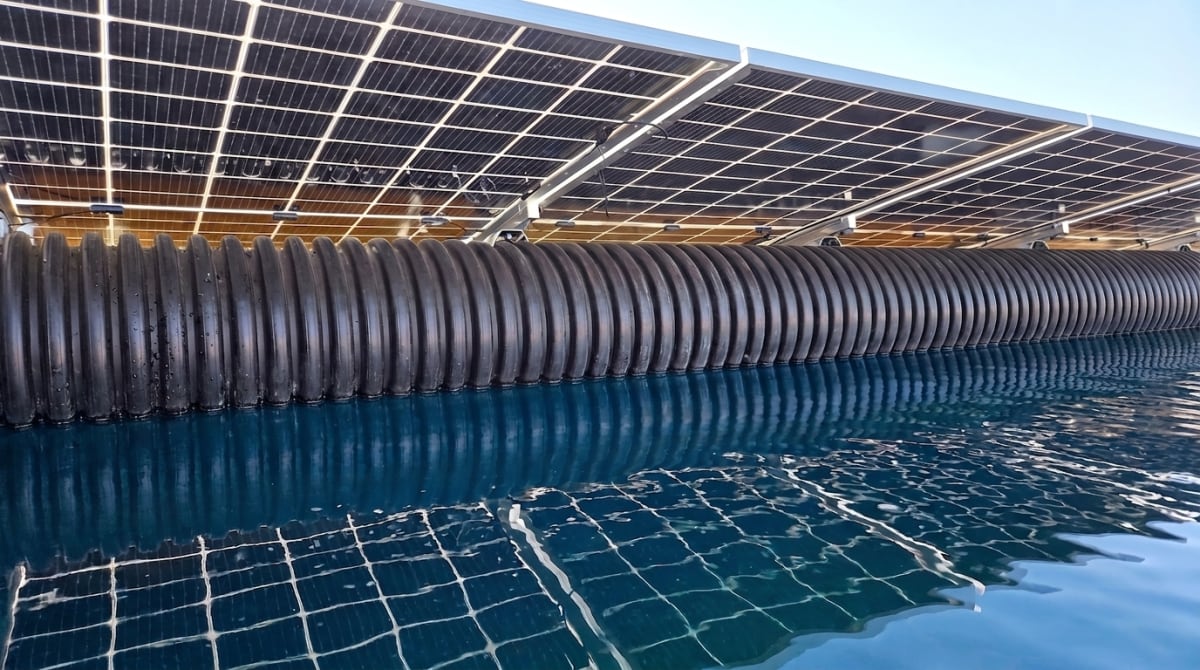
Solar Panels Now Work 33 Feet Underwater in Ocean
Scientists have successfully powered underwater robots with solar panels operating 33 feet below the ocean's surface. This breakthrough could revolutionize how we power marine sensors, cameras, and autonomous underwater devices.
Imagine charging your phone at the bottom of a swimming pool, except the pool is the ocean and your phone is a robot exploring the deep.
Scientists from Yunnan University just proved that solar panels can work 33 feet underwater in the South China Sea. Lead researcher Wen-Hua Zhang says this is the first time anyone has shown solar cells functioning at this depth, expanding possibilities far beyond the shallow two-meter tests done before.
The team used special perovskite solar cells with a chemical boost that makes them tough enough to handle underwater conditions. They added a compound called polyhexamethylene guanidine hydrochloride, which strengthens the panels against salt water damage and helps them capture light more efficiently.
Before diving into the ocean, the scientists tested their panels in the lab under lights that mimicked underwater conditions. The results stunned them: the panels converted 34.71% of available light into electricity and showed almost no wear after 1,160 hours of testing.
Then came the real test off the Weizhou Islands. The team attached large solar panels to underwater robots and sent them 33 feet down. After just two hours of underwater sunlight exposure, the panels generated 324 milliwatt-hours of electricity, enough to charge batteries and power LED lights.
Zhang says what surprised the team most was how much energy their large panels produced in real ocean conditions. They successfully scaled up from tiny lab samples to full-size modules that work in the wild.
The panels proved durable too. Accelerated testing suggests they could last 5.5 years continuously submerged at that depth.
The Ripple Effect
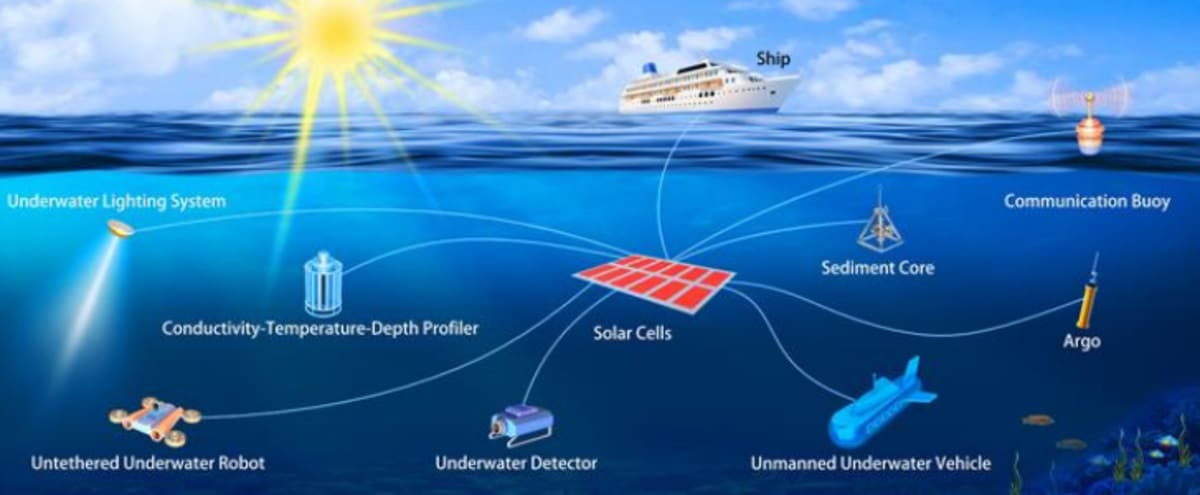
This breakthrough opens doors for completely self-sufficient underwater technology. Ocean sensors monitoring climate change, underwater cameras tracking marine life, and communication systems for submarines could all run on solar power instead of batteries that eventually die or need replacement.
Autonomous underwater vehicles could potentially stay submerged longer without surfacing to recharge. Scientists studying remote ocean areas could deploy equipment that powers itself indefinitely, gathering data from places humans rarely reach.
The technology could make ocean exploration more affordable and sustainable. No more expensive missions to retrieve and replace batteries in deep-water equipment. The ocean itself provides the power source.
One small solar panel is lighting the way toward energy independence beneath the waves.
More Images



Based on reporting by Google News - Researchers Find
This story was written by BrightWire based on verified news reports.
Spread the positivity!
Share this good news with someone who needs it