Solar Power Adds Record 664 GW Worldwide in 2025
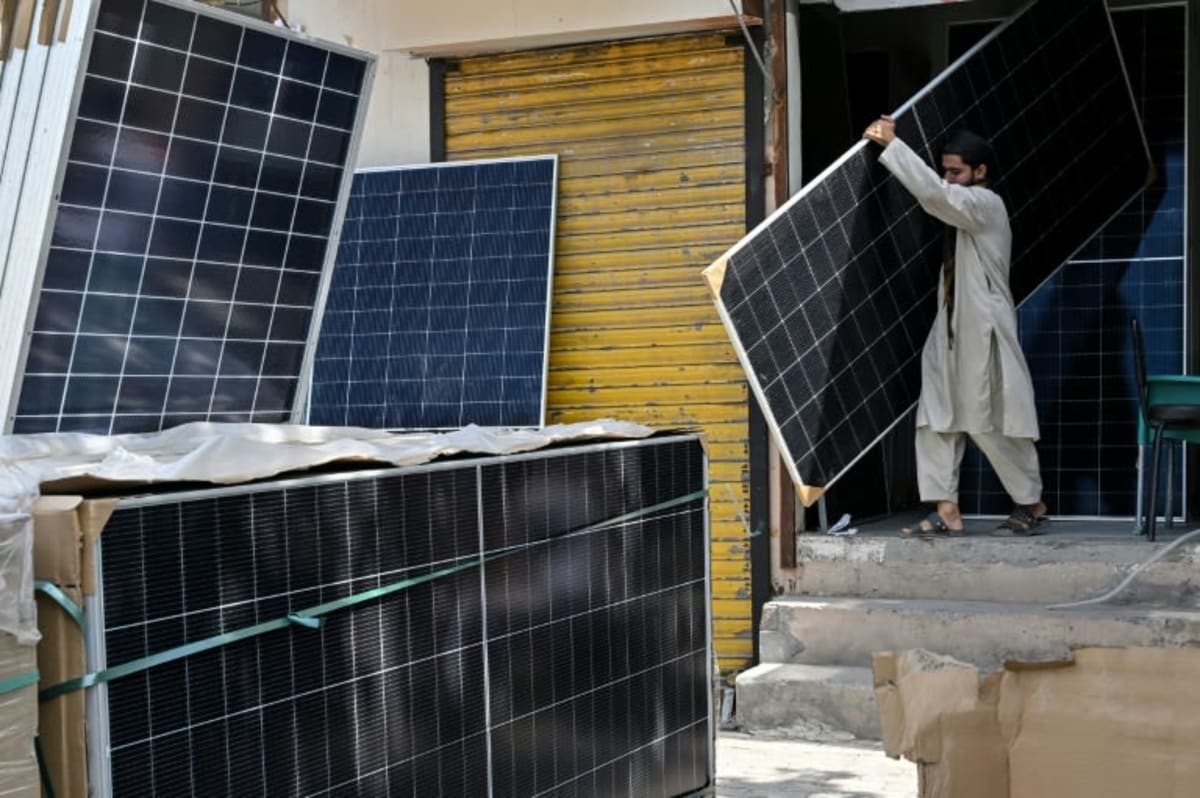
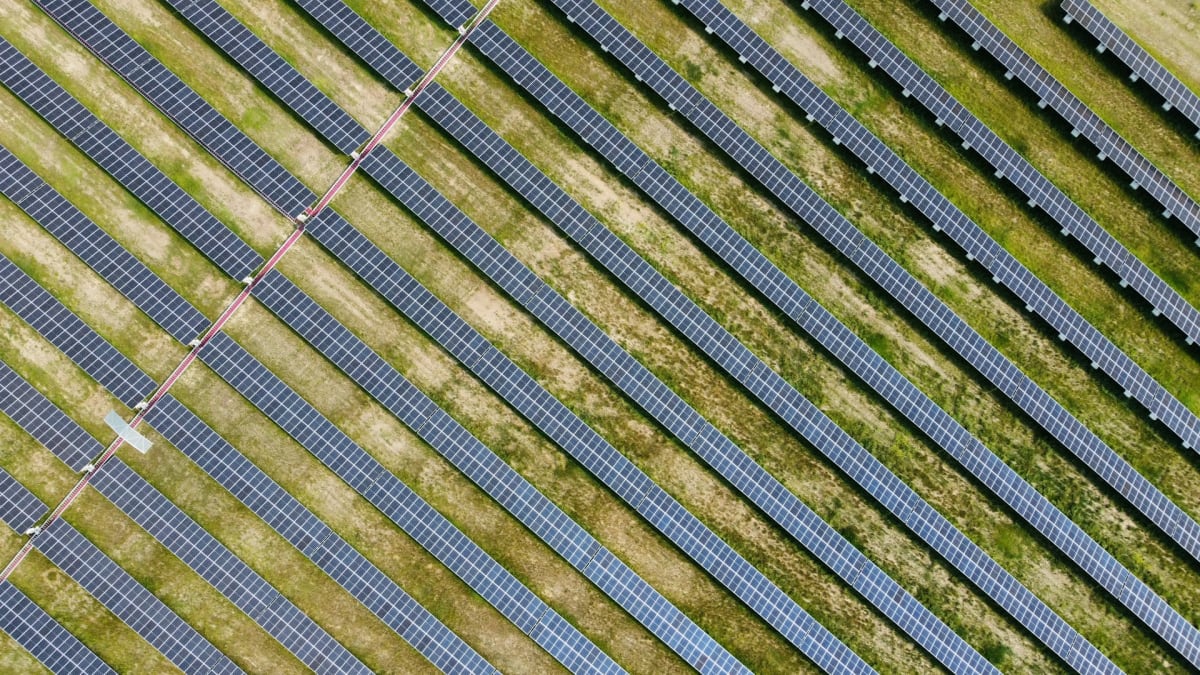
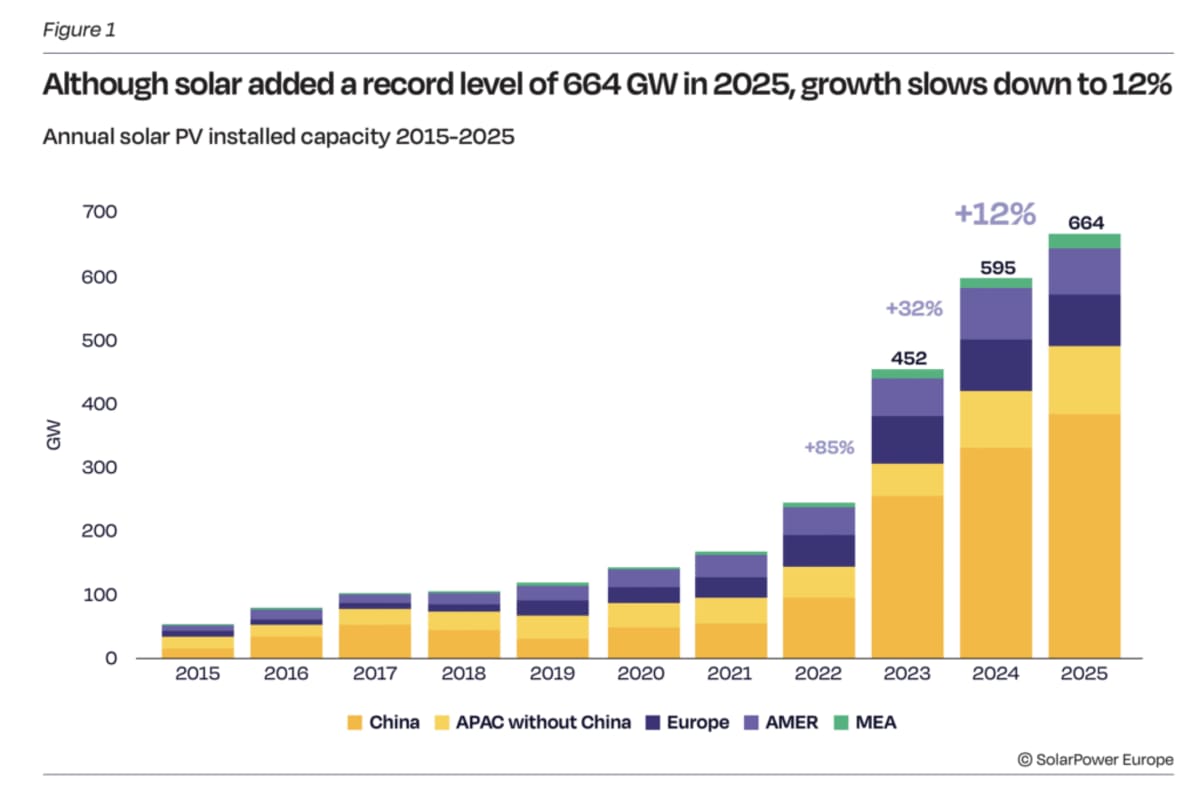
The world installed a record 664 gigawatts of solar power in 2025, enough to now supply 9% of global electricity. Solar accounted for 80% of all renewable energy growth and outpaced fossil fuels and nuclear combined.
The world just crossed a major milestone in clean energy, with solar installations hitting an all-time high of 664 gigawatts in 2025. That's enough new capacity to power hundreds of millions of homes and brings solar's share of global electricity to 9%, triple what it was just five years ago.
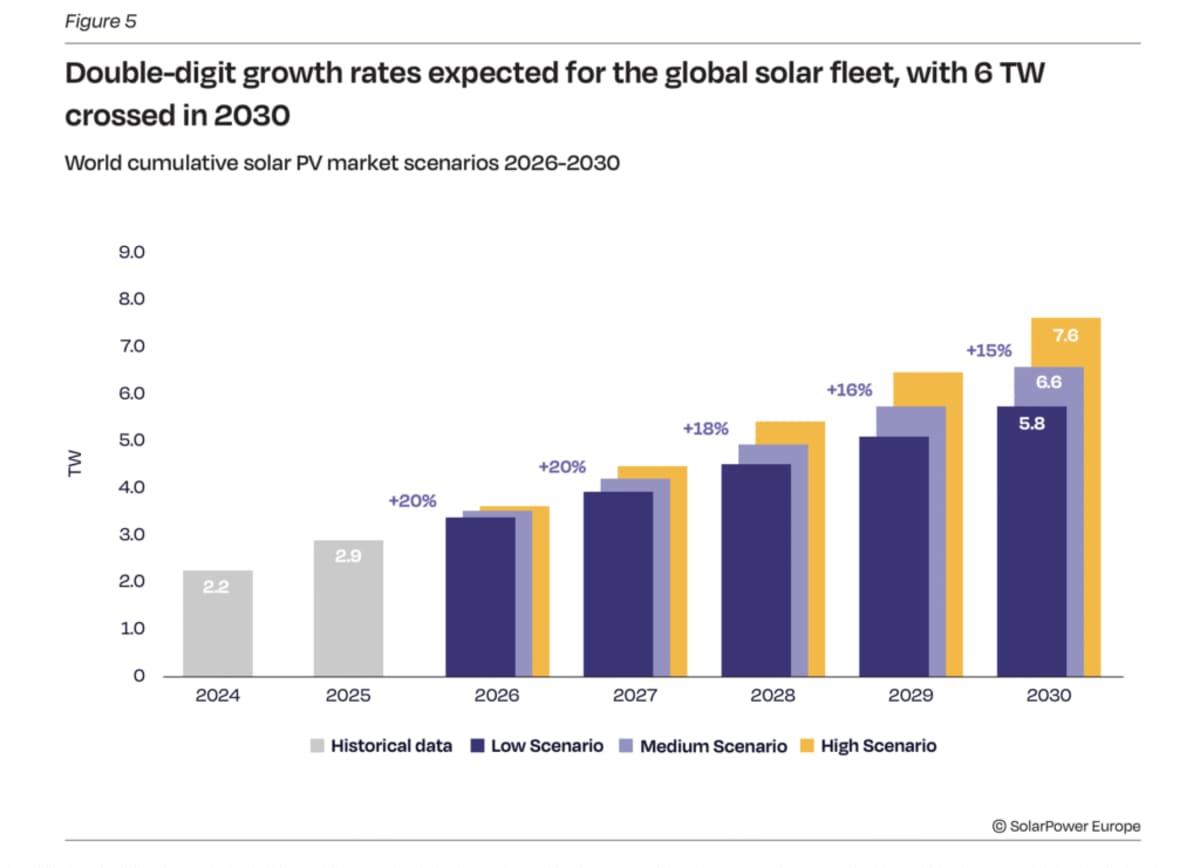
The numbers tell a story of extraordinary momentum. Total global solar capacity passed 3 terawatts earlier this year, reaching that threshold in less than two years after hitting 2 terawatts. It took four years to go from 1 to 2 terawatts, showing how rapidly the technology is accelerating.
China led the charge by installing 382 gigawatts alone, capturing 57% of the global market. India claimed second place with 45.7 gigawatts, overtaking the United States for the first time. Europe added 81.6 gigawatts, with Germany leading the continent as the fourth largest market worldwide.
The Asia-Pacific region dominated installations with 73% of new capacity. The Middle East and Africa showed impressive growth too, surging 51% compared to 2024. Ten countries accounted for 82% of all new solar installations, demonstrating both concentration and global reach.
Solar proved its critical role in energy security during a turbulent year. The electricity generated by solar in 2025 equaled nearly five years of liquefied natural gas flows through the Strait of Hormuz, a crucial chokepoint for global energy supplies. This helped countries reduce dependence on volatile fossil fuel markets during geopolitical tensions.
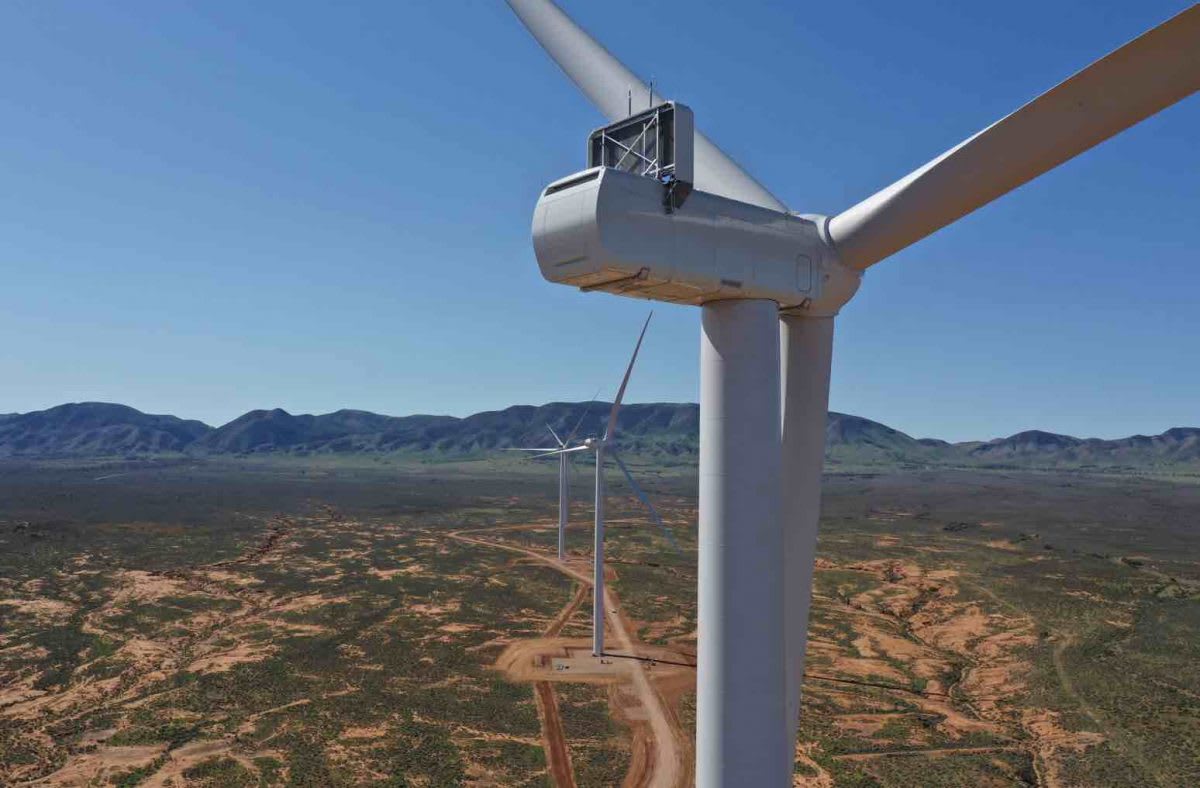
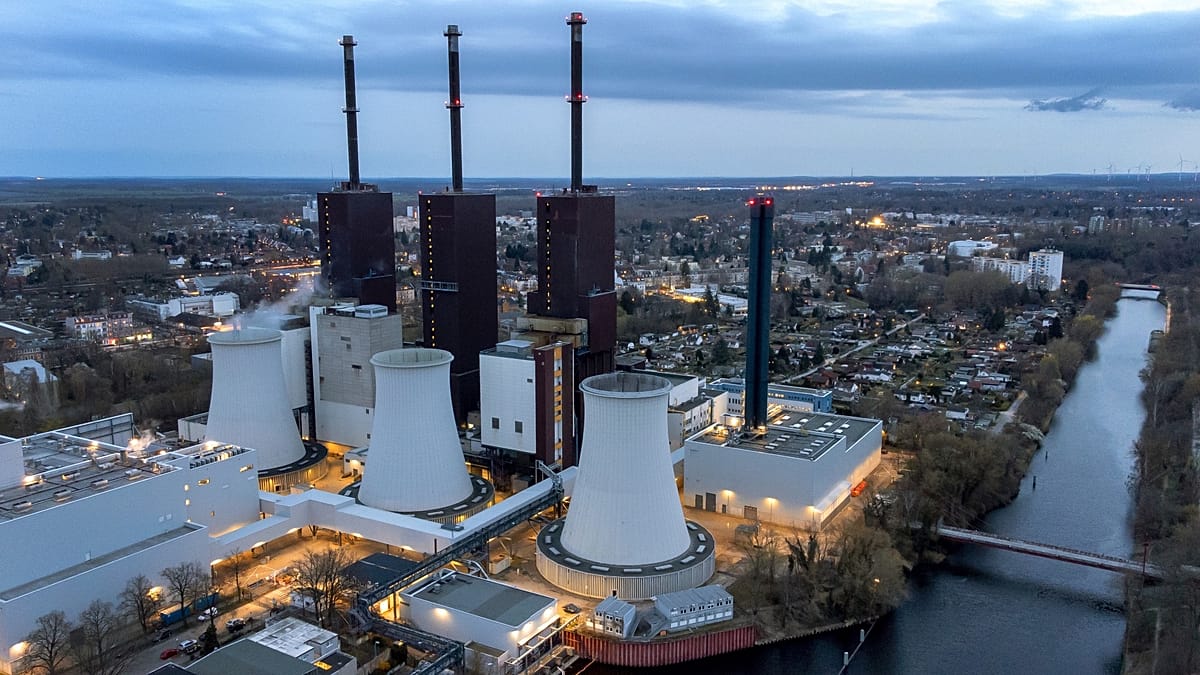
The technology outperformed all other energy sources. Solar represented 80% of renewable capacity additions and exceeded the combined growth of fossil fuels and nuclear power generation.
The Ripple Effect
This solar boom is reshaping global energy faster than experts predicted. By the end of the decade, global solar capacity is forecast to more than double to 6.6 terawatts, cementing solar as the backbone of worldwide decarbonization efforts.
The growth supports millions of jobs in manufacturing, installation, and maintenance across continents. Communities gain access to cleaner air as solar displaces coal and gas plants. Electricity costs drop in regions with abundant solar resources, making power more affordable for families and businesses.
Yet challenges remain to sustain this momentum. Grid congestion, limited battery storage, and permitting delays are slowing integration of new capacity in many regions. Experts emphasize that scaling solar now requires upgrading infrastructure to handle the influx of clean power.
Walburga Hemetsberger, CEO of SolarPower Europe, framed the moment clearly: "Scaling solar is no longer just about deploying more capacity but about how well it can be integrated into the system." Investments in grids and battery storage are essential to continue the transition.
Despite a projected temporary slowdown in 2026 driven by policy changes in China, solar's long-term trajectory remains strong across all other regions, with growth expected in Asia-Pacific, Europe, the Americas, and the Middle East and Africa.
The renewable revolution is delivering on its promise of cleaner, more secure energy for billions of people worldwide.
More Images

Based on reporting by PV Magazine
This story was written by BrightWire based on verified news reports.
Spread the positivity!
Share this good news with someone who needs it