Solar Power Beats Coal After 100 Years on Top
For the first time since 1919, renewable energy sources now generate more of the world's electricity than coal. Solar power alone has grown tenfold in just a decade, proving clean energy isn't just the future—it's happening right now.
After more than a century of dominance, coal just lost its crown as the world's top electricity source to renewable energy.
According to Ember's Global Electricity Review 2026, renewable sources produced 33.8 percent of the world's electricity in 2025, edging past coal's 33 percent for the first time in over 100 years. That's a historic flip that signals how fast the energy landscape is actually changing.
The hero of this story is solar power. When world leaders signed the Paris climate agreement in 2015, solar produced just 256 terawatt hours of electricity globally. A decade later, it's pumping out 2,778 terawatt hours—enough to power the entire European Union for a year.
Solar has been the fastest growing electricity source for 21 consecutive years. In 2025 alone, it surpassed wind power and is now on track to overtake nuclear this year.
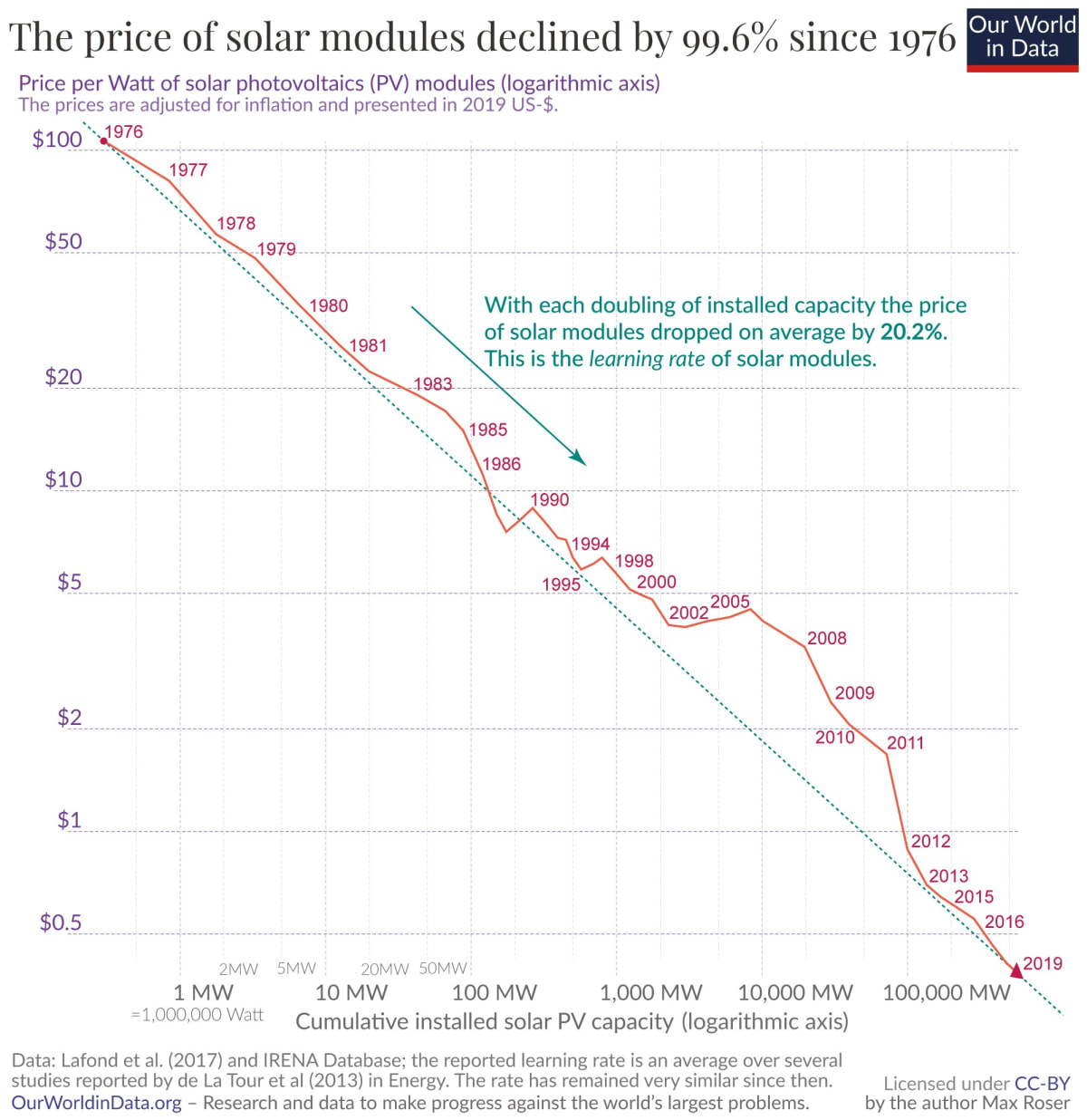
The secret behind solar's explosive growth is simple: it got incredibly cheap, incredibly fast. A solar panel that cost over $100 per watt in the 1970s now costs about 10 cents per watt. No other major energy source in modern history has dropped in price that dramatically.
The old argument against solar—that it doesn't work at night—is fading too. Battery costs fell 45 percent in 2025 alone, making it possible to store daytime solar energy for nighttime use. Solar plants with round-the-clock battery storage now sell electricity cheaper than building new natural gas plants.
Here's the math that matters most: solar alone covered 75 percent of the world's growing electricity demand in 2025. Add wind to the mix, and together they met 99 percent of new demand. That means clean energy is growing fast enough to handle almost everything new the world plugs in.
The Ripple Effect
The impact goes beyond just numbers on a grid. China, long synonymous with coal-fired growth, saw its fossil fuel generation drop 0.9 percent in 2025 even as electricity demand rose 5 percent. India's fossil fuel generation fell 3.3 percent while renewables jumped 24 percent. These aren't tiny test markets—they're the world's two most populous countries changing course.
For the first time since the pandemic, global fossil fuel power generation actually decreased in 2025, falling 0.2 percent. It's only the fifth time this century that fossil generation didn't climb higher. The plateau everyone talked about for decades is finally becoming real.
The transformation isn't complete, of course. The world still burns 8.8 billion tonnes of coal annually. But the direction is clear and the momentum is building. Clean energy installations are outpacing demand growth, which means every new solar farm and wind turbine isn't just adding capacity—it's actively replacing fossil fuels.
What took a century to build is being reshaped in less than a generation, powered by technology that keeps getting better and cheaper with each passing year.
More Images



Based on reporting by Google News - Clean Energy
This story was written by BrightWire based on verified news reports.
Spread the positivity!
Share this good news with someone who needs it