Solar-Powered Trucks Could Save Lives in Disaster Zones
When earthquakes strike and fuel runs out, solar electric vehicles keep emergency shelters powered for days. New research from Japan shows this technology could transform disaster response worldwide.
Picture an evacuation center in the dark, its diesel generator silent because fuel trucks can't navigate crumbled roads. Now imagine a truck pulling up that generates its own electricity from the sun, keeping phones charged and medical equipment running for as long as needed.
That vision just became reality in Japan, a country that experiences nearly one-fifth of the world's major earthquakes. Researchers have proven that solar-equipped vehicles can power emergency facilities when everything else fails.
The problem with traditional disaster planning is brutally simple. Diesel generators run out of fuel within three days, and stored gasoline goes bad in just months, clogging engines exactly when they're needed most. Even solar panels mounted on buildings become useless if those buildings collapse.
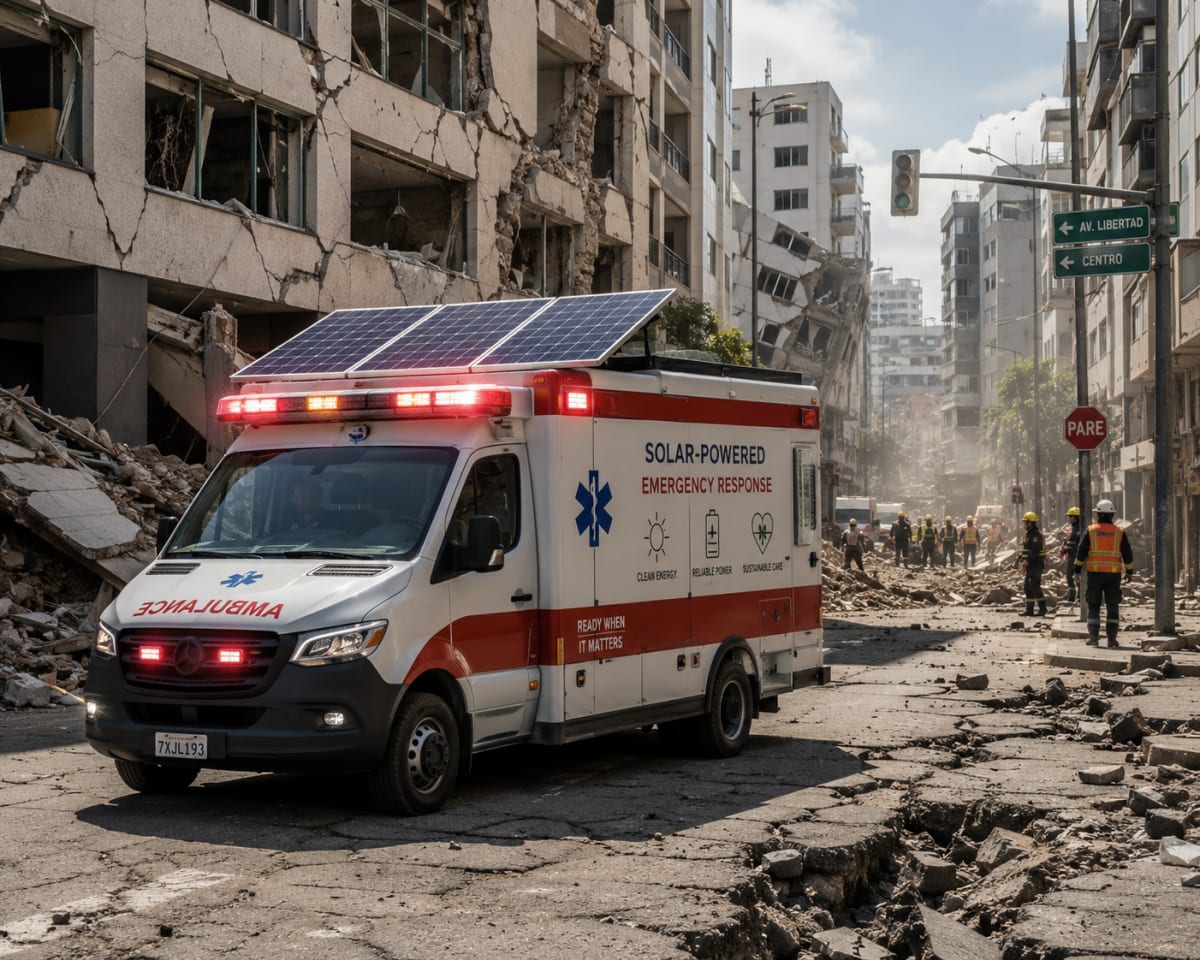
Enter the solar electric vehicle, or SEV. These trucks and cars generate power continuously from rooftop and side-mounted solar panels, can drive to wherever help is needed, and recharge themselves without any infrastructure.
Scientists ran thousands of computer simulations to find out how many would be needed. The answer surprised them: just 450 solar vehicles within a three-mile radius could power evacuation centers for seven full days after a major earthquake. In a city like Miyazaki, Japan, that's only one percent of all vehicles.
Real-world testing backs up the math. A Dutch company called IM Efficiency equipped standard trucks with solar panels and tracked their performance for an entire year in Japan. Even in the darkest winter month, these trucks generated enough electricity daily to charge 2,000 smartphones or run a mobile phone tower.
The vertical panels mounted on the truck sides turned out to be a game-changer. While rooftop panels produced more power in summer, the side panels delivered steady energy year-round, creating a reliable baseline that emergency planners can count on.
The Ripple Effect
This breakthrough extends far beyond earthquake zones. Remote communities without reliable power grids could host medical clinics powered by these vehicles. Festival organizers could eliminate noisy diesel generators. Construction sites in developing countries could operate power tools without fuel deliveries.
The research team learned something unexpected about human behavior too. When there are only a few solar vehicles available, every owner needs to contribute as much power as possible. But once enough vehicles join the network, smaller contributions from more people create a more stable system than depending on a few generous donors.
Japan is already moving forward with deployment plans, and other earthquake-prone regions are watching closely. The technology exists today, using standard vehicles and commercially available solar panels.
Within a decade, solar-powered trucks could be as common at disaster sites as ambulances, bringing light and power when communities need it most.
More Images
Based on reporting by PV Magazine
This story was written by BrightWire based on verified news reports.
Spread the positivity!
Share this good news with someone who needs it