Solar Powers 25% of EU Electricity for First Time Ever
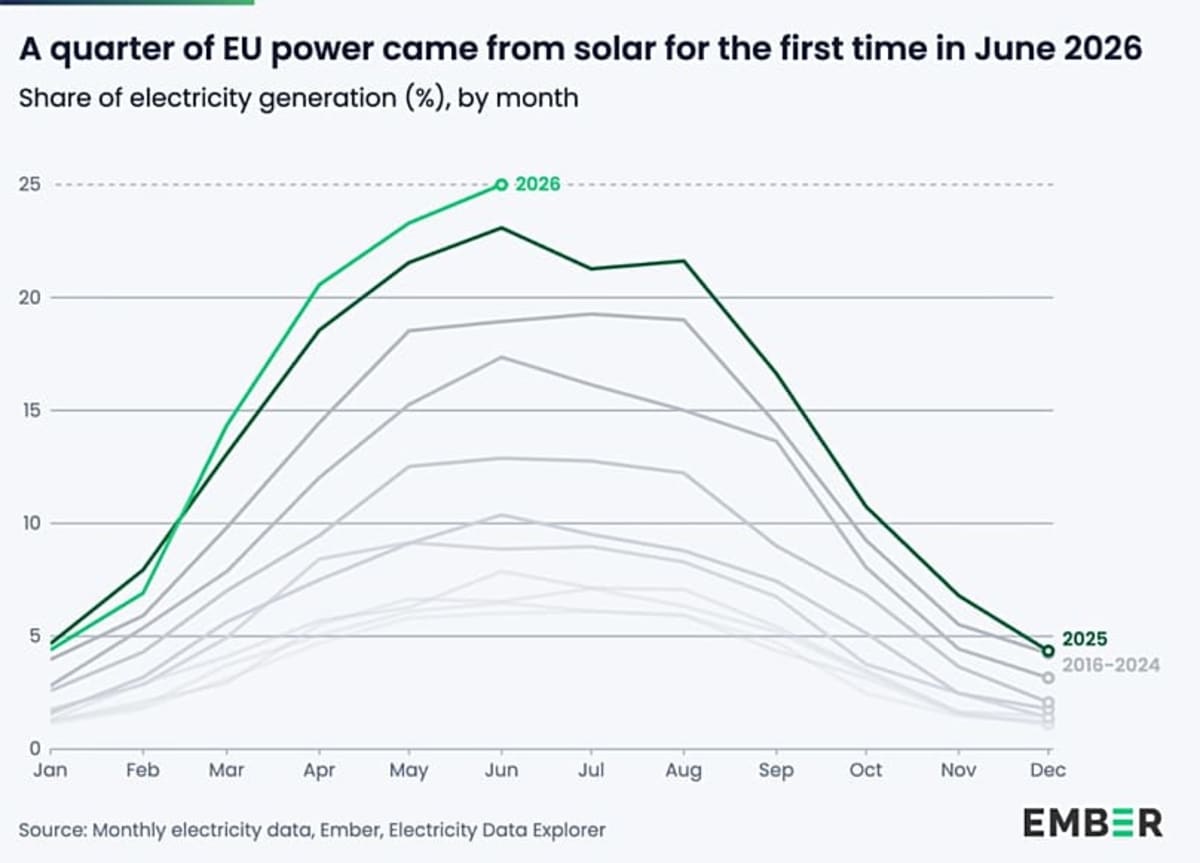
Solar energy provided a quarter of the EU's electricity in June 2026, beating nuclear, wind, and gas for the first time in history. Spain and Germany are leading the charge with massive investments in clean energy that are lowering electricity bills for millions.
For the first time in history, solar panels generated a quarter of all electricity used across the European Union in a single month.
Solar power produced 52 terawatt hours of electricity in June 2026, making up 25% of the EU's total energy supply. That's enough to power every home, hospital, school, and business across 27 countries for an entire month, and it beat every other energy source including nuclear, gas, and wind.
Just five years ago, solar provided only 10% of Europe's power. Now it's the continent's number one energy source during peak summer months.
"Solar's rise has been truly stratospheric, beating prediction after prediction," says Chris Rosslowe, a senior analyst at Ember, the think tank that tracked these numbers. The secret to solar's success? It's cheap, quick to install, and countries can build it themselves without relying on imported fuel.
Spain is showing what's possible when a country goes all in on clean energy. Solar provided over a third of Spain's electricity in June, thanks to doubling its wind and solar capacity since 2019. The country added more than 40 gigawatts of clean energy, more than any EU nation except Germany.
Spanish households are seeing real savings too. Since March, families have saved €10 per month on electricity bills while other countries saw prices rise. Spain hasn't burned coal for power since August 2025, a remarkable shift for a country where coal provided a quarter of its electricity just a decade ago.
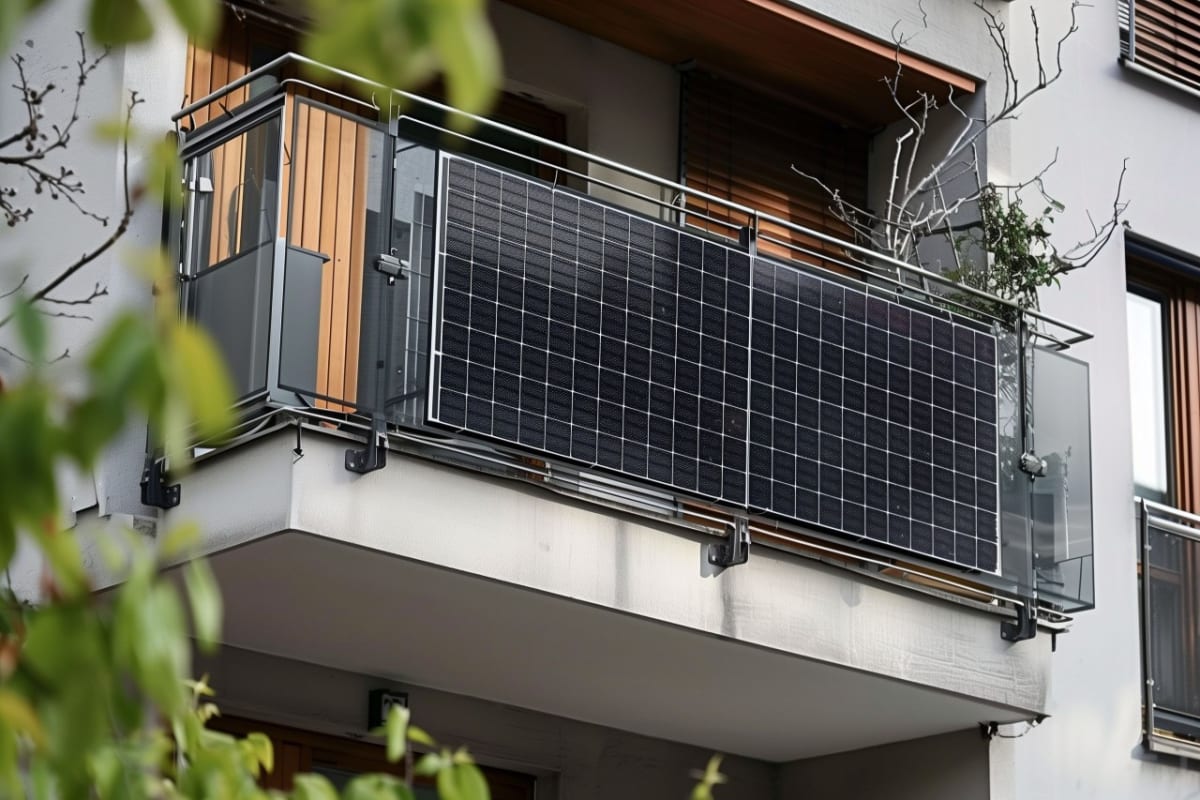
Germany hit its own milestone in June when solar generated 36% of its electricity. More than a million German households now use balcony solar panels, small plug-in kits that cost around €200 and can be bought at supermarkets. These simple panels attach to apartment balconies or shed roofs and feed power directly into homes through regular electrical outlets.
The systems pay for themselves in two to six years through lower energy bills. After that, it's free electricity every sunny day.
Eighteen EU countries set new solar power records in 2026. The timing couldn't be better, as summer heatwaves drove up demand for cooling while solar panels worked overtime under bright skies.
THE RIPPLE EFFECT
Europe's solar boom is proving that countries don't need perfect weather to transform their energy systems. Poland, not exactly famous for sunny beaches, is among the top three countries leading the solar race. Every EU nation could be making better use of its own renewable resources to cut dependence on expensive imported gas.
The shift to solar is slashing emissions across the continent. Spain's per capita emissions dropped to 0.9 tonnes of CO2, well below the EU average of 1.3 tonnes. Clean energy is no longer just an environmental goal; it's becoming the cheapest and fastest way to power modern life.
Europe is showing the world that the clean energy transition can happen faster than anyone predicted.
More Images

Based on reporting by Euronews
This story was written by BrightWire based on verified news reports.
Spread the positivity!
Share this good news with someone who needs it