Solar Scooter Charges Itself While You Work
A new solar-powered scooter called the Lightfoot can recharge itself during the day, making short city trips possible without ever plugging in. The whimsical two-wheeler is turning heads in California as it reimagines how we move around our neighborhoods.
Inventor Saul Griffith discovered that more than half of all car trips in America are under three miles. His answer? A goofy-looking scooter covered in solar panels that people can't help but smile at.
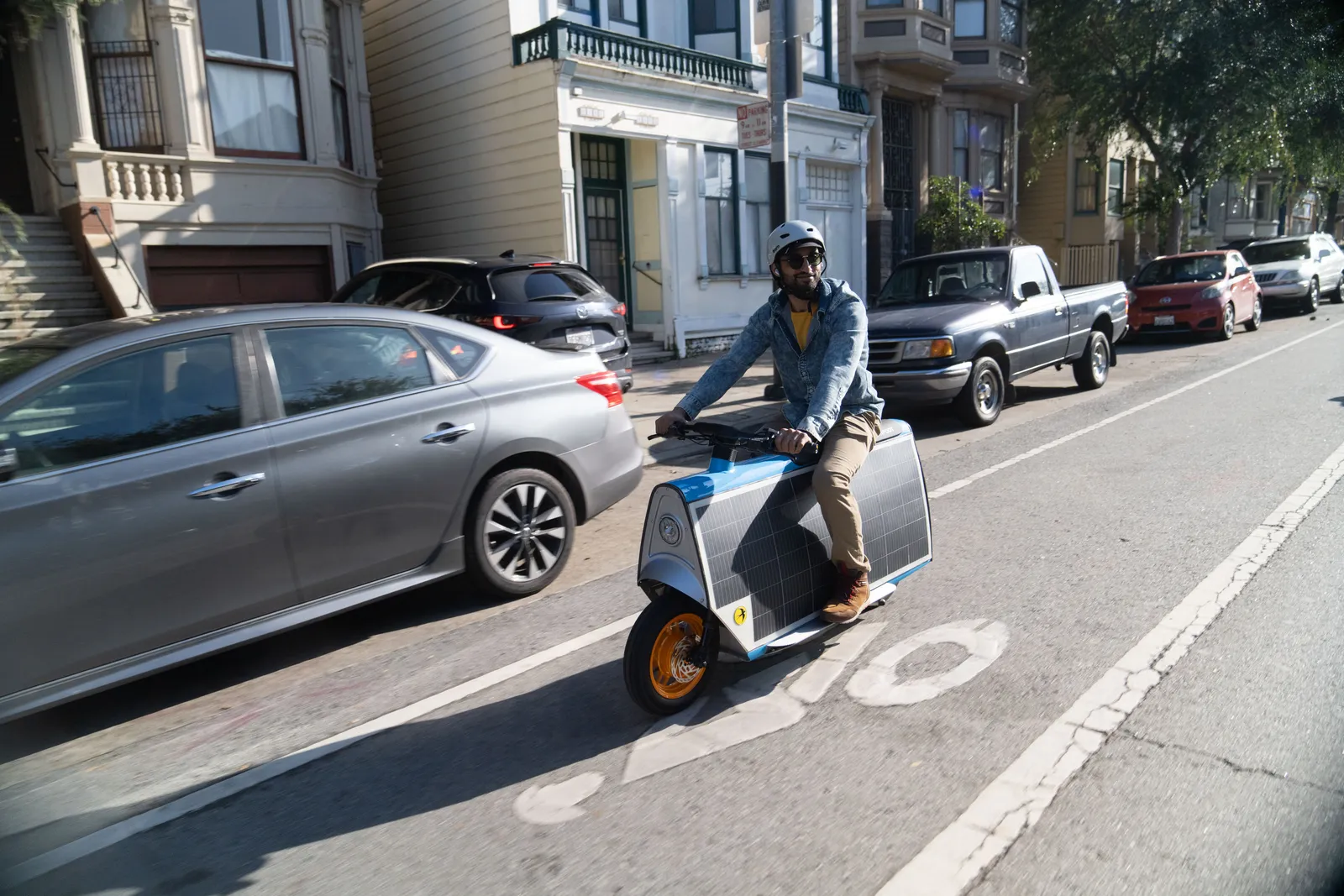
The Lightfoot looks like someone built a cozy bench on wheels and slapped solar panels on the sides. It cruises at 20 miles per hour in bike lanes without requiring a single pedal push. Riders say strangers take photos at stoplights and yell questions mid-ride.
This isn't some futuristic concept vehicle. The Lightfoot is on sale now in California for $4,495, and Otherlab (the company behind it) is already shipping orders. The creator calls it a "smile machine" because of the reactions it gets.
Here's what makes it special: those solar panels actually work. Park it outside during the day, and it charges itself for your evening trip to dinner. No hunting for outlets, no expensive charging stations.
The scooter fits two people on its bench seat and handles rough roads surprisingly well thanks to solid suspension. It weighs 137 pounds and uses simple, off-the-shelf parts that any local bike shop can fix. There's no fancy app, no complicated modes, just a PIN lock and a throttle.
Griffith, who also founded Rewiring America (a nonprofit helping Americans switch to clean energy), designed the Lightfoot to prove a point. Most of us don't need a two-ton car to grab groceries or visit a friend across town.
The Ripple Effect
The Lightfoot is starting small on purpose. After watching countless electric vehicle startups crash by expanding too fast, Otherlab is focusing on sunny California first. Next stops include southern states and eventually Florida.
The company is already talking with resorts, college campuses, and delivery fleets. Vietnam has expressed interest too, since Hanoi is banning gas scooters in 2027. Each conversation reveals new ways communities might use affordable, solar-powered transport.
If it works, the Lightfoot could help answer a question many cities are asking: how do we move people short distances without cars, pollution, or complicated infrastructure?
For now, California riders are zipping around on sunshine, grinning at strangers who can't quite believe what they're seeing.
More Images
Based on reporting by Wired
This story was written by BrightWire based on verified news reports.
Building Something New? Try the BrightWire Tech Stack Advisor
Compare modern frameworks, cloud hosting, and AI tools tailored to your project budget and scale.
Spread the positivity!
Share this good news with someone who needs it