Solar Uses Just 0.07% of U.S. Prime Farmland
A new interactive map reveals solar panels occupy a tiny fraction of America's farmland while helping farmers earn stable income. Golf courses and suburban sprawl actually consume far more agricultural land than renewable energy projects.
📺 Watch the full story above
Worried about solar panels eating up farmland? A groundbreaking new map from the Solar Energy Industries Association shows those fears are overblown.
Solar energy currently uses just 0.07% of U.S. prime farmland. That's less land than what's been abandoned, and dramatically less than what's being paved over for suburbs and golf courses.
The interactive tool launched this week amid congressional Farm Bill negotiations and growing concerns about balancing food production with clean energy. It reveals that not a single state has solar installations on more than 0.5% of its prime farmland.
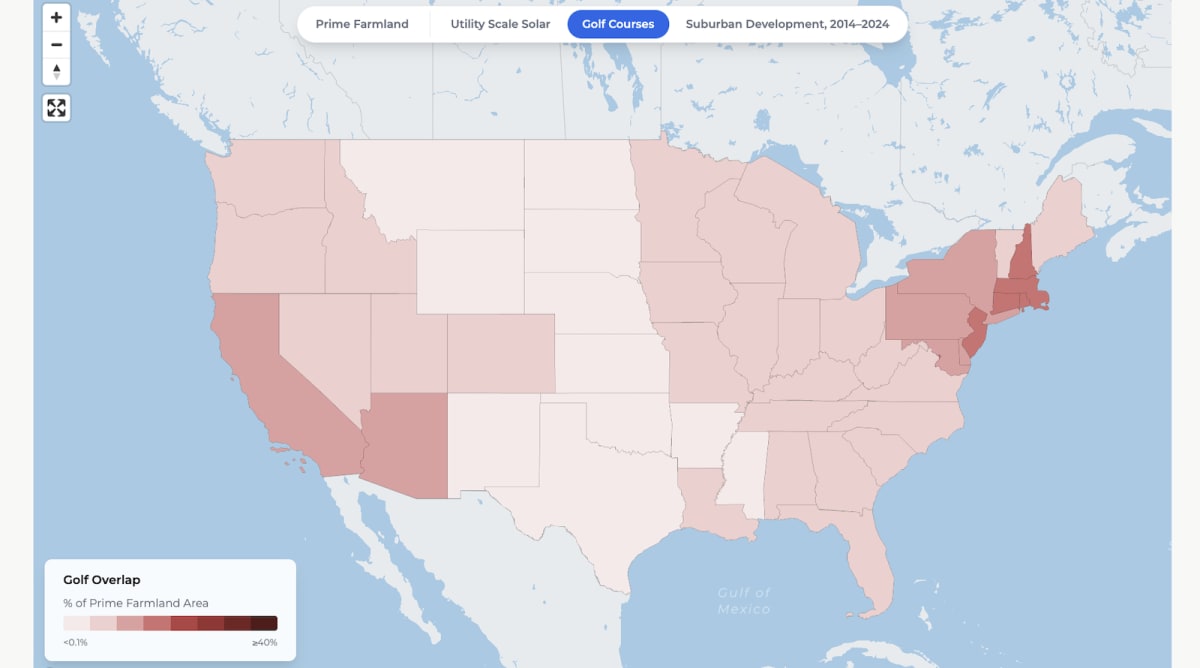
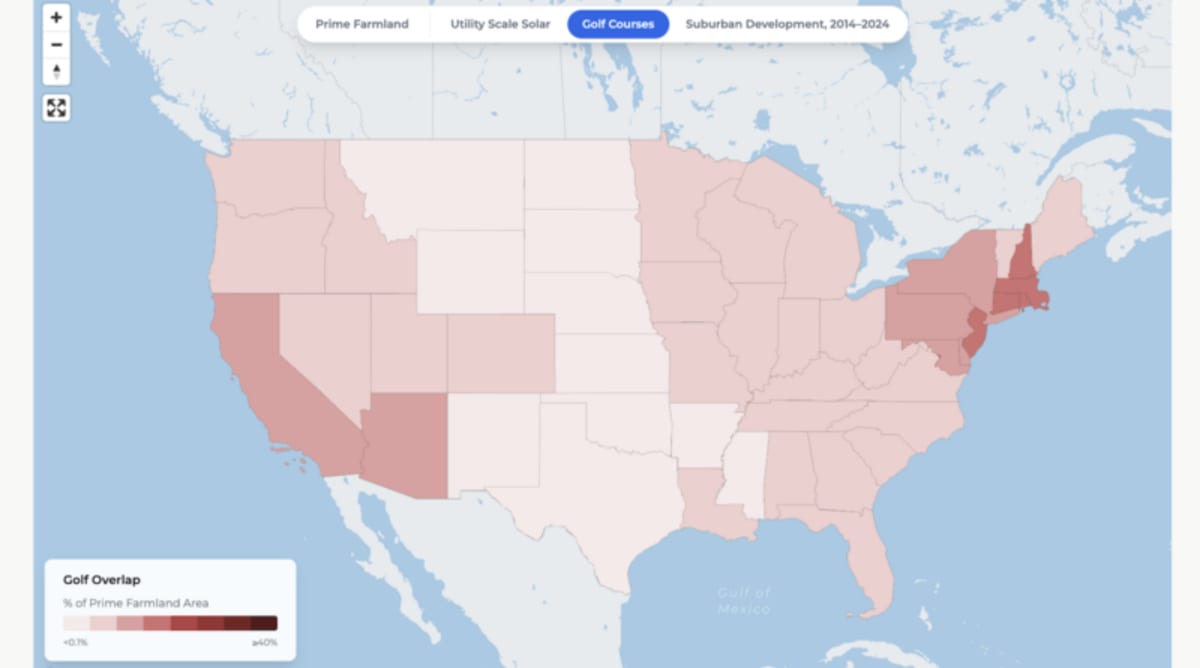
The numbers get even more interesting when you compare solar to other land uses. Golf courses alone occupy 2.6 times more prime farmland than solar panels. Suburban development since 2014 has consumed roughly six times more farmland than all solar projects combined.
For every acre of solar on prime farmland, there are 43 acres of abandoned prime farmland sitting unused. Unlike permanent suburban expansion, solar installations can be removed at the end of their 25 to 30 year lifespan, returning the land to agricultural use.
Thousands of farmers across America are choosing solar as a way to keep family farms in business. The panels provide stable, long-term revenue that helps weather unpredictable crop prices and climate challenges while delivering affordable electricity to rural communities.
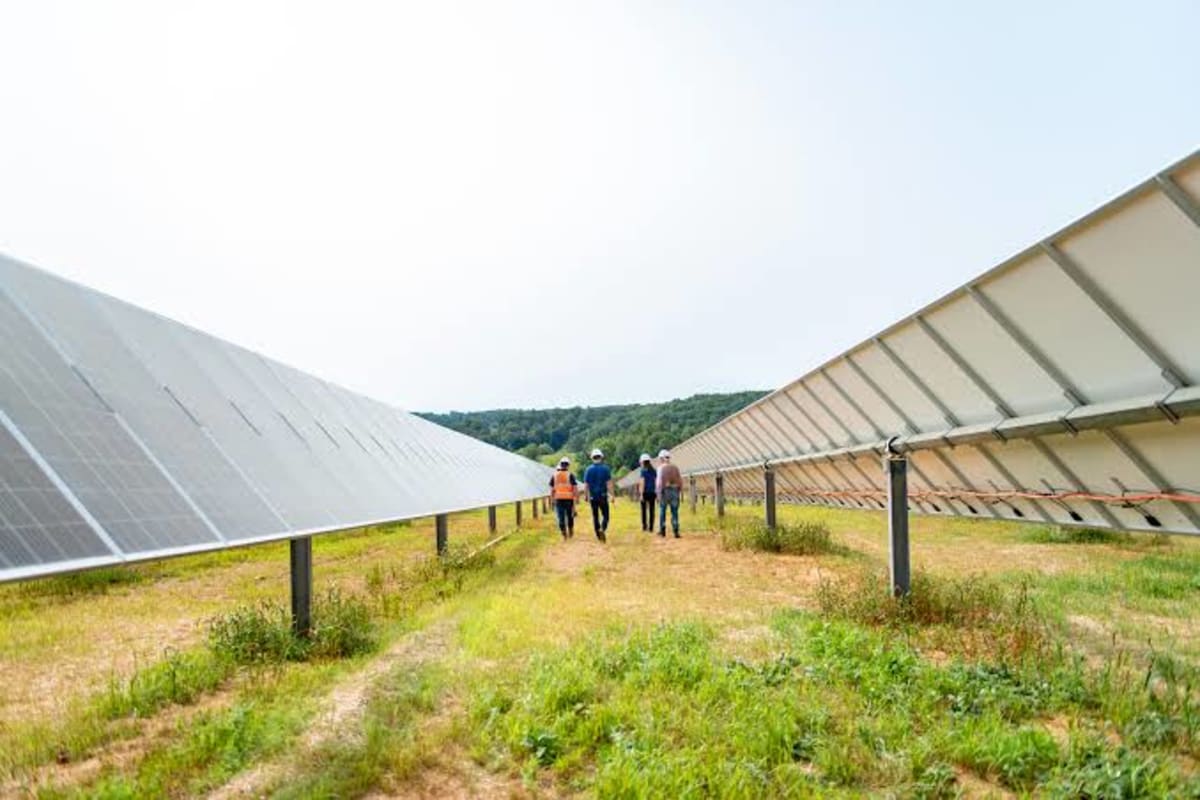
Many solar projects support dual-use practices. Sheep graze beneath panels, bees pollinate wildflowers planted between rows, and the land continues contributing to local ecosystems.
The Ripple Effect
The benefits extend beyond individual farms. Solar projects bring local tax revenue to rural communities, often funding schools and infrastructure improvements. They create construction jobs and ongoing maintenance work in areas that need economic opportunities.
Tim Pawlenty, SEIA president and CEO, emphasized the balance communities need. "America depends on our land to grow our food, build our communities, and power our lives," he said. The new map helps people understand that these needs aren't in competition.
The tool arrives at a crucial moment as communities make decisions about their energy future. With transparent data now available, local officials and landowners can make informed choices about responsible development that supports both agriculture and clean energy goals.
The findings show that solar and farming can thrive side by side, creating shared value while protecting the land that feeds America.
More Images
Based on reporting by CleanTechnica
This story was written by BrightWire based on verified news reports.
Spread the positivity!
Share this good news with someone who needs it