Sony's Table Tennis Robot Defeats Pro Players
A robot named Ace has reached a new milestone in AI by beating professional table tennis players in real matches. The breakthrough shows artificial intelligence can now excel in fast-paced physical sports, not just digital games.
Sony's AI division just proved that robots can compete with the best athletes in the world, and they chose one of the fastest sports to do it.
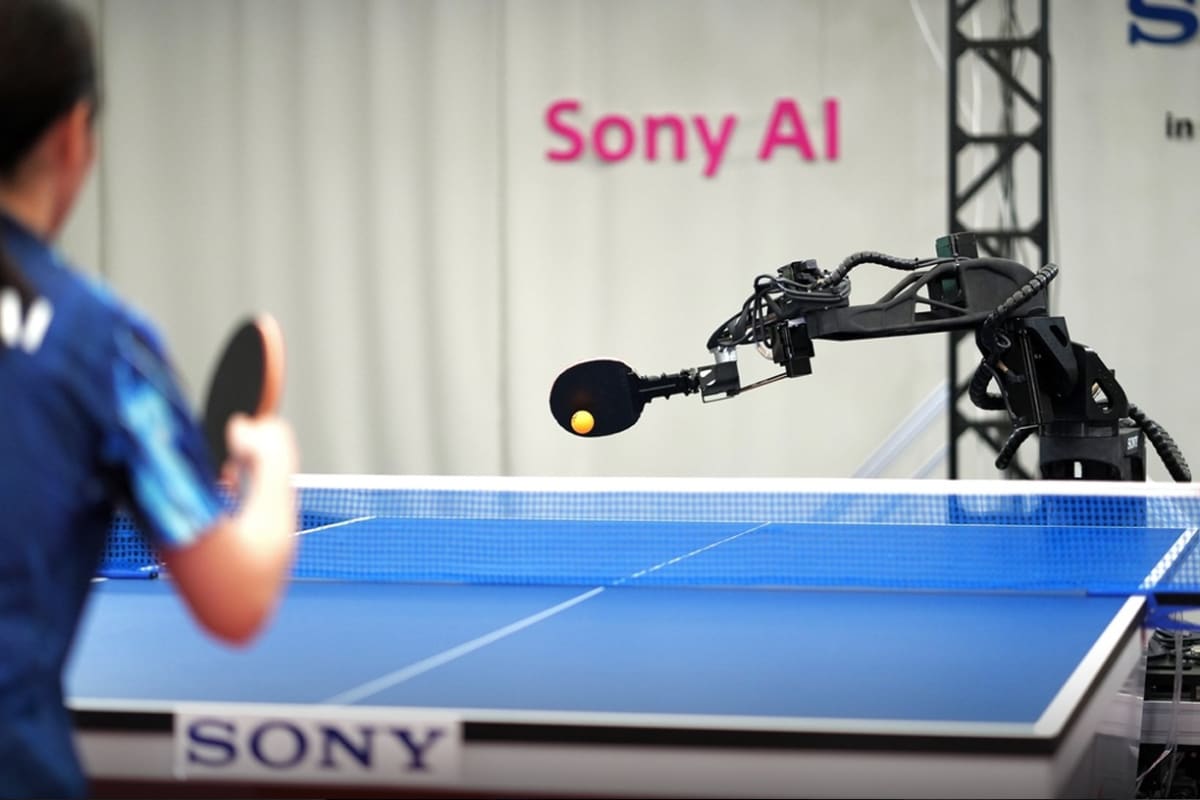
Meet Ace, a table tennis robot that recently defeated professional players in official matches. The robot won three out of five games against high-level competitors and came close against top-tier pros, with additional wins reported through early 2026.
This achievement represents a major leap for artificial intelligence. Previous AI victories happened in digital spaces like chess or strategy games. Table tennis requires something far more complex: real-time tracking, split-second decisions, and precise physical movements that push the limits of human reaction time.
Ace relies on eight robotic joints that control every aspect of each shot, from position and angle to speed and force. Nine synchronized cameras track the ball's movement, spin, and trajectory with accuracy that surpasses what human eyes can process.
The robot's learning process sets it apart from traditional training methods. Instead of studying how humans play, Ace teaches itself through simulation, developing unique strategies that even surprise professional athletes.
The Ripple Effect
Professional player Mayuka Taira, who lost to Ace, described the challenge of facing an opponent without emotional tells. "You cannot sense what it struggles with or what kind of shots it prefers," she explained. The robot's unpredictable patterns make it harder to read than human competitors.
Fellow pro Rui Takenaka noticed how Ace adapts to different playing styles. Complex serves get returned with equally complex spins, while simpler shots produce more predictable responses. This adaptability opens new strategic possibilities for both training and gameplay.
The technology powering Ace reaches far beyond the ping pong table. Researchers see applications in industrial robotics, service systems, and any environment requiring safe, responsive human interaction. The combination of rapid perception and precise control could transform how robots work alongside people in factories, hospitals, and homes.
This breakthrough proves that AI can master dynamic physical challenges, not just digital ones. That opens doors to a future where robots become better partners in work and daily life.
Based on reporting by Google News - AI Breakthrough
This story was written by BrightWire based on verified news reports.
Spread the positivity!
Share this good news with someone who needs it