%2Ffile%2Fattachments%2Forphans%2FKarooPistachiosFarmAerialView_174183.jpg)
South Africa Grows "Green Gold" to Feed the World
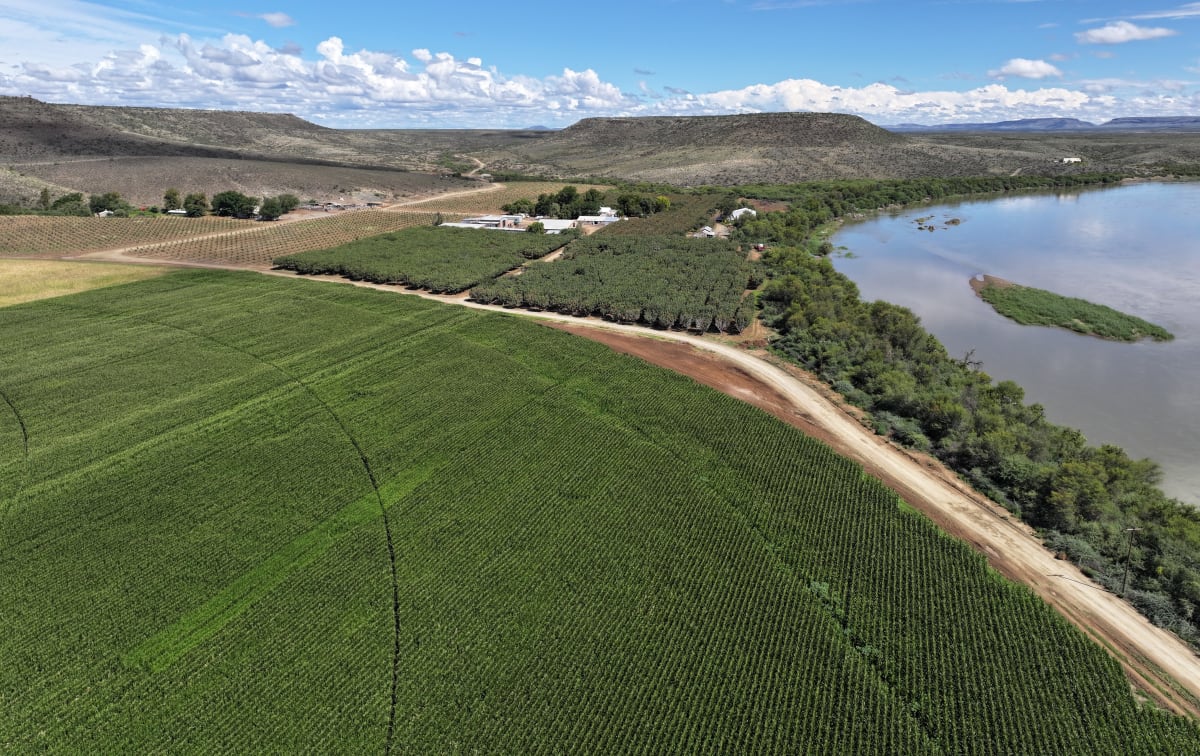
South Africa is building a pistachio industry in the arid Karoo that could capture 8% of the global market within a decade. A new financing model that bends to how trees actually grow is making it possible.
The desert landscape of South Africa's Northern Cape is sprouting an entirely new industry, one that could position the country among the world's top pistachio producers by 2036.
Pistachios are serious business globally. They're called "green gold" in Turkey, where they underpin entire culinary traditions, and the global market is worth $5.49 billion this year, expected to reach $7 billion by 2031.
Here's the opportunity: just three countries control 85% of world production. The United States, Iran, and Turkey face mounting water scarcity, climate volatility, and geopolitical tensions, creating space for new suppliers to enter the market.
South Africa's Karoo region offers something rare: desert heat, winter chill, low rainfall, and access to irrigation from the Orange River. Karoo Pistachios and its funding partner Fedgroup laid out their vision at a growers' conference in Prieska: build capacity to produce 60,000 tonnes annually and capture 5% to 8% of global market share.
"We have a counter-seasonal advantage and a premium product," said Karoo Pistachios CEO David Muller. Quality tests show South African pistachios rival the world's best, with prices reaching $36 per kilogram in early 2026.
But growing pistachios requires patience. Trees take years to mature, yields fluctuate wildly between seasons, and farmers typically only break even around year eight.
The Ripple Effect
That timeline has historically clashed with traditional bank loans demanding predictable repayments. Fedgroup spent six years developing a financing model that bends to biology instead of forcing biology to bend to spreadsheets.
"We structure financial instruments that mimic the cash flow cycle of the underlying assets," explained Warren Winchester, Partner at Fedgroup Alternative Asset Management. "You don't have to pay back before the assets are producing income."
The model adjusts for pistachios' alternate-bearing nature, where trees deliver heavy harvests one year and lighter ones the next. Returns link to actual output, not rigid schedules.
For Muller, this flexibility is transformative for South African farmers facing unsustainable crops. "People need to urgently diversify from corn and wheat because we're not competitive on the world market, and climate change is making it more volatile," he said.
The resilience of pistachios offers hope. They're desert plants that survive drought and bounce back when water returns.
This isn't just about nuts; it's about rethinking how agriculture gets funded in a changing climate, one patient investment at a time.
More Images

%2Ffile%2Fattachments%2Forphans%2FKarooPistachioCEODavidMuller_756253.jpg)
%2Ffile%2Fattachments%2Forphans%2FFedgroupPartnerAlternativeAssetManagementWarrenWinchester_401641.jpg)
Based on reporting by Daily Maverick
This story was written by BrightWire based on verified news reports.
Spread the positivity!
Share this good news with someone who needs it
%2Ffile%2Fattachments%2Forphans%2FIMG_6399_134346.jpg)