%2Ffile%2Fattachments%2Forphans%2F6I1A3746_596866.jpg)
South Africa Refill Stores Cut Costs 50% for Low-Income Shoppers
A Johannesburg scone seller buys exactly what she needs each morning at a revolutionary refill store that's making groceries affordable for South Africa's poorest communities. By eliminating packaging and selling by weight, these shops are proving fair pricing isn't just possible—it's profitable.
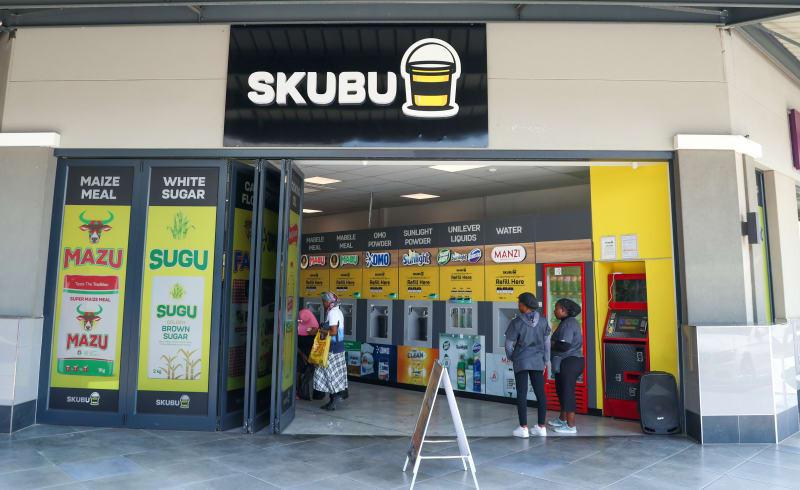
Every morning before dawn, a businesswoman in Diepsloot, Johannesburg, sells her homemade scones, then walks to her local Skubu store with empty containers and buys exactly what she needs for tomorrow's batch. It's a simple routine that's only possible because someone decided to fix a broken system.
Skubu and similar refill stores are spreading across South Africa's underserved communities with a radical idea: let people buy groceries by weight, paying the same fair price per gram whether they're buying 100 grams or 10 kilograms. Shoppers bring their own containers and fill them with essentials like maize meal, cooking oil, sugar, and cleaning products.
The problem these stores solve is staggering. A 1kg bag of maize meal typically costs R20 to R22, while a 10kg bag costs only R90 to R100. Poor families who can't afford bulk sizes end up paying double per kilogram for the exact same product.
Founder Ebenezer de Jongh noticed this pricing injustice while working as a logistics manager at a major consumer goods company. He was so troubled by it that he sold his house to raise startup capital and left corporate life entirely.
The Council for Scientific and Industrial Research found that Skubu's model eliminates up to 100% of single-use plastic packaging while enabling savings of up to 50%. For families living on South Africa's minimum wage of R4,836 per month, with basic food costs at R3,720, those savings aren't just helpful—they're the difference between eating and going hungry.
The Ripple Effect
The impact reaches far beyond individual savings. At Gcwalisa, another refill store operating from a shipping container outside Alex Mall in Alexandra, grandmothers measure out a few rands' worth of sugar while children stop by on their way to school.
These aren't just stores—they're community gathering places where neighbors catch up while they shop. The model creates local jobs while teaching young entrepreneurs through De Jongh's separate venture, Sonke Sales Solutions.
De Jongh calls his approach "going back to the future," inspired by his grandmother's stories of grocery shopping in Zimbabwe. The stores use modern technology and old-fashioned common sense to prove that serving low-income communities well isn't charity—it's smart business.
The scone seller put it simply: "I wouldn't think about going to any other shop. It is much cheaper and affordable to buy everything I need from them." Her neighbors agree, building their own precise, self-sustaining routines around fair prices and zero waste.
Skubu currently operates just two locations, focused on serving their communities well rather than rushing expansion. Sometimes the most revolutionary act is simply treating everyone fairly.
More Images
%2Ffile%2Fattachments%2Forphans%2F6I1A3751_593719.jpg)
%2Ffile%2Fattachments%2Forphans%2F6I1A3741_827056.jpg)
%2Ffile%2Fattachments%2Forphans%2F6I1A3757_566531.jpg)
Based on reporting by Daily Maverick
This story was written by BrightWire based on verified news reports.
Spread the positivity!
Share this good news with someone who needs it