South Africa's First Solar-Powered Electric Truck Charger
A fully off-grid, solar-powered charging station near Wolmaransstad just charged its first electric truck, proving renewable freight transport can work in South Africa. While the country faces infrastructure challenges, this breakthrough shows grid-independent solutions are already arriving.
📺 Watch the full story above
South Africa just took a major leap toward cleaner freight transport without relying on the troubled power grid.
In January 2026, Zero Carbon Charge opened the country's first fully off-grid, solar-powered ultra-fast charging station for electric trucks near Wolmaransstad. The milestone proves that renewable, grid-independent freight charging works under local conditions, offering a blueprint for expanding electric trucking across a country where reliable electricity has long been a challenge.
The timing couldn't be better. Electric trucks are racing ahead globally, with more than 90,000 units sold worldwide in 2024 alone. Companies like Volvo, Daimler Truck, BYD, and Tesla have moved these vehicles from pilot projects to full commercial production, powering last-mile delivery and regional distribution across North America, Europe, and Asia.
But South Africa faces different obstacles. The freight sector depends on long-distance routes spanning thousands of kilometers, often with limited charging infrastructure. While load shedding has faded into memory, power supply remains unstable, and public charging stations for heavy vehicles are virtually nonexistent.
That's what makes the Wolmaransstad station so significant. By running entirely on solar power, it sidesteps grid dependency while offering the fast charging speeds freight operators need.
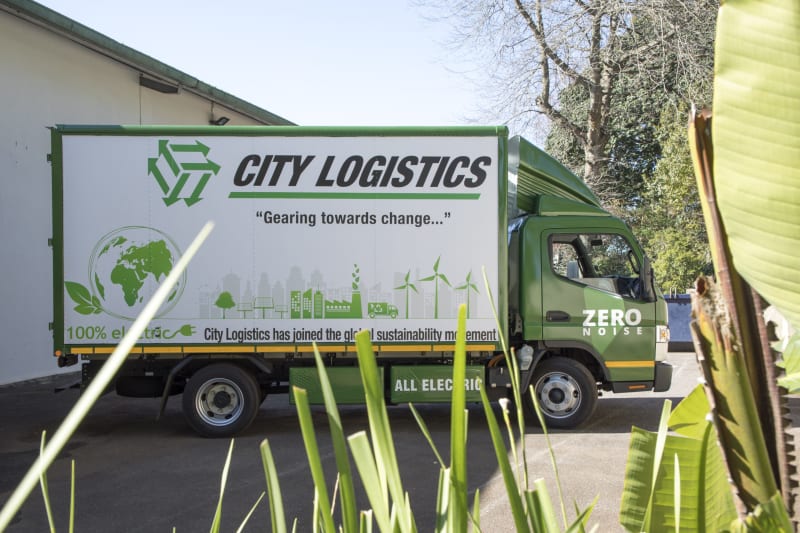
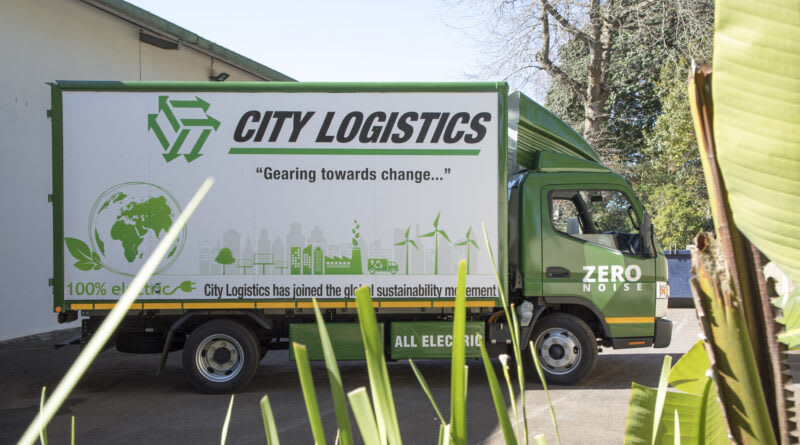
City Logistics has already tested these waters. The company trialed a battery-electric Fuso eCanter on an 80-kilometer round trip between Germiston and Midrand, hauling full loads in both directions. The truck performed well under controlled conditions, but the trial reinforced that electric vehicles work best on short, predictable urban routes with guaranteed access to charging.
Ryan Gaines, CEO of City Logistics, emphasized that electric trucks need reliable power, depot-based charging, and tightly managed operations to succeed. "Electric trucks make sense in environments where you have reliable power, short routes, and the infrastructure to support them," he said.
Cost remains another hurdle. Electric trucks carry substantial upfront price premiums, and South Africa lacks the government incentives and tax breaks that have accelerated adoption elsewhere. For logistics companies operating on thin margins, reliability matters more than cutting-edge technology.
The Bright Side
South Africa isn't sitting on the sidelines. Logistics operators are actively monitoring developments, testing vehicles, and identifying niche applications like urban delivery or closed-loop industrial routes where electric trucks make immediate sense.
The solar-powered charging station proves that infrastructure gaps can be closed with renewable energy solutions designed for local conditions. As battery technology improves and more grid-independent charging stations emerge, electric freight transport becomes increasingly viable without waiting for national grid upgrades.
This isn't about replacing diesel trucks overnight—it's about building the foundation for a cleaner freight future, one solar panel and charging station at a time.
More Images

Based on reporting by CleanTechnica
This story was written by BrightWire based on verified news reports.
Spread the positivity!
Share this good news with someone who needs it