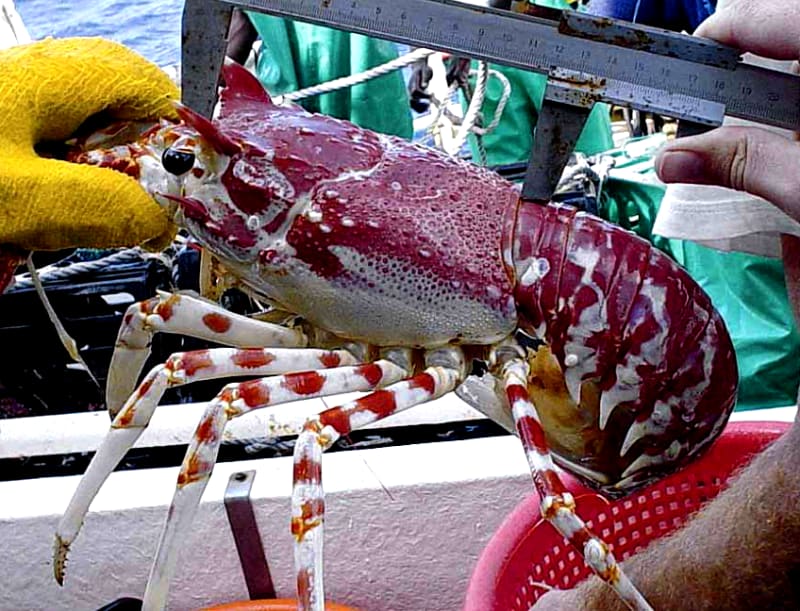
%2Ffile%2Fattachments%2Forphans%2FMeasuringalobsterforallowablesizeDFFE_788413.jpg)
South Africa's Marine Parks Double Fish Populations
A Cape Town scientist is proving that ocean "savings accounts" can rebuild overfished populations in just a decade. His work shows marine protected areas are restoring species once on the brink while helping fishing communities thrive.
Imagine trying to count every fish in the ocean without draining it first. Professor Colin Attwood has spent his career doing exactly that, and his findings are giving South Africa's oceans a second chance.
The University of Cape Town researcher doesn't literally count fish. Instead, he pieces together clues like an ocean detective using underwater cameras, sonar, diver surveys, and tag-and-release studies to track population trends over time.
His real breakthrough isn't in counting, though. It's in proving that marine protected areas work like savings accounts for the sea.
Inside these no-fishing zones, Attwood has watched decimated populations come roaring back. Red roman and galjoen, two species hammered by overfishing, now thrive in protected waters with double or triple the fish biomass compared to a decade ago.
The secret lies in protecting the big breeders. A large female fish can produce ten times more eggs than a smaller one, Attwood explains. When these giants get sanctuary to grow old, their offspring replenish fishing grounds far beyond protected boundaries.
This "spillover effect" addresses fishers' biggest worry about losing access to traditional grounds. As protected populations explode, fish don't respect park boundaries. They swim into neighboring waters where fishing continues, often boosting catches just outside the reserves.
The difference takes patience. Slow-growing species might need a full decade to show dramatic recovery, and enforcement is critical. A marine park that exists only on paper does nothing for fish or fishers.
South Africa's success mirrors global patterns. Well-managed marine reserves worldwide routinely double fish populations within ten years, providing some of conservation's clearest wins.
Why This Inspires
Attwood's work proves we can reverse decades of damage with smart, science-backed protection. His research gives coastal communities a roadmap: short-term sacrifice for long-term abundance.
The approach works best when fishers help design the protected areas, turning potential adversaries into partners. When local voices shape where boundaries go and how parks operate, compliance soars and everyone wins.
His methods also create living laboratories. By comparing protected reefs to fished ones, scientists finally see what "healthy" looks like, providing a baseline that guides management decisions across entire coastlines.
The professor trains the next generation of ocean guardians too, inspiring students to care for marine ecosystems through hands-on research. His students learn that conservation isn't about locking away resources but about managing them wisely for future generations.
Climate change adds urgency to his mission as warming waters and shifting currents reshape fish habitats. But the foundation he's building, protected areas where populations can withstand stress and adapt, gives marine life its best fighting chance.
Attwood's jigsaw puzzle approach, assembling scattered clues into a complete picture of ocean health, shows that patience and science can restore what seemed permanently lost.
More Images

%2Ffile%2Fattachments%2F2985%2FTroubledWaters_405609.jpg)
%2Ffile%2Fattachments%2F2985%2FProfColinAttwood_834619_795aeef2062ebdd90e833e3f33b46a11.jpg)
Based on reporting by Daily Maverick
This story was written by BrightWire based on verified news reports.
Spread the positivity!
Share this good news with someone who needs it
%2Ffile%2Fattachments%2Forphans%2FMLJoburg-91_220988.jpg)
%2Ffile%2Fattachments%2Forphans%2FIMG_20260823_131033_256493.jpg)