South Dakota Ethanol Plant Gets World's Largest Heat Battery
A groundbreaking thermal battery system is turning cheap wind power into industrial heat for an ethanol refinery, slashing costs while cleaning up production. The technology could transform how America's factories power themselves.
An empty lot in South Dakota has become home to one of the world's largest battery projects, and it's nothing like the batteries in your phone.
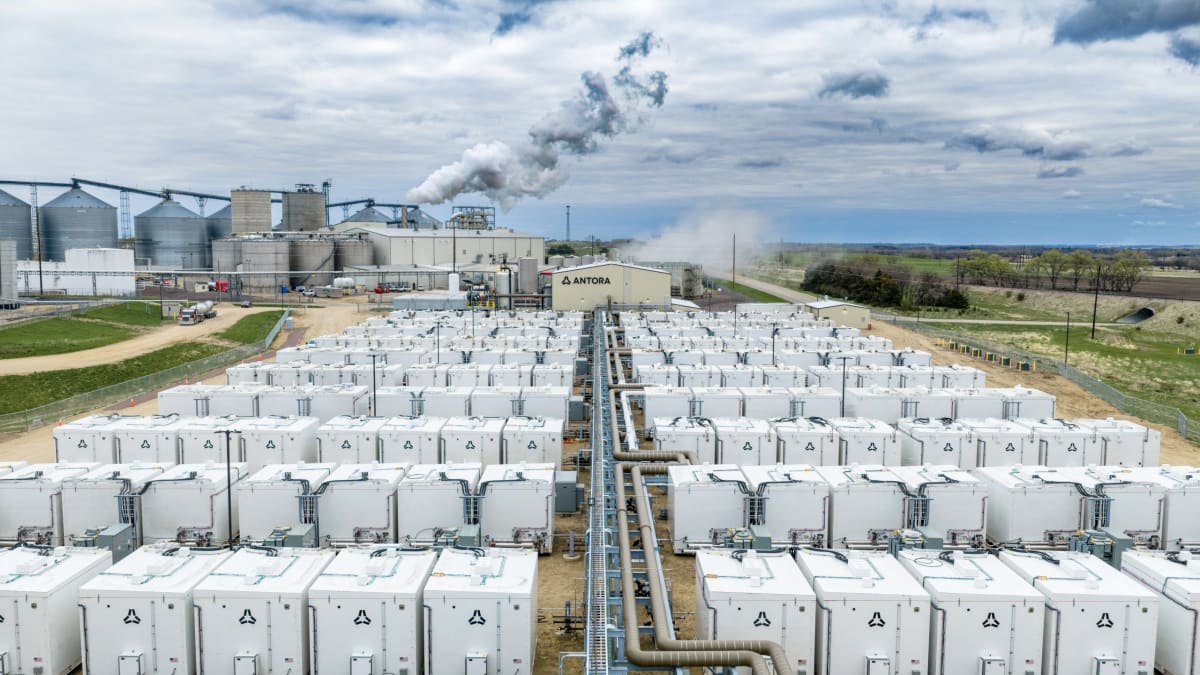
California startup Antora just fired up over 200 thermal batteries next to POET's ethanol refinery in Big Stone City. These aren't your typical batteries. They convert cheap wind power into heat and store it in carbon blocks that get hotter than cement kilns, reaching temperatures that would make a pizza oven look like a refrigerator.
The heat powers the plant's massive dryers, which previously relied on an aging coal plant and natural gas. Now the refinery can soak up excess wind energy that would otherwise go to waste when the grid doesn't need it.
South Dakota regulators approved a special 20-year rate structure in July that protects other utility customers while letting the batteries charge when electricity is cheapest and most abundant. It's not a sweetheart deal. It's recognition that flexible energy users can help everyone by using power when nobody else wants it.
The Biden administration gave Antora $14.5 million last year to scale up the technology. While federal climate goals have shifted under the Trump administration, the economic logic hasn't changed for plant owners and utilities.
POET can now expand production, pumping tens of millions more into the regional economy through payments to corn growers, according to Antora's director of state affairs Noah Long. The system went from blueprint to operation in less than a year.
The Ripple Effect
The technology addresses a stubborn problem in American manufacturing. Minnesota alone has 8,500 factories employing 323,000 workers, but just 37 facilities produce 87% of the state's industrial emissions. These plants need heat, and lots of it, but switching away from fossil fuels has been prohibitively expensive.
Thermal batteries change the equation by storing energy over long periods and responding instantly when grid conditions shift. The heating elements work like giant toasters, warming up and cooling down on demand.
Francesco Aimone, an industrial electrification fellow at the Center for Climate and Energy Solutions, calls it a win for everyone. When factories can use wind power that would otherwise be curtailed due to lack of transmission capacity or demand, electricity costs drop across the board.
The project proves that clean industrial heat isn't just environmentally smart. It's becoming the economically smart choice too, especially in regions with abundant renewable energy and outdated coal infrastructure.
What started as an experiment near the Minnesota border could reshape how America's factories compete in the decades ahead.
More Images
Based on reporting by Google News - Clean Energy
This story was written by BrightWire based on verified news reports.
Spread the positivity!
Share this good news with someone who needs it