South Korea Launches Homegrown Earth-Observation Satellite
South Korea just launched its second advanced Earth-observation satellite, marking a major leap toward space independence. The homegrown technology will help monitor disasters and improve agriculture while strengthening the nation's satellite capabilities.
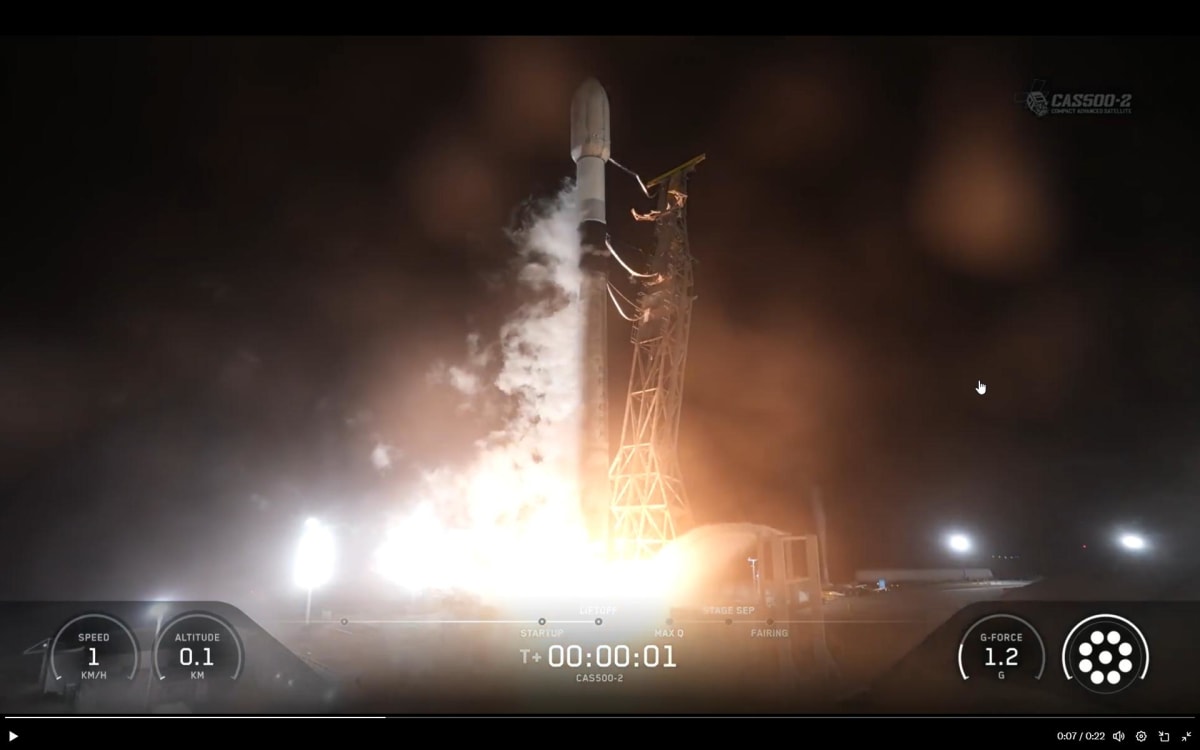
South Korea took a giant step toward space independence Saturday when its newest Earth-observation satellite successfully entered orbit from California's Vandenberg Space Force Base.
The Compact Advanced Satellite (CAS) 500-2 lifted off aboard a SpaceX Falcon 9 rocket at midnight local time. Just one hour later, the satellite separated from the rocket and made its first contact with a ground station in Norway, confirming all systems were working perfectly.
This launch represents something bigger than just another satellite in orbit. The Korea AeroSpace Administration (KASA) emphasized that key components of both the platform and payload were developed using homegrown South Korean technology, a significant milestone for the nation's space program.
The 534-kilogram satellite packs impressive capabilities, capturing black-and-white images with a ground resolution of just 0.5 meters and color images at 2 meters. These high-resolution images will help authorities monitor natural disasters in real time and track agricultural conditions across the country.
The journey to launch wasn't without challenges. The satellite was originally scheduled to launch on a Russian Soyuz rocket in 2022, but those plans fell through after Russia's invasion of Ukraine forced South Korea to find an alternative path forward.
After a four-month testing period, CAS500-2 will team up with its predecessor, CAS500-1, creating a powerful duo for Earth observation starting later this year. Together, they'll provide more frequent coverage and better data for disaster response and farming communities.
The Ripple Effect
South Korea's space achievements extend far beyond national pride. By developing independent satellite technology, the country joins an elite group of nations capable of monitoring their own territory and responding to emergencies without relying on foreign intelligence.
KASA Administrator Oh Tae-seog called the launch "a major milestone in opening the private-led space era," suggesting this success could unlock new opportunities for South Korean aerospace companies. The ability to independently capture high-precision imagery strengthens the nation's technological competitiveness on the global stage.
For farmers, this means better crop monitoring and more accurate predictions for planting and harvesting. For emergency responders, it means faster, more detailed information when disasters strike, potentially saving lives and reducing damage.
South Korea's journey from space program delays to successful homegrown satellite launches shows what determination and innovation can accomplish when a nation invests in its future.
Based on reporting by Regional: south korea technology (KR)
This story was written by BrightWire based on verified news reports.
Spread the positivity!
Share this good news with someone who needs it