South Korea Plans Tires Made 85% From Recycled Materials
South Korea just launched an ambitious project to turn old tires into new ones, with a goal of creating next-generation tires made from 85% sustainable materials while cutting carbon emissions in half. Eleven organizations are joining forces to prove the circular economy can work at scale.
Imagine if the worn-out tires on your car could become the brand-new ones that replace them. South Korea is making that vision real with a groundbreaking national project that could transform how the world thinks about tire manufacturing.
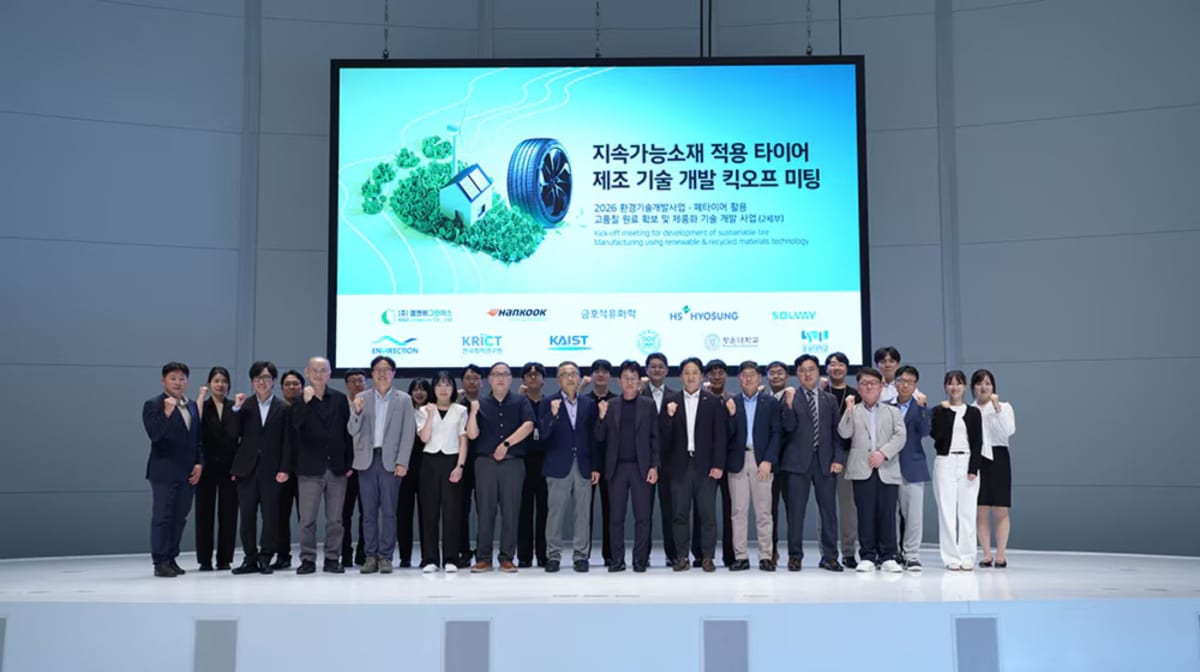
Hankook Tire kicked off the initiative as part of South Korea's Ministry of Climate, Energy and Environment's 2026 Environmental Technology Development Program. The ambitious goal is to create high-performance tires containing more than 85% sustainable materials while slashing carbon emissions by over 50%.
This isn't just one company working alone. Eleven organizations are collaborating on the project, including major industry players like Hankook Tire, Kumho Petrochemical, and Solvay, alongside universities like KAIST and Pusan National University. The Korea Research Institute of Chemical Technology is also contributing its expertise.
The project tackles two major challenges at once. First, teams are developing technologies to extract premium quality recycled materials from old tires that would otherwise end up in landfills. Second, they're creating new manufacturing processes that can actually use these recycled materials to make tires that perform as well as traditional ones.
Lead organization M&B Green Earth is coordinating the effort to create what South Korea calls a "Tire-to-Tire circular economy model." Instead of viewing used tires as waste, this approach treats them as valuable raw materials waiting for their next life.
The timing matters. Environmental regulations around the world are getting stricter, and companies need reliable sources of sustainable materials. By developing these technologies now, South Korea is positioning itself as a leader in green manufacturing while making its supply chains more resilient.
The Ripple Effect
This project extends far beyond just making greener tires. It demonstrates how countries can build circular economies by bringing together businesses, universities, and research institutions. When old products become new ones, we reduce waste, cut emissions, and create jobs in recycling and advanced manufacturing.
The collaborative model itself offers a blueprint for other industries and nations. By sharing knowledge across organizations and sectors, South Korea is accelerating innovation that might take decades if each company worked in isolation.
If successful, the technology developed here could spread globally. Tire manufacturers worldwide face the same environmental pressures and material challenges. Solutions proven in South Korea could help reduce the environmental footprint of the billions of tires produced each year.
Bonhee Koo, head of R&D innovation at Hankook Tire, captured the project's significance: "Through close communication and collaboration among all participating organizations, we will strive to deliver tangible outcomes that contribute to strengthening competitiveness in the global market."
The project represents a shift from treating sustainability as a burden to seeing it as an opportunity for innovation and leadership.
More Images


Based on reporting by Regional: south korea technology (KR)
This story was written by BrightWire based on verified news reports.
Spread the positivity!
Share this good news with someone who needs it