South Korea Targets 2,500 Solar Villages by 2030
South Korea is helping 2,500 rural villages build their own solar power plants by 2030, turning idle land into shared income for entire communities. One village already uses its solar revenue to fund free lunches and a community bus.
Imagine your entire village sharing the profits from clean energy generated right in your own backyard. That's exactly what South Korea is making possible for thousands of rural communities.
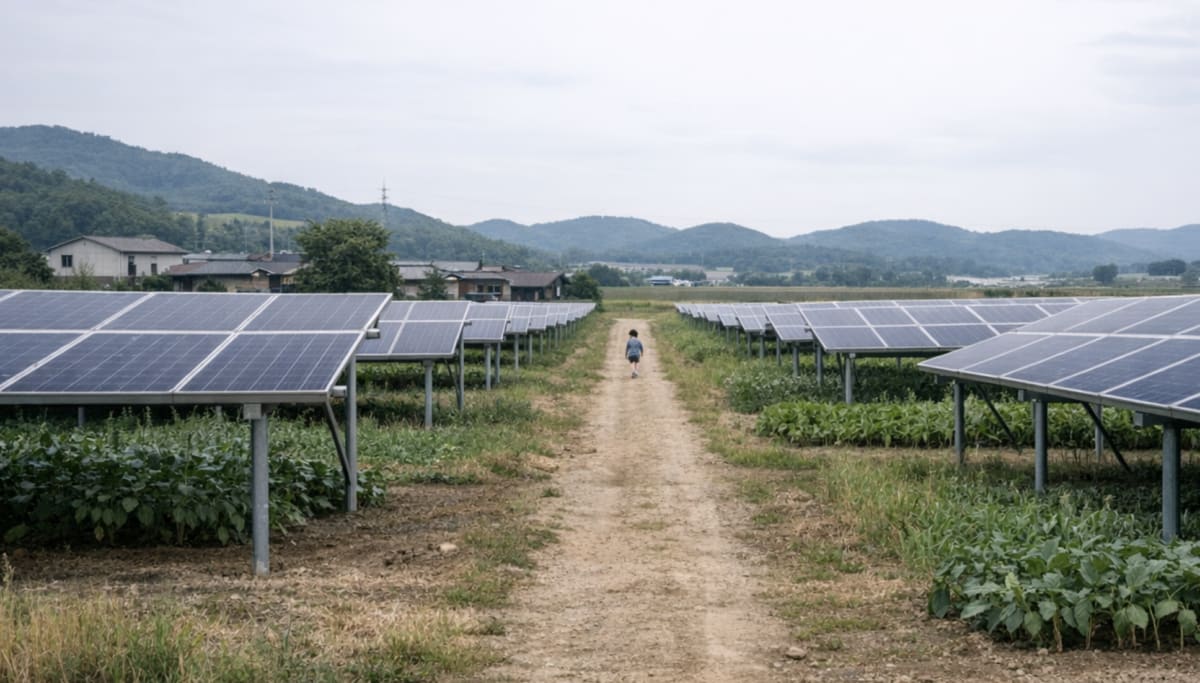
The country's Sunlight Income Village program launches this March, inviting 500 villages to form cooperatives that install solar panels on unused local land. Residents share the revenue equally, creating a new income stream for communities that need it most.
The program targets rural villages with idle public land, reservoirs, and reserve farmland. Each installation generates between 300 kilowatts and one megawatt of solar power. By 2030, the government aims to bring this opportunity to more than 2,500 of South Korea's 38,000 villages.
The best part? Villages don't need deep pockets to participate. Low-interest loans cover up to 85% of installation costs, drawn from $337 million in renewable energy funding available in 2026. In areas facing population decline, local governments can even cover residents' remaining share.
One village is already proving the model works. In Guyang-ri, a community in Gyeonggi province, residents installed solar panels on warehouses and parking lots. The electricity revenue now pays for free lunches at their community center and operates a free village bus for everyone.
The government isn't leaving villages to figure this out alone. A support team including Korea Electric Power Corp. and the Korea Energy Agency will provide on-site consulting starting in April. They'll help communities form cooperatives and identify the best locations for panels.
South Korea tackled the program's biggest hurdle head-on. Grid connection has historically slowed solar projects, so the government is amending national energy laws to give these village projects priority access to the power grid. Where capacity runs short, they'll install battery storage systems to bridge the gap.
The Ripple Effect
This program does more than generate clean electricity. It breathes economic life into rural communities struggling with population decline and limited opportunities. Villages become energy producers instead of just consumers, keeping revenue local and giving residents a reason to stay.
The timing aligns with South Korea's broader solar push. In February, lawmakers removed restrictive setback rules that had blocked solar projects. The same month, the government announced $240 million to upgrade power grids and deploy 85 energy storage systems nationwide.
Applications open in two rounds, closing at the end of May and July. Provincial governments will begin field operations in April, surveying land and meeting with interested communities.
Rural South Korea is turning sunshine into shared prosperity, one village at a time.
More Images
Based on reporting by PV Magazine
This story was written by BrightWire based on verified news reports.
Spread the positivity!
Share this good news with someone who needs it