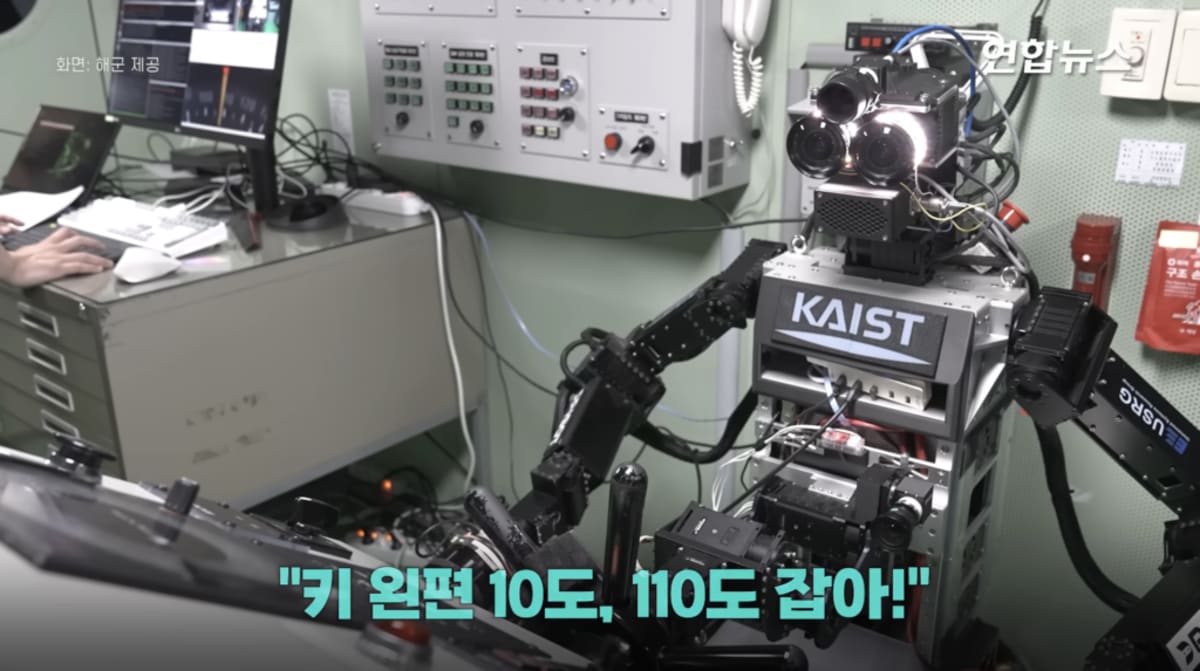
South Korea Tests Humanoid Robot Navy Sailors
South Korea's navy is testing a humanoid robot that can pilot ships, representing a major leap in human-machine teamwork at sea. The robot uses cameras to read instruments and navigate vessels during simulations.
Imagine a future where robots and humans work side by side to keep naval crews safer and more effective at sea.
South Korea's navy is making that future real with PIBOT, a humanoid robot that recently took the helm of a vessel during testing. The Korea Advanced Institute of Science and Technology developed the robot specifically to work alongside human sailors, not replace them.
PIBOT uses multiple cameras mounted on its body to read instrument panels and monitor everything happening around the ship. During recent simulations for the Republic of Korea Navy, the robot successfully controlled a vessel, proving it can handle real maritime tasks.
This isn't about removing humans from ships. The technology represents a new form of teamwork where robots handle repetitive or dangerous tasks while human sailors focus on strategic decisions and complex problem solving.
The robot's design allows it to use existing ship controls without requiring vessels to be completely redesigned. PIBOT can grip steering wheels, push buttons, and flip switches just like a human crew member would.
The Ripple Effect
South Korea's innovation could transform naval operations worldwide. Robots like PIBOT could take over overnight watches, monitor engine rooms in hazardous conditions, or maintain operations during emergencies when human safety is at risk.
The technology also addresses a challenge many navies face: recruiting enough qualified sailors. By having robots handle routine tasks, naval forces can operate effectively with smaller crews while keeping experienced sailors in roles where human judgment matters most.
Other nations are watching South Korea's tests closely. Success could spark similar programs globally, making naval service safer and more appealing to future generations.
The testing phase will help engineers refine PIBOT's capabilities and identify which shipboard tasks benefit most from robotic assistance. Each simulation brings the technology closer to real-world deployment.
South Korea continues proving that the future of defense isn't about choosing between humans and machines, but finding smart ways to combine the strengths of both.
More Images

Based on reporting by Regional: south korea technology (KR)
This story was written by BrightWire based on verified news reports.
Spread the positivity!
Share this good news with someone who needs it