South Korea Unveils First Homegrown Flying Air Taxi
South Korea just revealed its first domestically built air taxi at a major expo in Incheon, bringing the country one step closer to commercial flying taxi services by 2028. The two-seat electric aircraft represents a bold leap into the future of urban transportation.
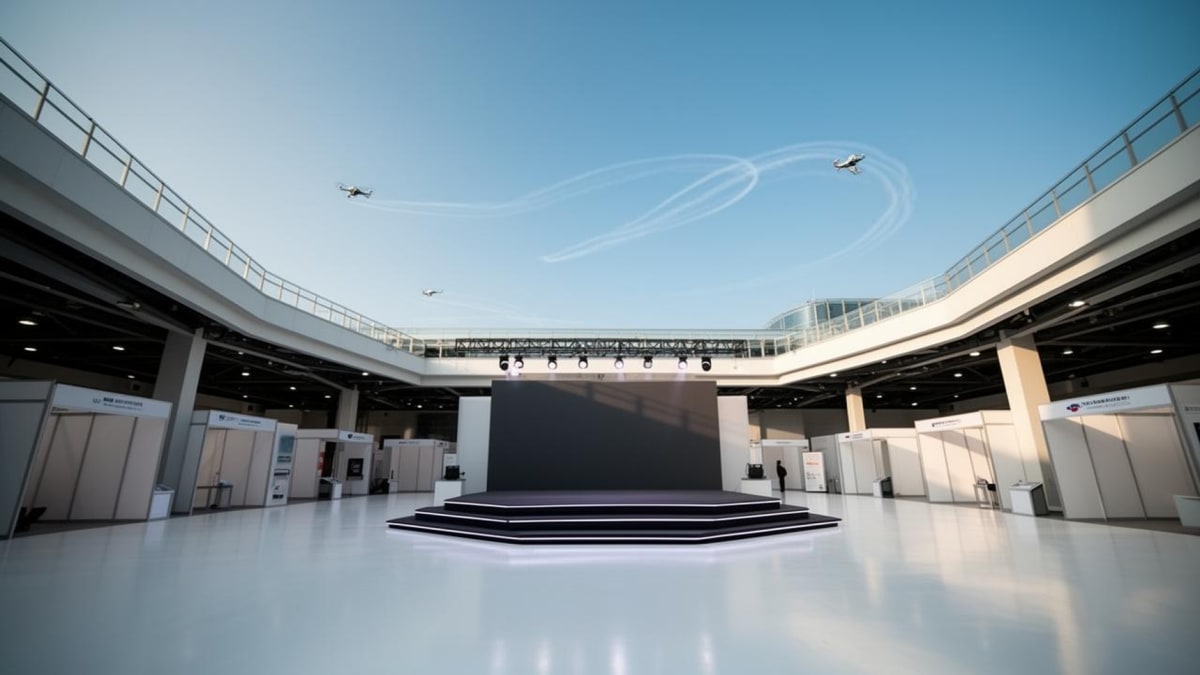
South Korea's first homegrown air taxi took center stage at the 2026 Korea Drone & UAM Expo in Songdo, marking a historic moment for the nation's aviation industry.
The two-seat B32-R2, built by Sambo A&T, features eight propellers and can take off vertically like a helicopter. While rain and radio interference postponed the planned flight demonstration, the unveiling itself drew crowds and government officials eager to witness the dawn of South Korea's air mobility era.
"This is the day a UAM built with our technology takes to the skies," said Kim Yoon-duk, South Korea's Minister of Land, Infrastructure and Transport. The aircraft represents years of development leveraging the country's strengths in battery technology and communication systems.
Incheon Mayor Park Chan-dae shared an exciting vision for the technology's real-world impact. He described future air taxis shuttling passengers between islands like Deokjeokdo, dramatically cutting travel times and connecting communities in ways previously impossible.
Korean Air showcased its ACROSS system at the same expo, an intelligent control platform that manages multiple air taxis simultaneously in busy urban airspace. The company also unveiled AI-powered inspection drones that can check an entire aircraft in just one hour, a task that previously took 11 hours.
Local drone companies Pablo Air and UbiFi displayed advanced technologies, while citizens got hands-on experience with virtual reality flight simulators. One popular attraction simulated a scenic flight over Jeju Island's famous landmarks, giving everyday people a glimpse of tomorrow's travel possibilities.
The Ripple Effect
Incheon City presented concrete plans for an Island Region Emergency Transportation System, using air taxis to rush medical patients and critical supplies to remote islands. This practical application could save lives by slashing response times in emergencies where every minute counts.
The technology showcased at the expo extends beyond passenger transport. Defense applications, swarm drone technology, and maintenance innovations demonstrate how this industry could create thousands of jobs while solving real transportation challenges facing island communities and congested cities.
Sambo A&T plans to build a three-seat prototype by 2030, working closely with government regulators to ensure safety at every step. South Korea aims to launch commercial air taxi services by 2028, following a careful phased verification process.
The four-day expo continues through July 17, featuring an international conference, job fair, and evening drone light shows. South Korea may be entering the air mobility race later than the United States, Europe, and China, but officials believe their "fast follower" strategy and technological strengths will carve out a meaningful market position.
The skies above South Korea's cities are about to get a lot more interesting.
Based on reporting by Regional: south korea technology (KR)
This story was written by BrightWire based on verified news reports.
Spread the positivity!
Share this good news with someone who needs it