Southeast Asia Pours $1.8B Into Solar and Electric Vehicles
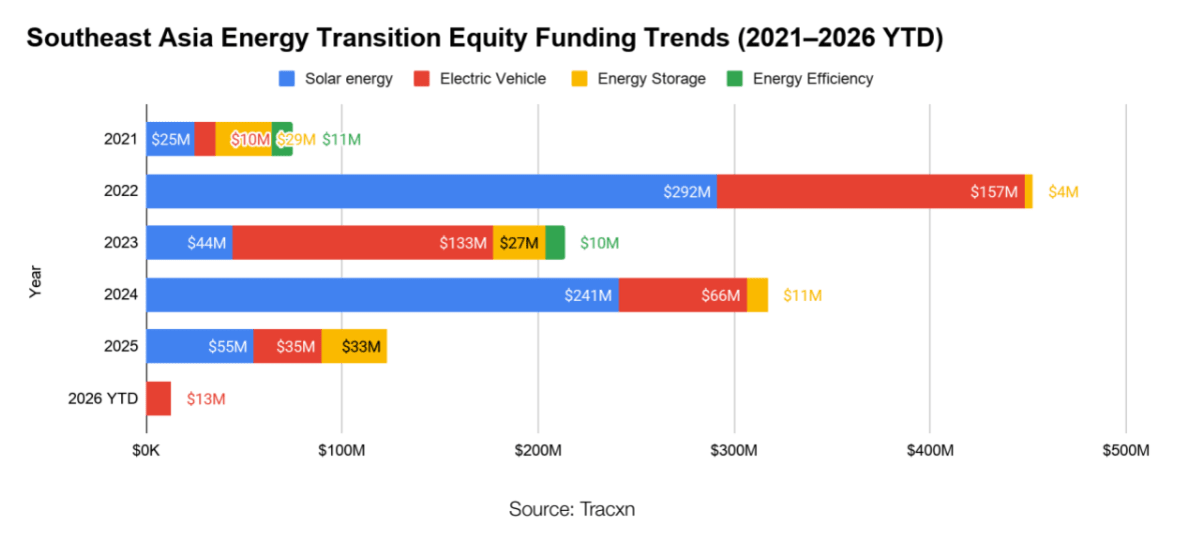
Southeast Asia is investing big in clean energy, with solar and electric vehicles capturing $1.6 billion of the region's $1.8 billion energy transition funding. The surge shows growing momentum toward renewable power, even as other critical technologies still need support.
Southeast Asia is betting big on a cleaner future, channeling nearly 90 percent of its $1.8 billion energy transition budget into solar power and electric vehicles.
Solar energy led the charge with $1.1 billion in funding, making up 62 percent of all clean energy investment across the region. Electric vehicles followed with $505 million, reflecting surging interest in cleaner transportation options that could transform how millions of people move through rapidly growing cities.
The investment boom shows real progress in countries working to reduce carbon emissions and build sustainable infrastructure. Vietnam's feed-in-tariff program between 2017 and 2020 helped rapidly expand solar capacity, while the Philippines recently introduced reforms to speed up project approvals and attract more investors.
However, the funding landscape reveals an important gap. Energy storage attracted just $119 million and energy efficiency secured only $77 million, together making up about 11 percent of total funding. These technologies are essential for long-term grid stability and helping renewable energy work reliably around the clock.
Of more than 2,000 energy transition companies operating in Southeast Asia, only 13 percent have secured funding so far. Solar companies are leading the way with 109 funded firms, including 50 that have gone public and 25 that have been acquired by larger companies.
The Ripple Effect
The clean energy shift is creating opportunities across multiple countries. Indonesia, Vietnam, Thailand, and the Philippines are all positioning themselves to benefit from renewable infrastructure buildouts that could power economic growth for decades.
Development finance institutions are stepping up to support emerging technologies like flow batteries, hydrogen, and grid-scale storage. These investments could help the next wave of clean energy companies advance beyond early-stage funding over the next two years.
Energy efficiency startups are also beginning to emerge outside traditional financial hubs, with companies working on grid software and demand-response platforms. Early successes in distributed energy solutions like microgrids and rooftop solar could pave the way for more geographically distributed investment across the region.
The funding surge represents more than just numbers on a spreadsheet. It signals growing confidence that Southeast Asia can build a sustainable energy future while supporting economic development and improving quality of life for hundreds of millions of people.
Based on reporting by Google: clean energy investment
This story was written by BrightWire based on verified news reports.
Spread the positivity!
Share this good news with someone who needs it