Southern US Solar Soars 25% in March Heat Dome
A record-breaking heat dome brought 25% more sunshine to southern US solar farms in March, with Texas and California leading gains. While northern regions faced storms, the sunbelt's clear skies delivered a powerful month for clean energy production.
Solar panels across Texas and California just had their best March in nearly two decades, thanks to unusually clear skies that boosted energy production by up to 25%.
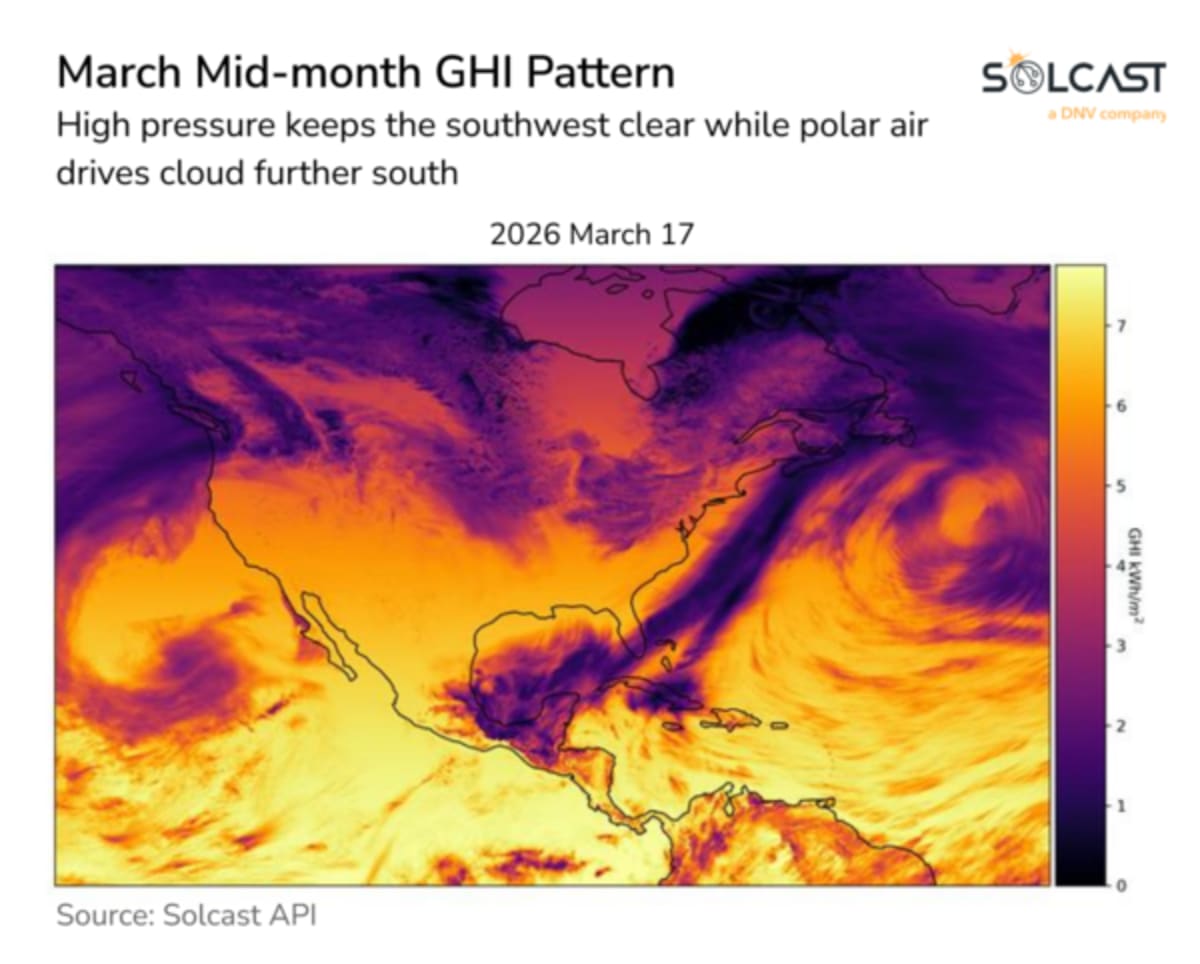
A massive high-pressure system parked over the southern United States throughout March created what scientists call a "heat dome." The atmospheric phenomenon pushed temperatures up to 35 degrees Fahrenheit above normal and kept storm clouds away for weeks.
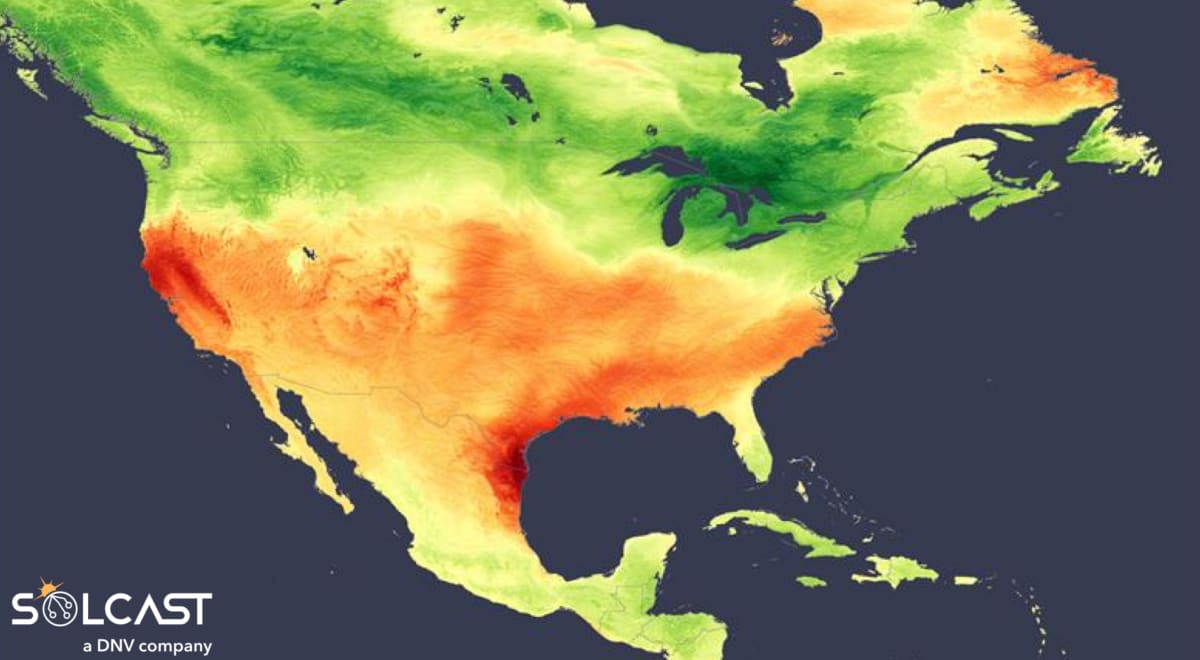
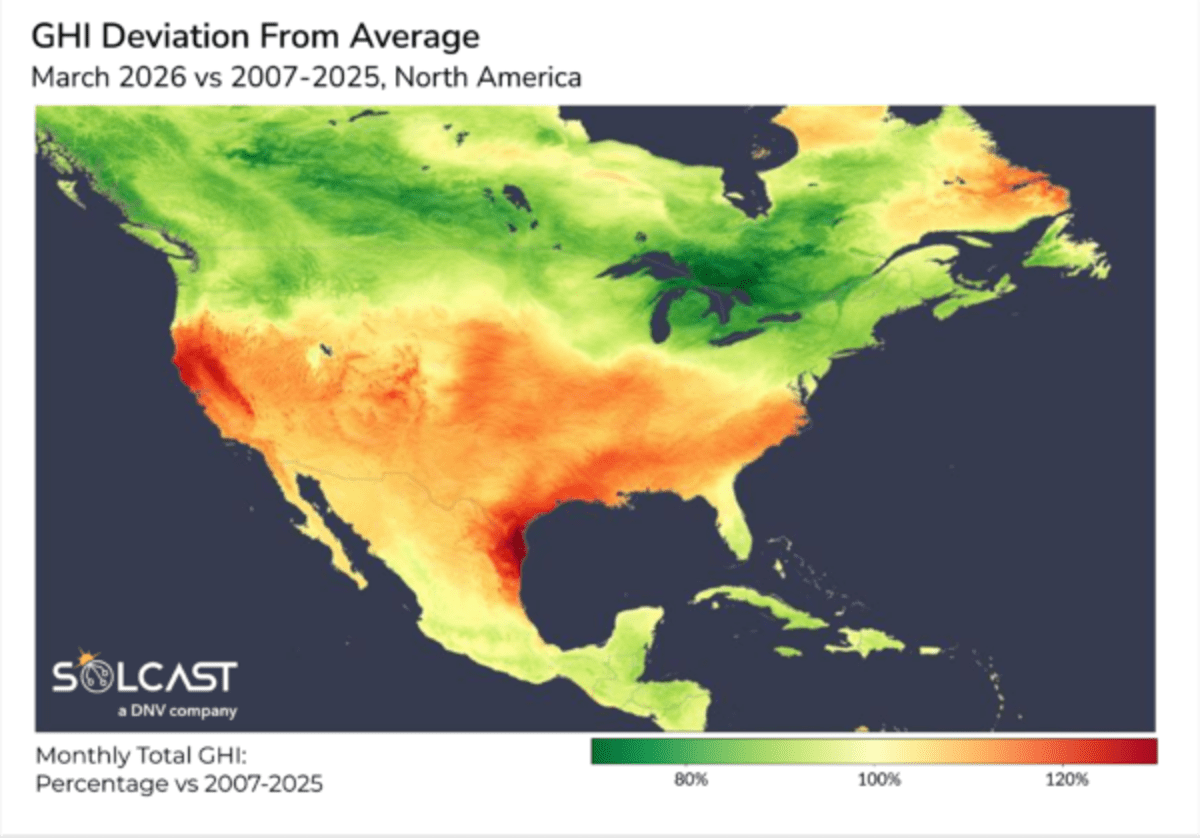
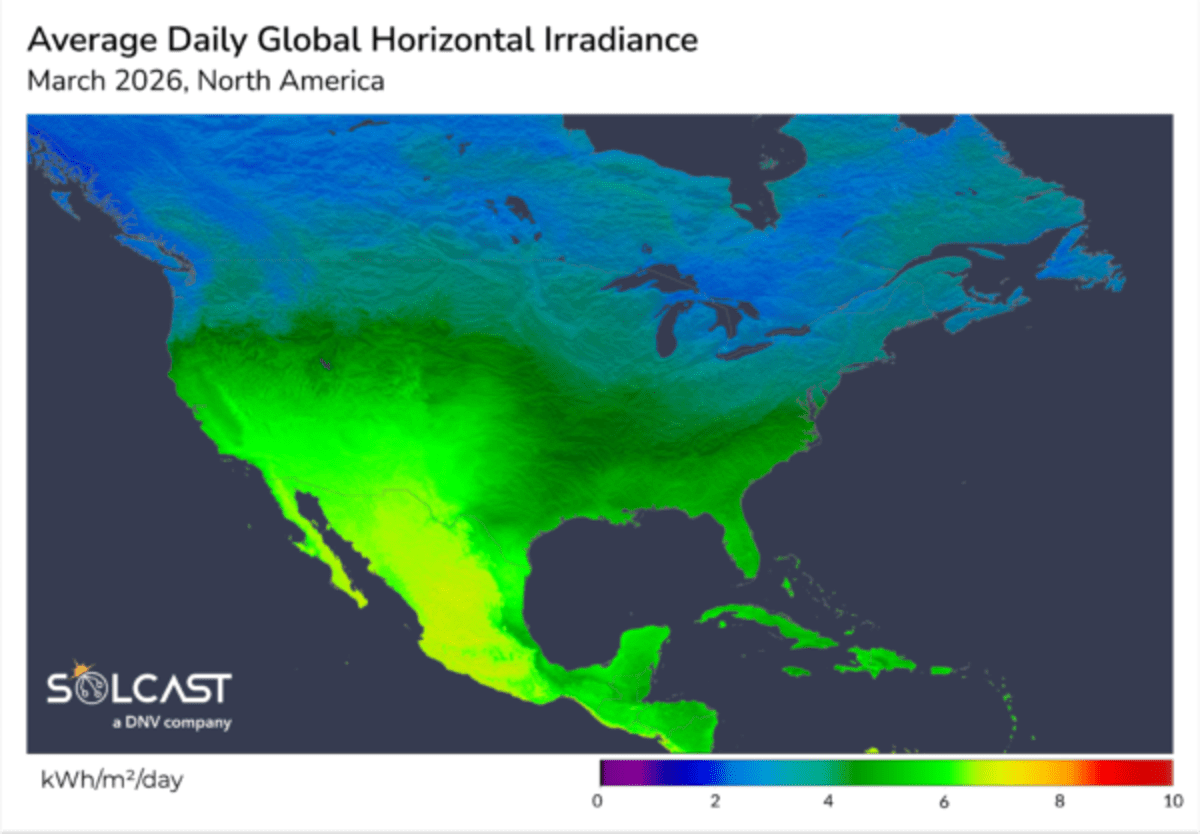
The result was a solar energy bonanza. Northeastern Mexico and southeastern Texas saw the strongest gains, with solar irradiance reaching roughly 20% to 25% above the long-term March average. Much of California recorded similar increases, making it one of the top-performing regions for solar generation during what's normally a transitional spring month.
More than 350 companies managing over 300 gigawatts of solar assets worldwide rely on this satellite data to optimize their energy production. The March surge means those southern solar farms generated significantly more clean electricity than anticipated, helping reduce reliance on fossil fuels during a critical month.
The unusually stable atmosphere suppressed cloud formation across the sunbelt, creating extended periods of brilliant sunshine. While temperatures soared to summer-like levels, the clear conditions were ideal for photovoltaic panels converting sunlight into electricity.
The Bright Side
Even as northern states battled polar air and snowstorms that reduced their solar output, the southern surge more than compensated on a continental scale. The geographic diversity of North America's growing solar infrastructure proved its resilience, with different regions picking up slack when weather challenges hit elsewhere.
The data comes from satellite tracking at extremely high resolution, using AI algorithms to monitor clouds and calculate solar irradiance with less than 2% error. This precision helps energy grid operators plan more effectively and demonstrates how reliable solar power has become as a cornerstone of clean energy.
Southern Mexico and Florida were exceptions to the trend, experiencing slightly below-average sunshine where localized clouds persisted. But the overall picture painted a story of renewable energy meeting the moment when conditions aligned.
Clean energy continues proving it can deliver when the sun shines bright.
More Images
Based on reporting by PV Magazine
This story was written by BrightWire based on verified news reports.
Spread the positivity!
Share this good news with someone who needs it